
Under the Radar Towns in Popular Destinations

Our clients are always looking for hidden gems, authentic experiences, and adventures away from the crowds. While summer travel is blissful, it is rarely feasible to enjoy popular cities without the throngs of tourists. And “high season” is growing longer and longer each year. Rather than waking up at 5:00 AM to see the Trevi Fountain with only 50 people instead of 200, we propose venturing into more undiscovered destinations. Instead of following Instagram hype, consider the quieter, more local, and still stunning towns that offer their own unique magic. If your heart is set on the Eiffel Tower, there is only one place in the world to go, but if you are happy to see AN ancient Roman Colosseum instead of THE Colosseum, there are countless amazing places with incredible, undiscovered potential.

If you’re planning to go to any of the countries below – please take a look at our under-the-radar recommendations. You may just find your new favorite destination!

France
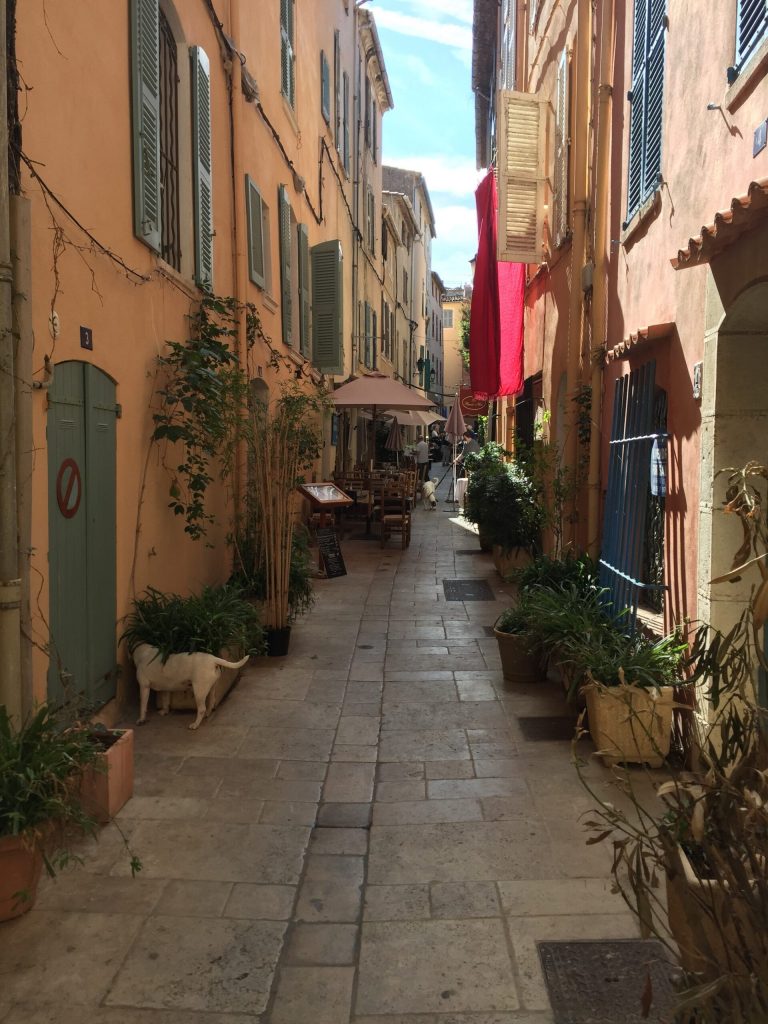
For travelers seeking a big city with incredible food, green spaces, and a vibrant cultural scene, France offers a wealth of alternatives to Paris that capture the essence of French life without the saturation. These towns range from the gastronomic capital of the south to the historic river cities and the sun-drenched Riviera. In these cities, you’ll discover quaint sidewalk cafes, intriguing museums, and a range of architectural wonders.

[Photo Credit: Kayla via Shared Adventures — read about her honeymoon in France here!]

Lyon: As the gastronomic capital of France, it offers a Michelin-starred dining scene and charming architecture that feels intimately lived-in.

Avignon: The historic Palais des Papes dominates this medieval city, but its charm lies in the relaxed Provençal atmosphere, vibrant theater scene and countless art collections and exhibitions.

Nîmes: Home to one of the best-preserved Roman amphitheaters in the world, this city blends ancient grandeur with a modern, sun-drenched lifestyle.

Nice: While the Promenade des Anglais is famous, the real magic is found in the old town’s narrow alleys, the Cours Saleya markets, and the stunning views from Castle Hill.

Toulouse: Known as “La Ville Rose” for its terracotta bricks, this city offers a perfect mix of aerospace history, vibrant student life, and the serene Canal du Midi.

Lille: Lille offers a delicious palate of variety. Walk between narrow cobblestone streets with pastel houses and the modern Euralille district with futuristic skyscrapers. Visit museums that host a diverse collection of sculptures and paintings, and weirder natural history. There’s a surprise around every corner.

Bordeaux: Beyond its world-class wines, this elegant city features stunning 18th-century architecture and a revitalized waterfront that is perfect for a leisurely stroll.

Italy

While Venice, Florence, and Rome are the top three cities everyone knows, Italy has so much more to offer, especially in high season. These alternatives provide the same romantic and historical depth, with significantly fewer visitors.
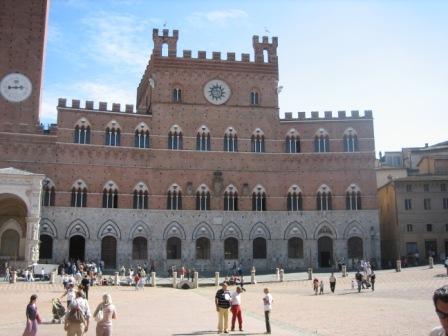
piazza del campo in Siena

If your idea of Italy involves winding cobblestone streets, cavernous churches with incredible frescos, and farm-to-table food, you don’t need to go to the big three to find it! Try the rolling hills and vineyards to the north, ancient monuments,and Renaissance architecture in the smaller towns, and seaside villages that are only a little less colorful than their famous neighbors.

[Photo Credit: Ann via Shared Adventures Travel — read about her Tuscany Adventure here!]

Verona: This city is steeped in history through the ages. Visit the well-preserved Roman amphitheatre, medieval and Renaissance buildings and Juliet’s house complete with balcony.

Lucca: Encircled by perfectly preserved Renaissance walls, this Tuscan town invites cycling on top of the ramparts and offers a serene, unspoiled atmosphere.

Treviso: Often called the “Venice of the North,” this charming city features pristine canals and a relaxed pace that captures the true essence of Venetian life.

Piemonte: This region is a haven for wine lovers and foodies, offering rolling vineyards, truffle hunting, and elegant hilltop towns that are far less traveled.

Siena: Famous for its shell-shaped Piazza del Campo and the Palio horse race, Siena preserves a medieval soul that feels frozen in time.

Cilento Coast: With its dramatic cliffs, hidden coves, and ancient Greek ruins, this area offers a wilder, more authentic Mediterranean experience than the Amalfi Coast.

Lerici: Perched on a peninsula in the Ligurian Sea, this picturesque village offers stunning sea views, a historic castle, and a tranquil harbor perfect for a romantic escape just below the Cinque Terre.

Greece

The classic route of Athens, Santorini, and Mykonos is losing some of its original charm due to overcrowding. We advocate for a wider array of stunning islands and ancient sites that preserve the authentic Greek spirit, featuring whitewashed villages, dramatic volcanic landscapes, and crystal-clear waters that remain accessible and serene. We definitely recommend checking out the rest of the mainland, but if you’re looking for an island paradise, these offer a beautiful experience.
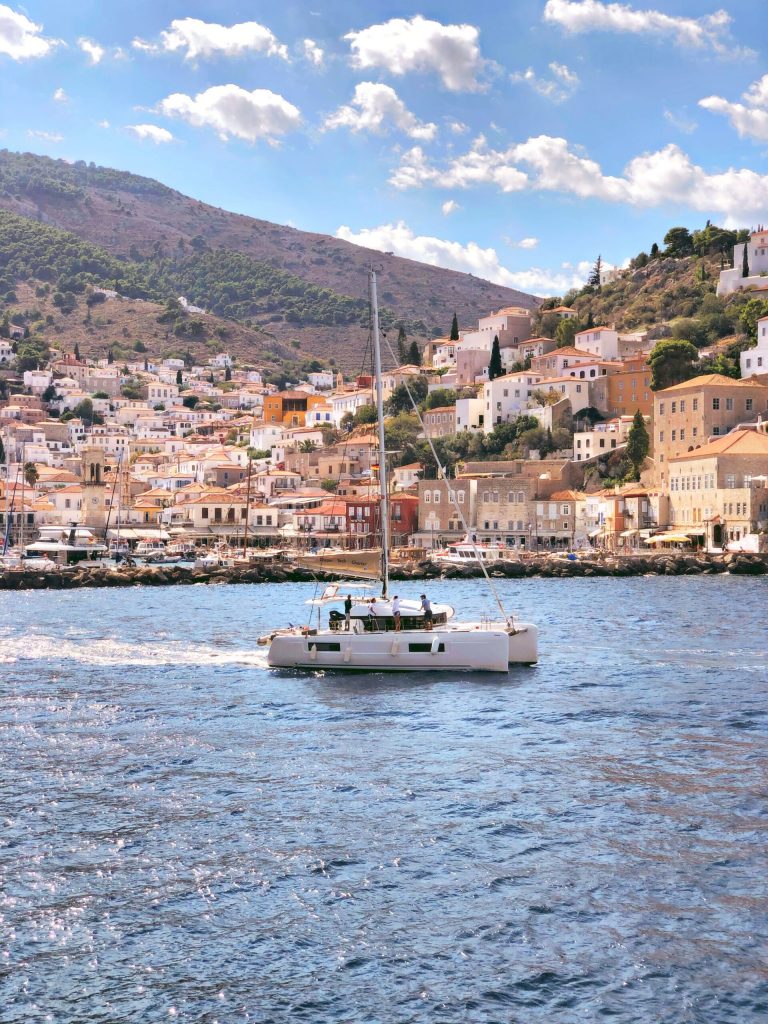
a catamaran in the bay of a village of Hydra built into the mountain in Greece
[Photo Credit: Hydra by Despina Galani via Unsplash]

Naxos & Paros: Naxos offers lush green landscapes and the largest ancient marble quarries, while Paros combines traditional villages with a sophisticated yet relaxed island vibe.

Milos: With its otherworldly lunar landscapes and hundreds of secluded beaches, this island provides a dramatic and less crowded alternative to the Cyclades.

Symi: This island is renowned for its colorful neoclassical architecture and tranquil bays, offering a peaceful retreat with a classic charm.

Folegandros: A hidden gem with dramatic cliffs and a charming main square, this island maintains a raw, authentic charm that appeals to those seeking solitude.

Hydra: This car-free island is famous for its donkeys, artist community, and pristine beaches that offer a serene escape.

Koufonisia: A group of three islands in the Cyclades, these small islands feature crystal-clear turquoise waters and white sandy beaches, and many hotels, restaurants and bars

Netherlands

In the Netherlands, Amsterdam is front and center, but the country has much more to offer for those looking beyond the main tourist trail and hoping to experience different architectural styles and local atmospheres. From the modernist port city to the historic canals of the “little Amsterdam,” these towns provide a more intimate glimpse into Dutch culture.

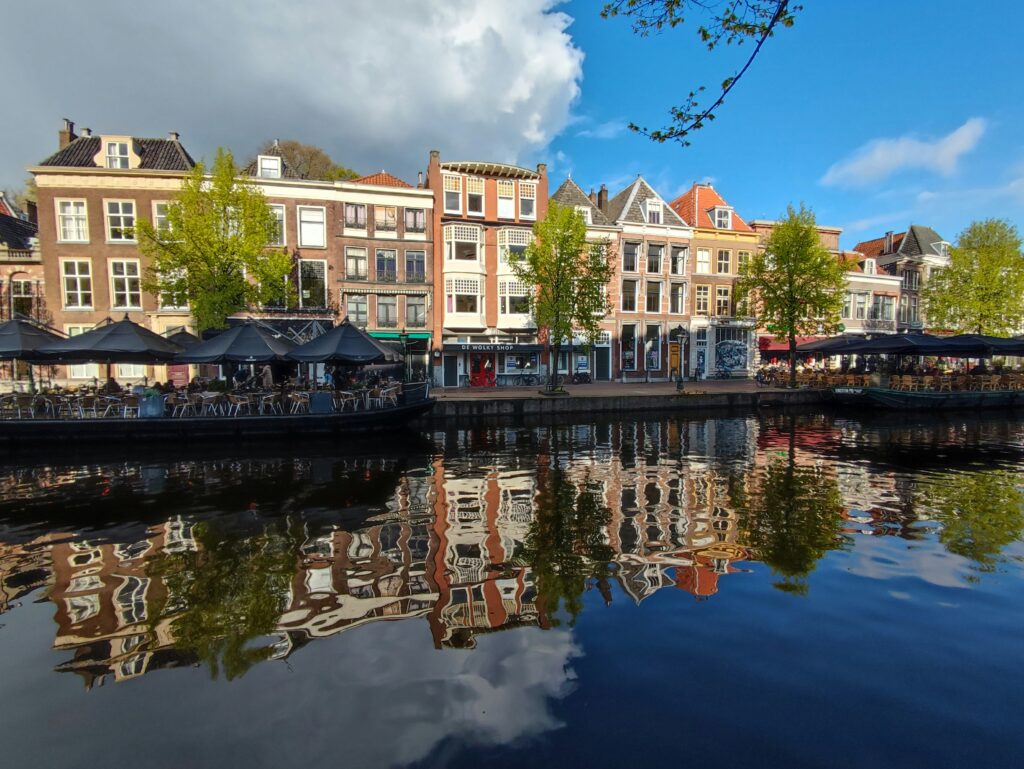
[Photo Credit: Leiden by Amanda MA via Unsplash]
Gouda: A typical Dutch city with its historic buildings, delicious cheese and, of course, a criss crossing of canals.

Rotterdam: As a hub of modern architecture and innovation, this city features striking bridges, futuristic buildings, and a dynamic waterfront that contrasts sharply with traditional Dutch towns.

Utrecht: Known for its unique wharf cellars along the canals and a lively student atmosphere, this city offers a cozy and authentic Dutch experience just a short train ride from Amsterdam.


Leiden: Photo-perfect, this town features tree-lined canals, windmills, wooden bridges and lush green spaces. With a wide range of museums and classic Dutch architecture, this is a perfect alternative to Amsterdam.

Spain

Sunny Spain is often synonymous with Barcelona and Madrid, known for vibrant culture, amazing food, tapas, beaches, history, and pumping nightlife. However, these incredible towns offer similar cultural richness and historical depth without the intense crowds of the major hubs, from the medieval streets of Catalonia to the Moorish heritage of Andalusia.
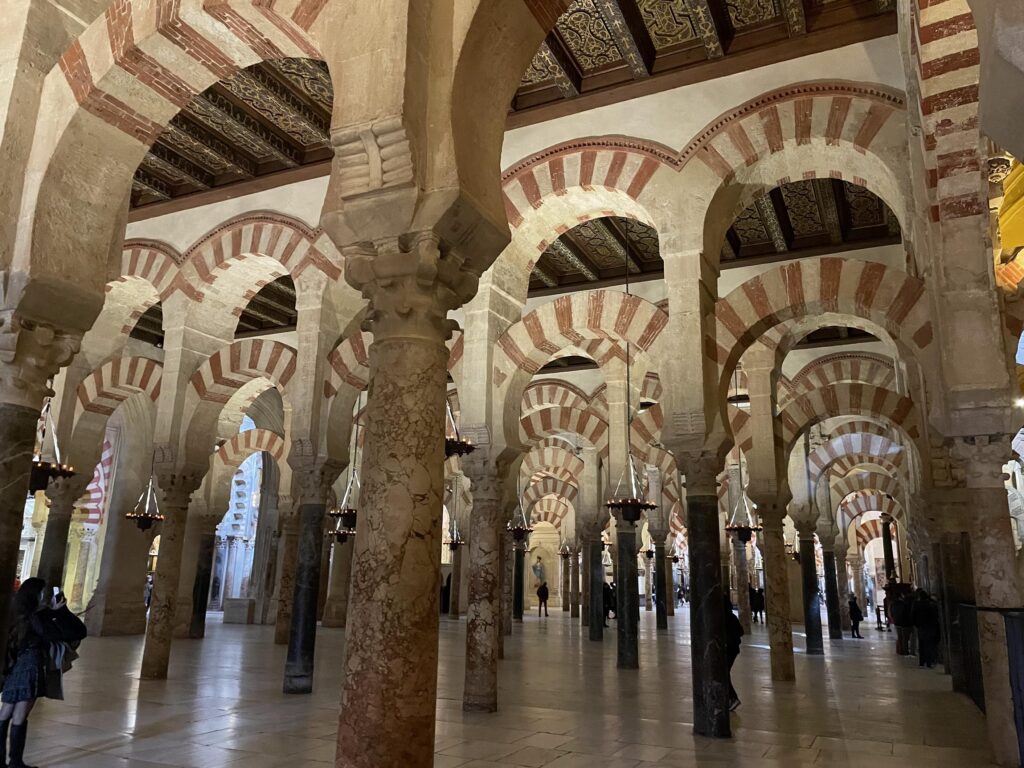
ornate repeating archways unique architecture at the Mezquita Cordoba in Southern Spain
[Photo Credit: Damian and Sarah via Shared Adventures — read about their trip to Southern Spain here!]

Girona: With its perfectly preserved Jewish Quarter and colorful houses along the Onyar River, this city offers a medieval charm that rivals Barcelona but with a fraction of the visitors.

Valencia: As the birthplace of paella, this city combines futuristic architecture with an historic old town and wide sandy beaches, offering a vibrant and authentic Spanish experience.

Bilbao: Home to the world-renowned Guggenheim Museum, this Basque city blends cutting-edge art with a rich culinary scene and a revitalized urban landscape.

Granada: Nestled at the foot of the Sierra Nevada, this city is home to the majestic Alhambra and offers a unique blend of Moorish history and flamenco culture.

Seville: As the heart of Andalusia, Seville boasts stunning Moorish palaces, vibrant plazas, and a passionate flamenco scene that captures the soul of southern Spain.


Are you ready to start exploring the road less traveled? Let us know, and we can help you plan an adventure with the best of both worlds!
Choosing Your Perfect Mountain Adventure

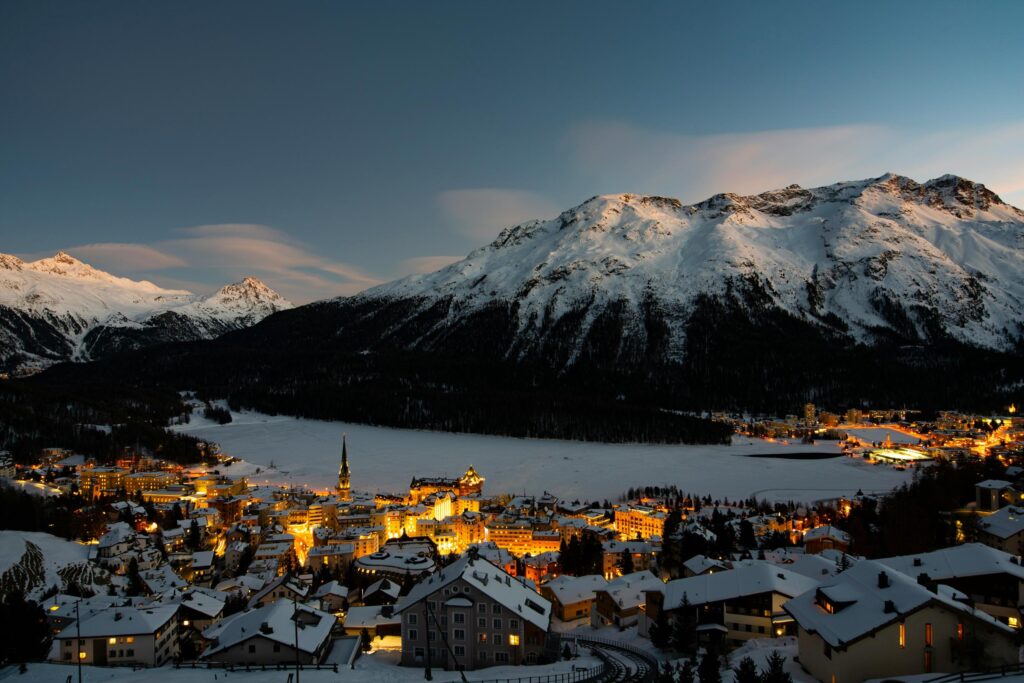
Whether you seek the adrenaline of the world’s highest peaks, the refined comfort of luxury resorts, or the rustic charm of hidden valleys, the European Alps offer three distinct experiences. When our clients start talking about a mountain adventure, we ask questions to understand which will be the best fit for them. As a starting point, here are the most important things to know about the Swiss Alps, the French Alps, and the Italian Dolomites.


The Swiss Alps: Luxury and Precision


Covering 60% of Switzerland, the Swiss Alps are a mountaineer’s paradise, boasting the highest concentration of 4,000-meter peaks in Europe. Home to the iconic Matterhorn, the region prides itself on the pristine infrastructure, multilingual hospitality, and Swiss efficiency. It is a landscape that oozes luxury, offering high-end resorts and picture-perfect views at every turn.

Our Top Towns: Interlaken, Grindelwald, Zermatt, and Andermatt.


[Photo Credit: Sepp Rutz via Unsplash]

The French Alps: The Ultimate Variety

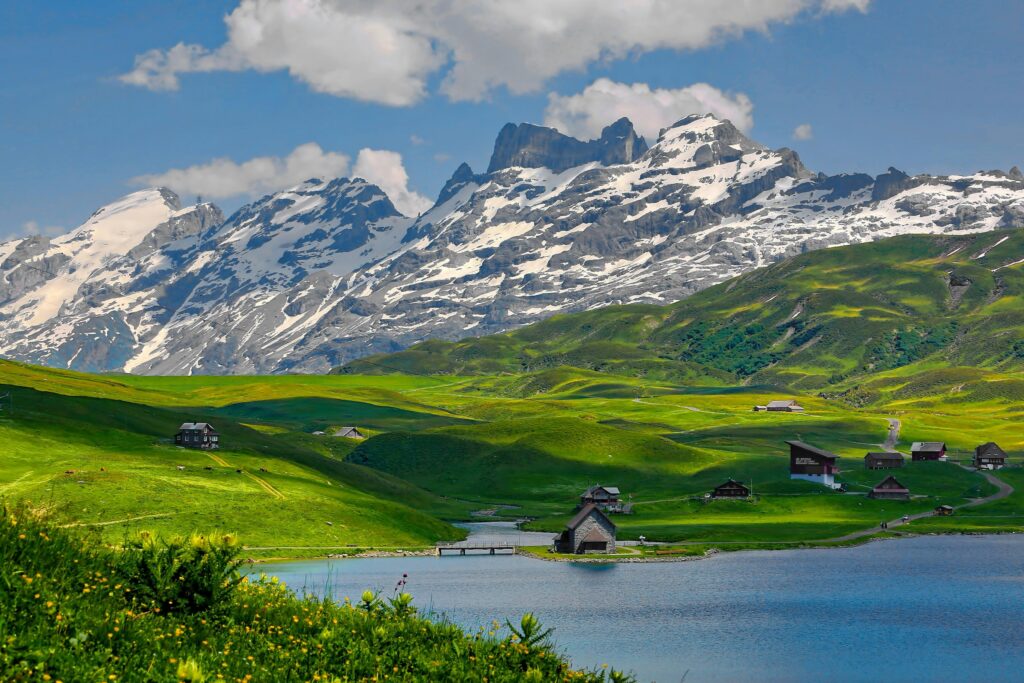
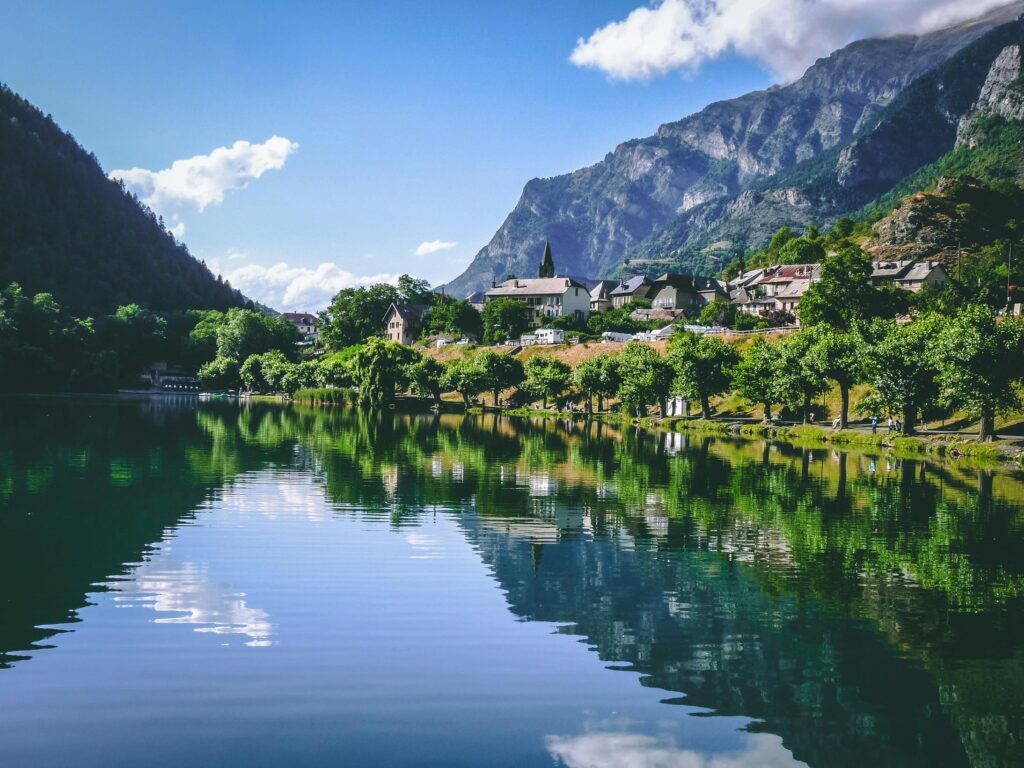
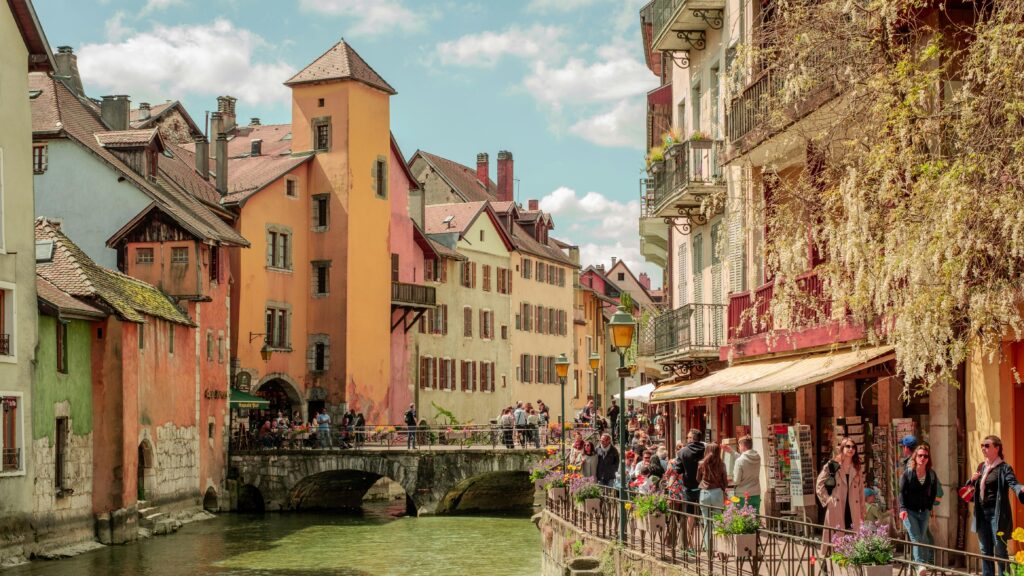
Stretching from Lake Geneva to the Mediterranean, the French Alps are all about diversity. You will find everything from the snow-capped heights of Mont Blanc to rolling meadows and alpine lakes.

Here, the Savoyard culture is the heartbeat, evident in the hearty menus featuring fondue, raclette, and tartiflette. And, the towns buzz with history and energy, offering a perfect pivot between a winter wonderland in the north and sunny Mediterranean getaways in the south.

Our Top Towns: Chamonix, Aix-les-Bains, Grenoble, and Chablis.


[Photo Credit: Clary Garcia via Unsplash]

The Italian Dolomites: Dramatic Beauty and Warmth


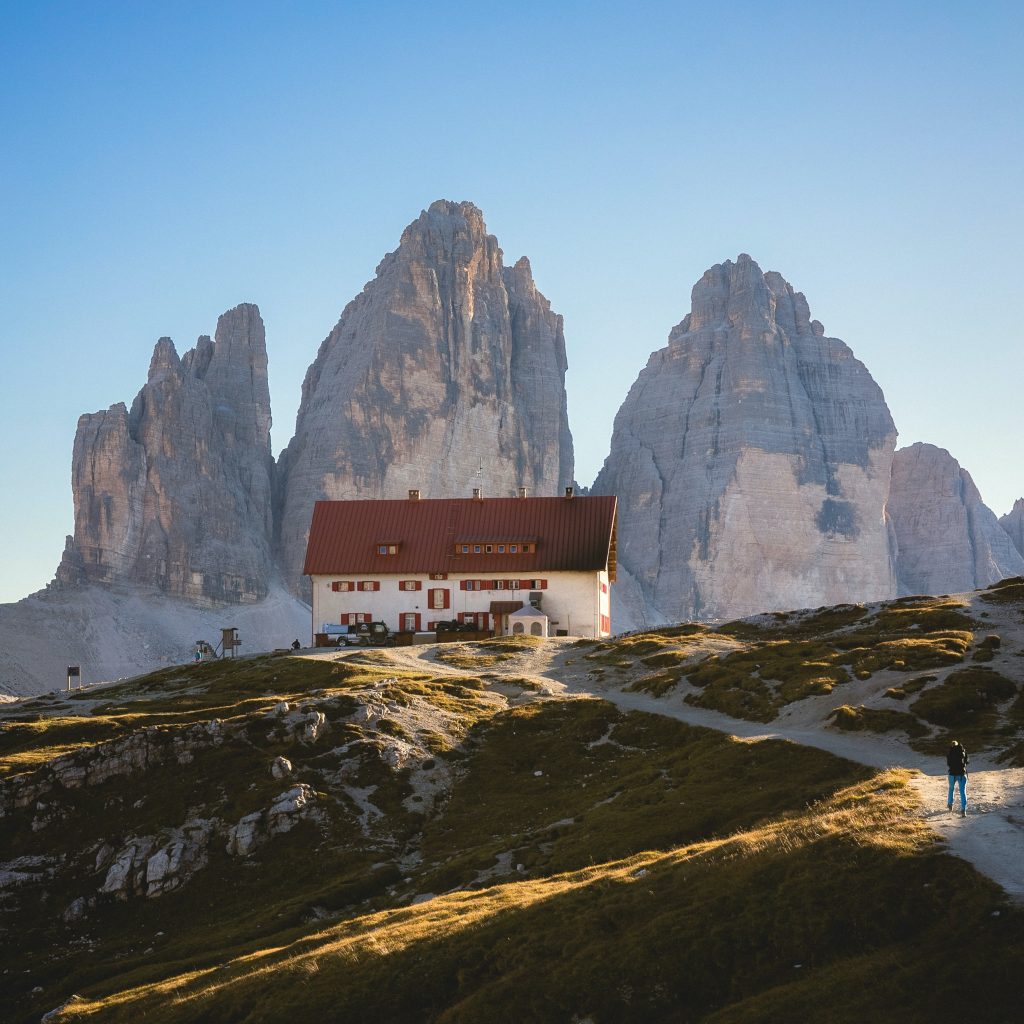
three imposing mountain spires behind a inn on a hill in the Dolomites

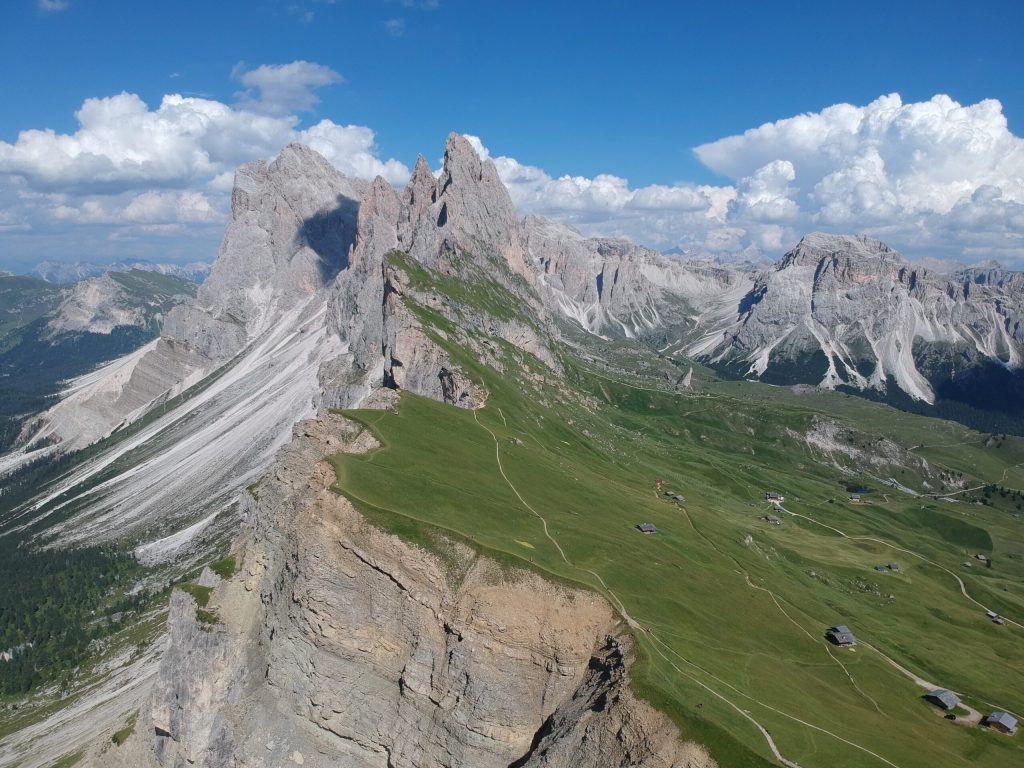
Located in the north-eastern corner of Italy, where Switzerland and Austria meet, the Dolomites offer effortless charm. This region uniquely blends German and Italian cultures, resulting in top-quality food and warm, welcoming hospitality. The landscape features dramatic, steep cliffs and winding roads leading to hidden gems.

Our Top Towns: Ortisei, Dobbiaco, Castelrotto, Bolzano, and Santa Maddalena.


[Photo Credit: Valdemaras D via Unsplash]

What’s the Vibe?

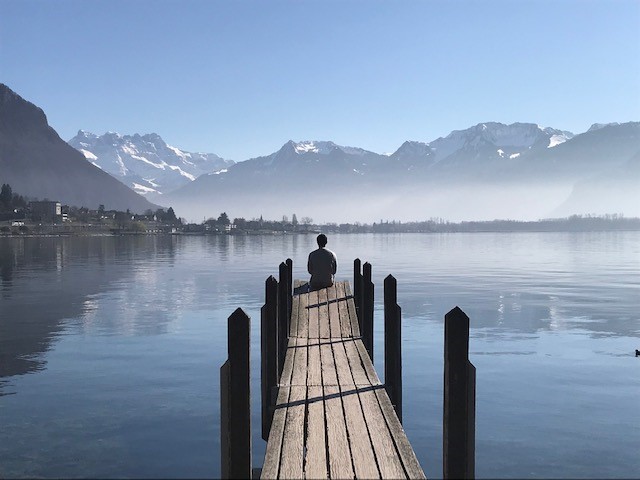
woman at the end of a dock in Switzerland

The Swiss Alps have a timeless sense of luxury and refinement. Here, you feel the respect they have for the incredible nature while managing it with precision. The Swiss Alps exude a calm but sophisticated atmosphere.

The French Alps offer a balance between the luxurious Swiss and laid-back Dolomites. With a lively atmosphere where culture, gastronomy, and sport collide, it feels like a celebration of life in the mountains.

Rustic and slow-paced, the Dolomites feel more like a home than a resort. The blend of cultures creates a unique, laid-back atmosphere where you are welcome to simply enjoy the jaw-dropping scenery.


[Photo Credit: Usha & Mark via Shared Adventures – read about their Switzerland Adventure here! ]

Budget Expectations

The Swiss Alps are the premium option. Expect to pay a significant premium for accommodation, dining, and lift passes. However, the quality of service and infrastructure is world-class, justifying the cost for those seeking the ultimate luxury experience.

While luxury exists, the French Alps are known for excellent value, particularly in the “lesser” known villages and self-catered chalets. You can find high-end experiences, but the region also offers some of the most affordable lift passes and accommodation in Europe.

The Dolomites generally offer better value than the other two Alps. You can enjoy high-end dining and accommodation without the Swiss price tag, thanks to the region’s focus on authentic experiences over pure luxury.

In Winter

a red train traveling through snowy mountains towards the matterhorn in Switzerland

The Swiss Alps in winter offer luxury, functionality, and classic Swiss efficiency. The experience is luxurious: private chalets, Michelin-starred dining, and exclusive spa facilities. Well-run trains wind through the mountains connecting the elegant towns. This is certainly the most comfortable winter holiday available.

[Photo Credit: Kevin Schmid via Unsplash]

For skiers, the pistes are impeccably groomed, and the lifts are reliable. While the Swiss resorts do feature beginner areas separated from the main slopes, the Swiss Alps suit intermediate and expert skiers best. Mid-level adventurers can find long, smooth red trails, and the high-altitude challenging off-piste areas are an adrenaline seeker’s dream. The culture here is more polished than the wild off-piste slopes of the French Alps, giving you stupifying speed that still requires heart-pumping precision and control.

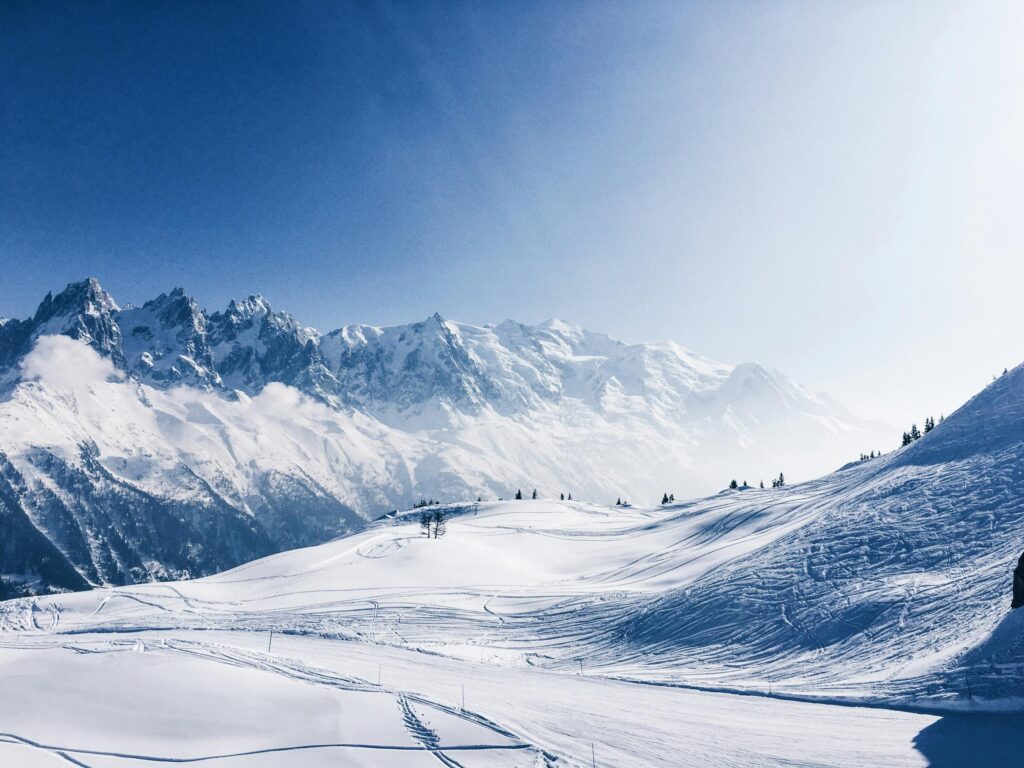
The French Alps are the home of serious skiing. The interconnected “Grand Massif” or “3 Vallées” (the world’s largest ski area) offers thousands of kilometers of perfectly groomed blue and red runs. You can ski for a week without repeating a trail, from powder hounds in Chamonix to families enjoying gentle slopes.

The French system is exceptionally friendly to novices. Towns like La Plagne and Méribel offer vast, gentle green runs that feel endless, allowing learners to build confidence without the intimidation of steep terrain. The “Family” ski areas are designed specifically for first-timers. Those looking for expert adrenaline runs can find it in the Chamonix glaciers, but these slopes tend to be a little more wild.

[Photo Credit: Chris Biron via Unsplash]

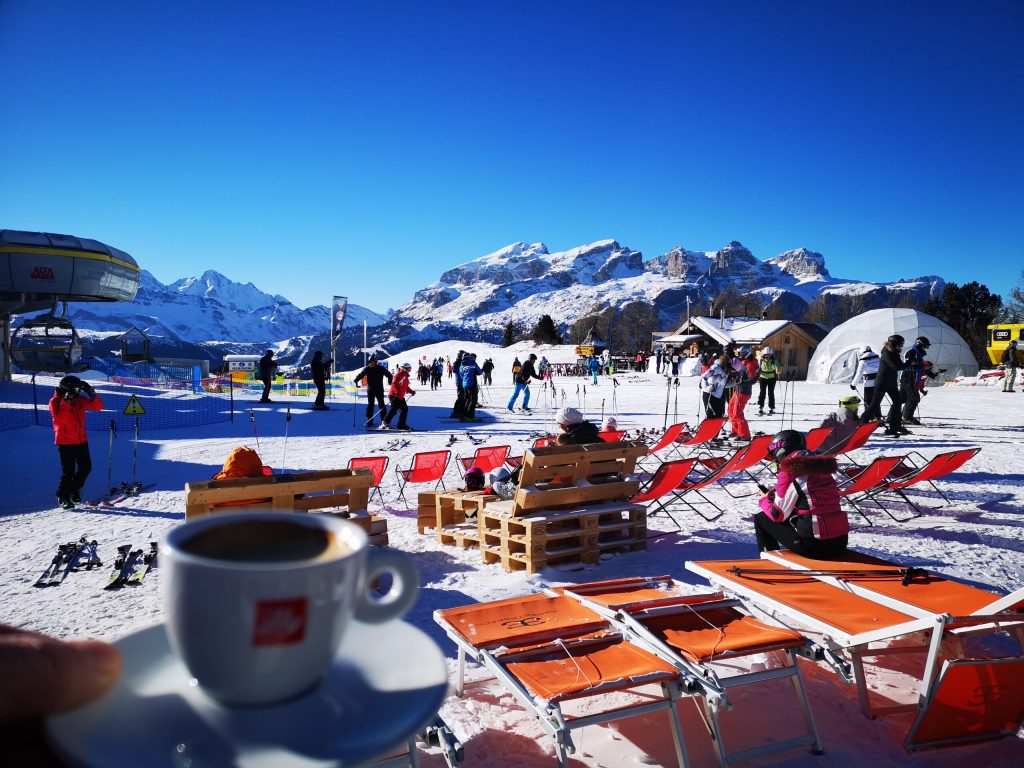
The Dolomites offer a more relaxed winter experience compared to their French and Swiss counterparts. The famous Sella Ronda circuit is perfect for all levels, with runs that weave through dramatic limestone peaks. The views alone make the skiing a joy. The infrastructure is there, but definitely less efficient and punctual than in the Swiss and French Alps. Certainly, there is no rush. For beginners, the slopes are gentle and the atmosphere is incredibly welcoming. The advanced runs are wild and rocky – rather than speed the focus here is on scenery and technique.

an italian espresso in the foreground and a ski resort in the background Dolomites Italy

Of course, being in Italy, the Dolomites are also perfect for foodies. Gourmet ski huts host the sciare con gusto – taste for skiing. Each year, ten Michelin-starred chefs from across Italy pair with mountain huts to create a signature dish inspired by the local cuisine. This involves a self-guided or tour route of tasting and skiing between each stop.

[Photo Credit: Vlado Sestan via Unsplash]

In Summer

The Swiss Alps are equally captivating in the summer. Keeping with the theme of effortless infrastructure, the Swiss Travel Pass makes exploration easy. Furthermore, you can use it to hop on scenic trains, cable cars, and boats. These Alps are the perfect destination for those who want to experience the mountains with zero logistical stress.

[Photo Credit: Ricardo Gomez Angel via Unsplash]

Summer in the French Alps brings warm, sunshiny days and an explosion of verdant green. Additionally, hiking trails are extensive. Like their ski slopes, the trails range from easy alpine lakes to challenging high-altitude treks. The weather is generally warmer than in the Swiss or Italian sectors, making it ideal for those who want to combine mountain air with a taste of the Riviera.

[Photo Credit: David Amar via Unsplash]

Compared to the Alps, the Dolomites have little of the efficient infrastructure, but they are a hiker’s and cyclist’s dream. The winding roads are a paradise for road cyclists, while the trails offer breathtaking views of the jagged peaks. Compared to the others, the culture here is slower, inviting you to linger over long lunches and explore hidden villages. The locals welcome you with open arms, and the scenery astounds.

[Photo Credit: Giorgi Shakarashvili via Unsplash]

an imposing mountain ridge with a sheer drop on one side and soft grassy hills on the other and imposing mountains in the background Dolomites Italy


No matter which range you choose, the mountains are calling. Let us know which one resonates with your travel style, we can’t wait to begin crafting your perfect itinerary.

Paris Anniversary Adventure

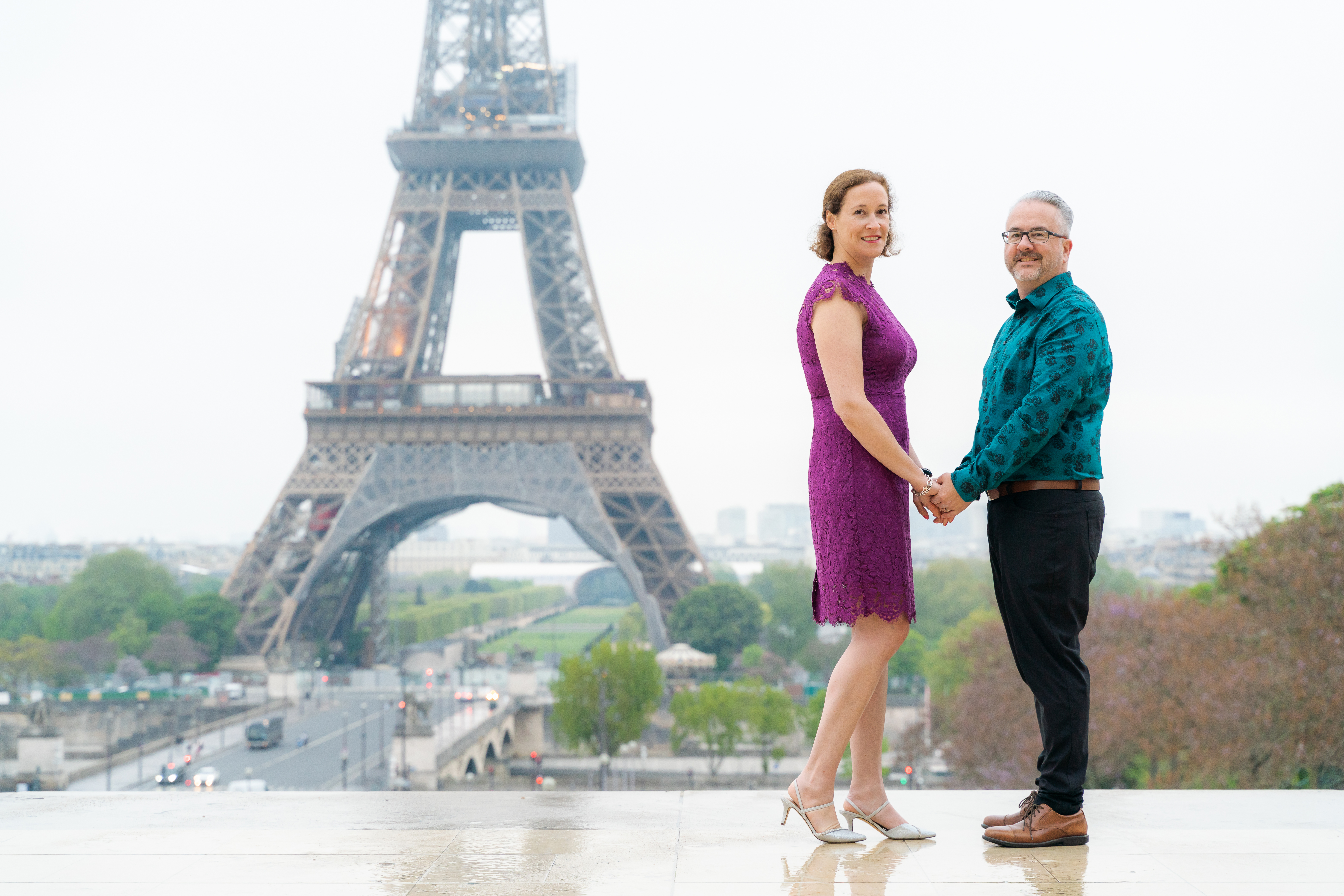
Nicole and Paul wanted to celebrate their 10th anniversary somewhere romantic, iconic and international. With amazing architecture, food, and one of Paul’s favorite soccer teams playing- Paris was the perfect destination! We sent them on a week long adventure in the city of light. Here’s how it went:


We absolutely LOVED our trip – the weather was gorgeous with the exception of one afternoon we got rained on. Everything was GORGEOUS – in awe of the history and architecture.

Here are some quick notes:

Flight

So awesome to travel internationally again. They give you food, don’t charge for alcohol, and have plenty of in-flight entertainment to keep you busy. The first-class area looked really nice too (if anyone wanted to pay for that).

Transportation

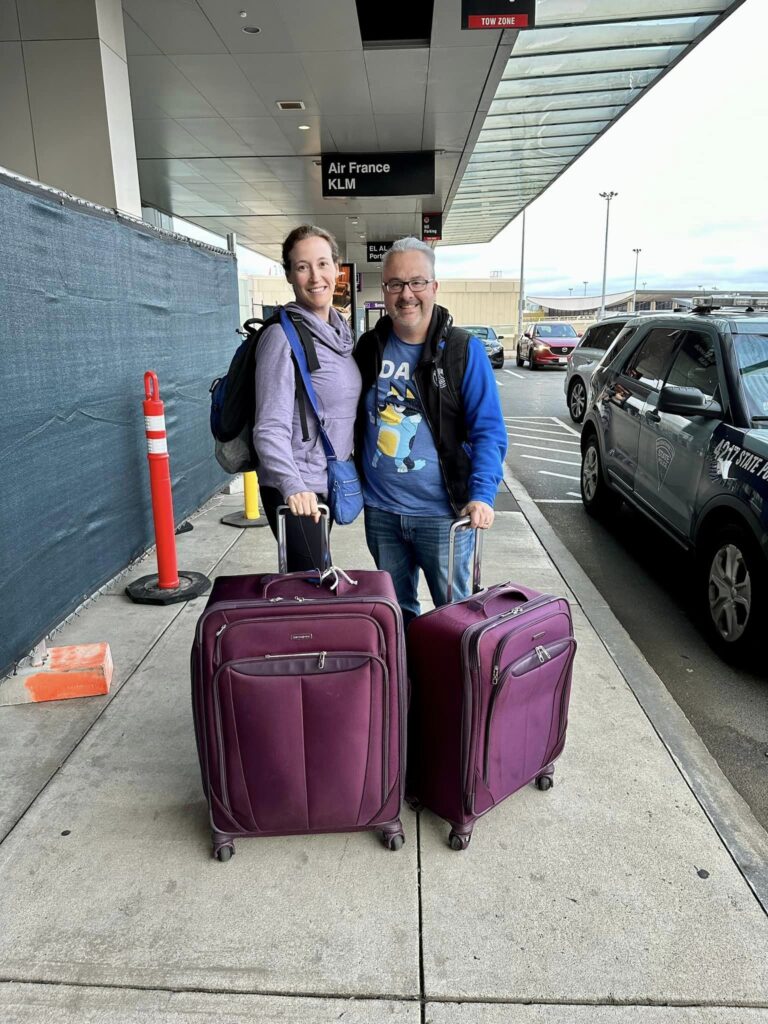
The car service that picked us up was decent. The driver said he almost left bc it took us almost an hour to get our bags and go through customs. He said he tried to call me but I didn’t have international calling or decent wifi to accept calls. Luckily he waited but they should know that it can take over an hour to get through everything.

Paris Food & Drink Tour

It was the perfect tour to “ease” us into Paris. Due to the timing of our flights, we did not feel much jet lag which was nice.

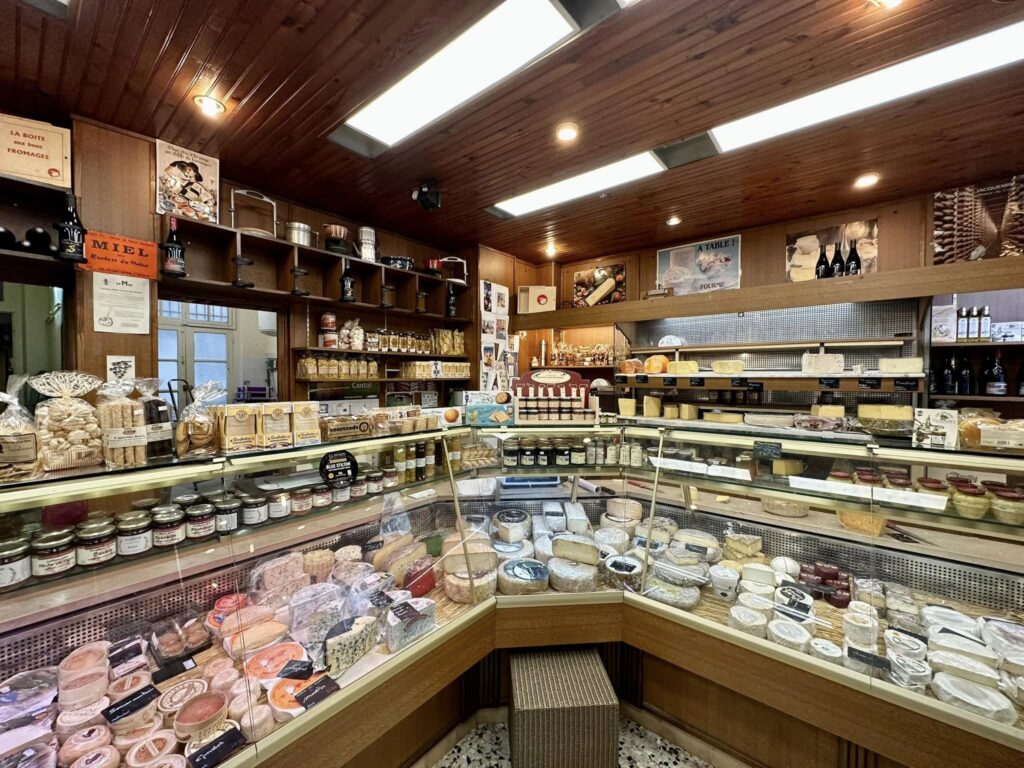
Joshua, our tour guide was AWESOME! He gave us the right info at each place and was personable with everyone. The small group was nice. It was nice to visit local shops and to learn about how the different cheeses and wines are made. Paul is now a Chablis fan! The tour ended at an Absinthe bar which made Paul very happy. 🙂

At the end of the tour, Joshua gave some recommendations on where to eat for dinner. We took his recommendation and went to Chez Nicos for crepes!

Hotel

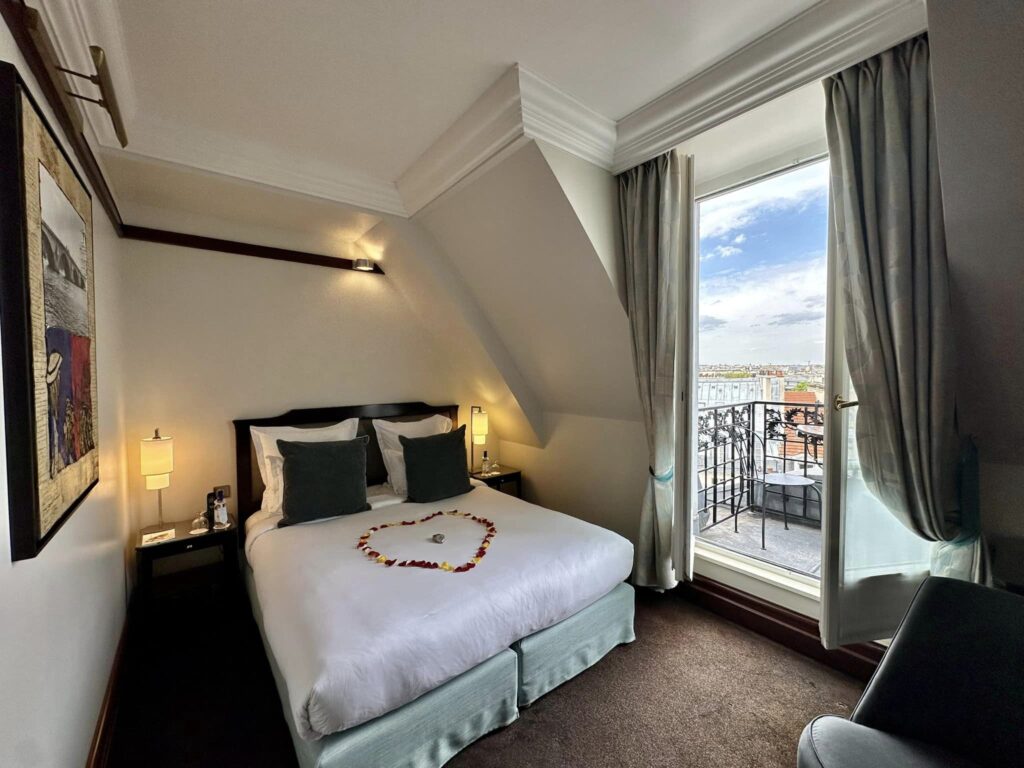
We really loved the boutique hotel. [Hotel Pont Royal] The staff was very nice and spoke English! We were thrilled breakfast was included as it was one less meal we had to worry about. We absolutely LOVED our balcony – it was perfect.

The room itself was nice (a bit small) and there was nowhere to put our luggage but we made do. The bathroom didn’t have much shelving for our stuff so we just had it on the floor…maybe that’s a Euro thing.

Friday – Walking Everywhere in Paris

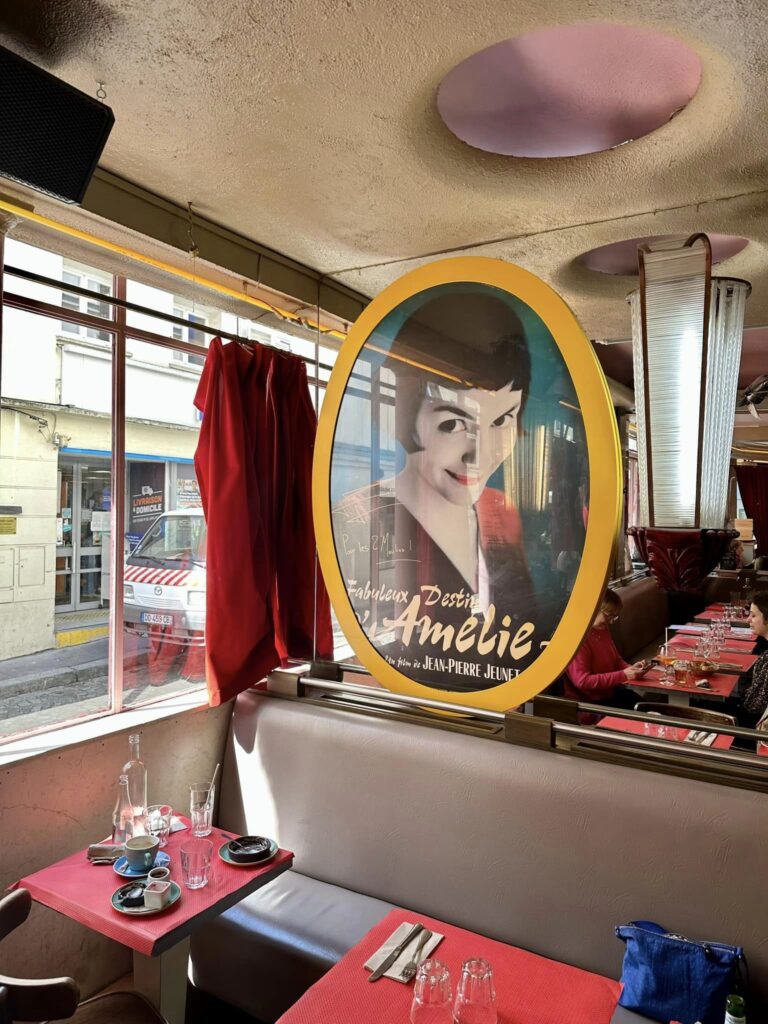
We walked an INSANE amount of steps: 26K and walked all over the place. We saw Moulin Rouge, Paul found the cafe from the movie Amelie that we really liked, we went to the I Love You wall, took some cool photos of the metro signs, and ended with the catacombs

Saturday – Photo Shoot, Notre Dame & the Louvre

I was able to find a last-minute photographer through a referral from another photographer and made Paul get up at 5 AM so we could meet the photographer at 7:15 and take photos with the least amount of people in the background. Now THAT is love. The photos came out really well and the photographer was great!

[Photo Credit: Jordan with The Parisian Photographers]

Afterward, we enjoyed a croissant and cappuccino at Patisserie where we met the photographer (it was delish) and headed back to the hotel to change. From there we walked to Notre Dame which was breathtaking even though we could not go inside. They had these cool exhibits showcasing different photographers and how they documented the fire and showed the plans to put everything back together.

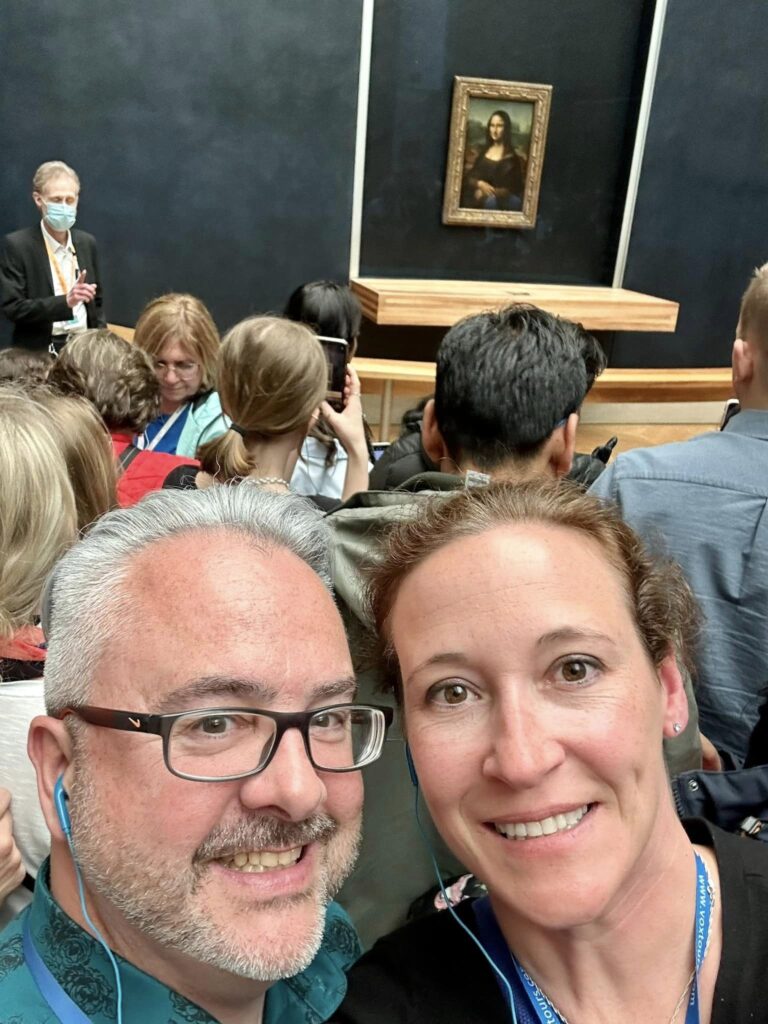
a couple celebrating their anniversary with the Mona Lisa in Paris

That afternoon we toured the Louvre which was really cool and HUGE. Seeing the Mona Lisa was neat after seeing it in so many art history books. Our tour guide was really passionate about art history so we lucked out.

Soccer Sunday

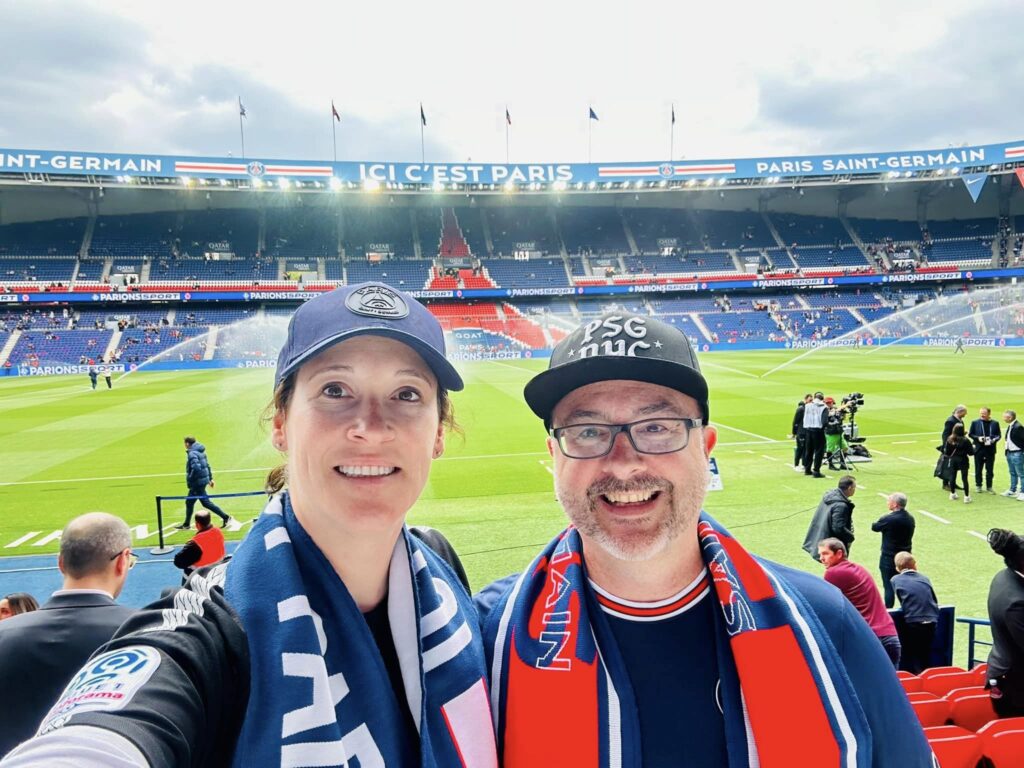
Sunday was our Paris Saint-Germain soccer game. THAT WAS EPIC – Paul was in soccer heaven. Such a cool experience, so glad we splurged on the seats – we were about 7 rows from the field and the players were RIGHT THERE. PSG didn’t play well and lost but we were thrilled with our experience.

a couple celebrating their anniversary at a PSG football/soccer match in Paris

Monday- Eiffel Tower and Shopping

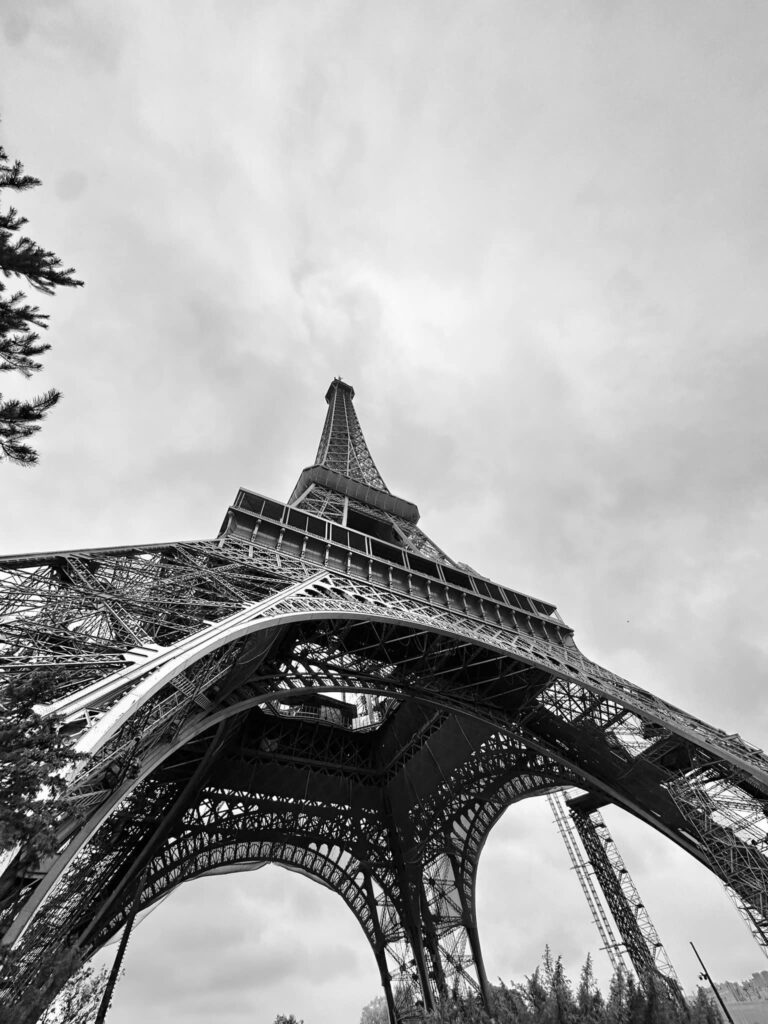
looking up at the Eiffel Tower in Paris

Monday was our Eiffel Tower and shopping day. Eiffel Tower was VERY BUSY. Cool views but very crowded. We witnessed a proposal! Afterward we walked to the Arc de Triomphe. You could not go up because it was their Labor Day in Paris and was closed. All the shops on Avenue des Champs-Elysees were also closed for Labor Day. We did find an Italian place to eat lunch and that’s when it poured on and off.

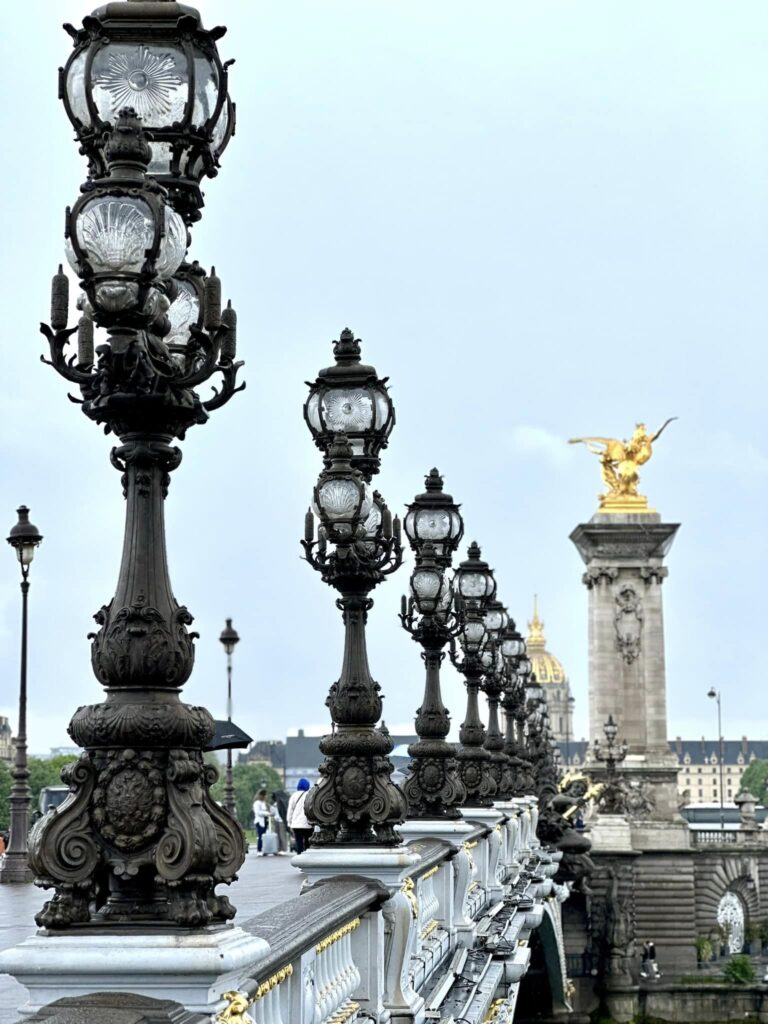
We continued to stroll to Alexander III Bridge and luckily no one was on it due to the heavy rains so we captured some nice shots.

Pont Alexander in Paris

Tuesday – Giverny Day Trip

Giverny was sooo pretty and it was nice to see the France Countryside. Our tour guide was very nice. Lunch was really good and Chateau de Versailles was beautiful. Could see where Newport got its inspiration from. Versaille was VERY CROWDED and we did not have much time to explore the grounds. Inside was fairly quick but VERY crowded. Like navigating through a crowded concert.


While we were sad to leave, if we stayed I am not sure where else we would have walked bc we confidently walked everywhere in Paris! LOL

Top Tips for Your First Trip to Europe

Top Tips for your First Trip to Europe Pin
Pin it for Later!

First time traveling to Europe? There’s a lot to consider for your first big trip abroad! If you’ve reached out to us to help you plan, you know most of the details are already taken care of. All that’s left is to pack, get on the plane, and enjoy your adventure! But even with a trusted travel agent by your side, it can feel a bit daunting heading to a completely unfamiliar place. Aside from preparing for the extra-long flight, what else do you need to know before you go? As seasoned European travelers, here are our top tips:

Packing

What to Pack: No matter where you’re going in Europe, you will be guaranteed to need three things: comfortable walking shoes, layers, and adapters. Your favorite dress shoes might look amazing, but if you’ve never walked farther than from the restaurant to your car in them, they need to stay home. Generally, the weather is constantly changing throughout the day. Fresh mornings give way to sweltering midday before cooling down again into beautiful evenings. To cover these changes you’ll need to bring some lovely light layers. Finally, you’ll need to select an all-purpose adapter to allow your US plugs to fit into a European outlet. Plus a converter if you’re bringing a US appliance (like a hairdryer) that can’t handle their stronger voltage.

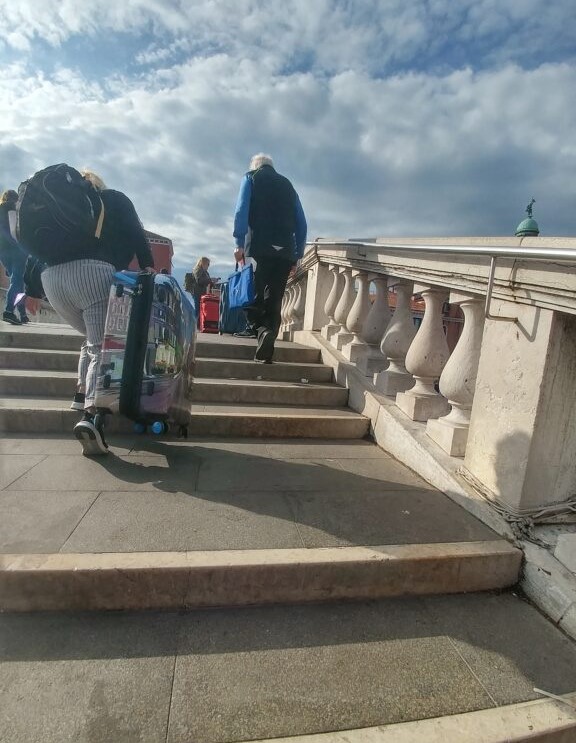
Pack Light: Even with careful planning, at some point on your adventure you’ll need to lift your suitcase. It won’t be over your head, perhaps just a small step into your hotel, up and over the bridges of Venice, or simply over the gap between the train and the platform. But you want to be sure you pack a suitcase that you can manage and maneuver. Check out our packing it all in a carry-on guide – even if you don’t plan on fitting it all in a carry-on, you’ll find some good tips to help you minimize. 

[Photo Credit: Liz via Shared Adventures]

Important Items: Make sure you pack all medicines, important phone numbers, a change of clothes, and expensive items/ electronics in your carry-on bag. Anything you need in the first 48hrs goes in the carry-on in case your luggage is delayed or lost.

Your Phone

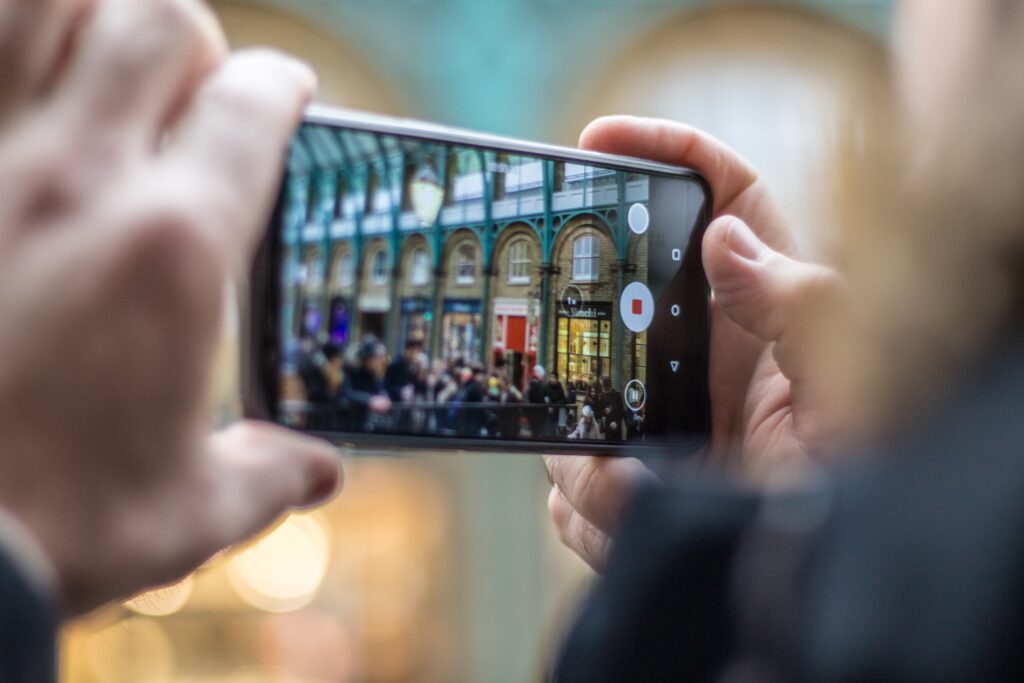
Check with your provider: Communicating while abroad is important – whether with other people in your group or with your friends and family back home. Or, if you need to access maps, use handy travel apps, post on social media, or check other internet info. Check with your mobile phone provider in advance to see what their international plan is, how to set it up, and whether it’s worth using. 

Offline: If you decide you don’t want to use your provider’s international plan, you must put your phone into Airplane mode to avoid roaming charges. Even if you’re not actively using your phone, unless it’s in airplane mode, it’s using data. It’s also worth looking up how to download offline maps. This will help you so much when you’re jumping from wifi to wifi. 

[Photo Credit: Angela Compagnone via Unsplash]

Connecting: Most crucially, when you’re abroad, you’ll need to dial the country code to contact anyone. Here’s how to do that (works for both iPhone and Android). Secondly, we cannot recommend WhatsApp enough. Everyone in Europe has and communicates through WhatsApp. That includes your tour guides, your drivers, and even some restaurants. Imagine trying to make a dinner reservation when you don’t speak the language. Instead of struggling to communicate, you type out the request in a translator app. Then, simply send the translation to the restaurant via WhatsApp text! Easy, simple, and with no misunderstandings! WhatsApp also works off of the wifi/ mobile data. So even if you decide not to set up an international plan, you can communicate! 

Money Matters

Check With Your Bank: You’ll want to check your bank’s foreign transaction fees and currency conversion rates. Be sure to let them know you’re traveling so they don’t flag any card purchases by mistake. If you have a card that doesn’t charge foreign transaction fees (like a Capital One or Chase Sapphire) now is the time to use it! Also, be sure to bring a Visa/Mastercard since many places won’t accept Amex or Discover

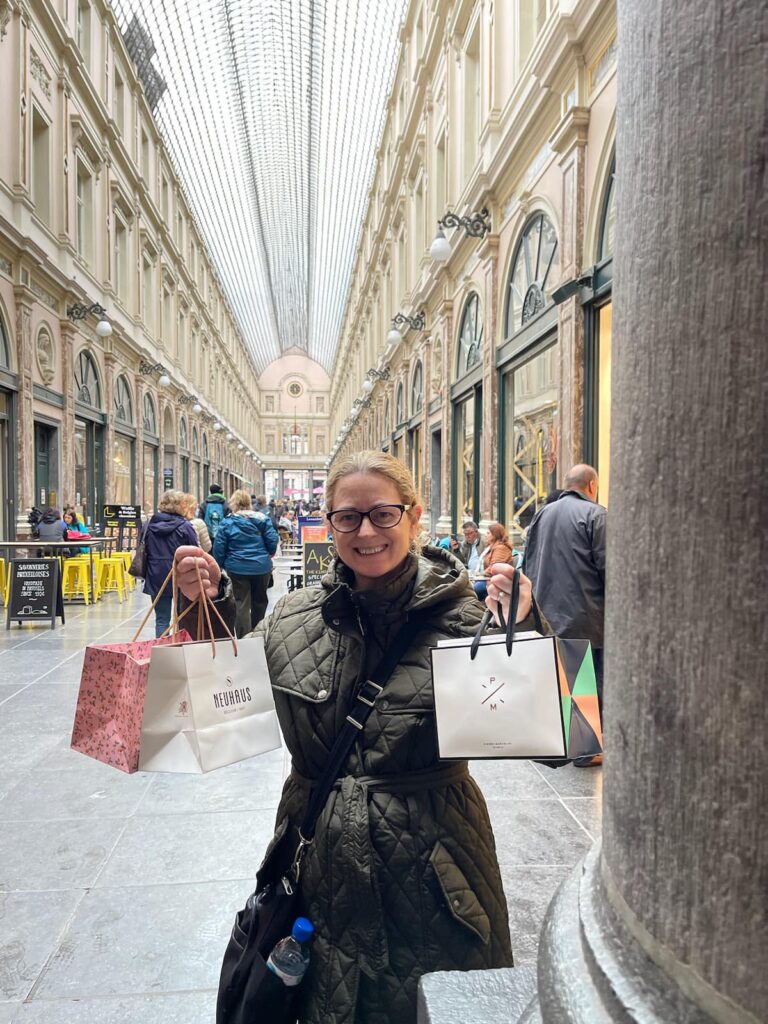
In Belgium Beth showing off her chocolate- shopping bags in the Brussels Shopping Mall

Cash vs Card: It’s not necessary to get a huge amount of foreign currency before you leave, but you’ll need some pocket money. The general rule is: anything under 10€ should be paid in cash. Some places won’t accept cards if it’s under 10€ and sometimes it’s more polite to pay for tips, taxis, cups of coffee, etc in cash. Plus, public toilets will only take 1€ coins. Remember: 1€ and 2€ are coins so don’t just get rid of “spare change”! For larger purchases in shops and restaurants, you can use your card to get the best exchange rate and some added protections. 

[Photo Credit: Beth & Bob via Shared Adventures Travel – check out their Amsterdam, Brussels, and Paris Adventure here! ]

Tipping: While in Europe, resist the urge to tip the way you do in the US. In restaurants check to see if a service charge is already on the bill. If not, and if you’re inclined to tip, don’t leave any more than 10%. Tip tour guides and drivers 2€ -10€ per person. For taxis, you can round up to the nearest Euro. European service workers, in general, make a living wage and do not need/expect a generous American-style tip.

Cultural

Language: Of course, they speak a different language! In major cities, a lot of the service industry at least speak English related to their jobs. But it’s always nice for you to try to meet them halfway. Always try to learn “hello & goodbye”, “ please & thank you”, “ do you speak English?” and “Where is the toilet?” These all go a long way. Don’t forget all the signs will be in the foreign language as well! Luckily, in transport areas like train stations and airports, you’ll often see English in small letters underneath.

Dining Times: Throughout most of Europe the dining times are more specific. Many places, especially in Italy, Portugal, and Spain, close down for an afternoon siesta between 2:30 pm – 7 pm.

To avoid only finding sad sandwiches for lunch, make sure you’re getting lunch before 2 pm. Similarly, many restaurants don’t serve dinner until 7 pm. Certainly, there are a few open earlier, and in big cities, some are open all day. However, you’ll limit your choices if you’re trying to eat dinner before 7 pm.

[Photo Credit: Hilary and Zackary via Shared Adventures Travel — read about their Rome & Amalfi Coast Honeymoon here!]

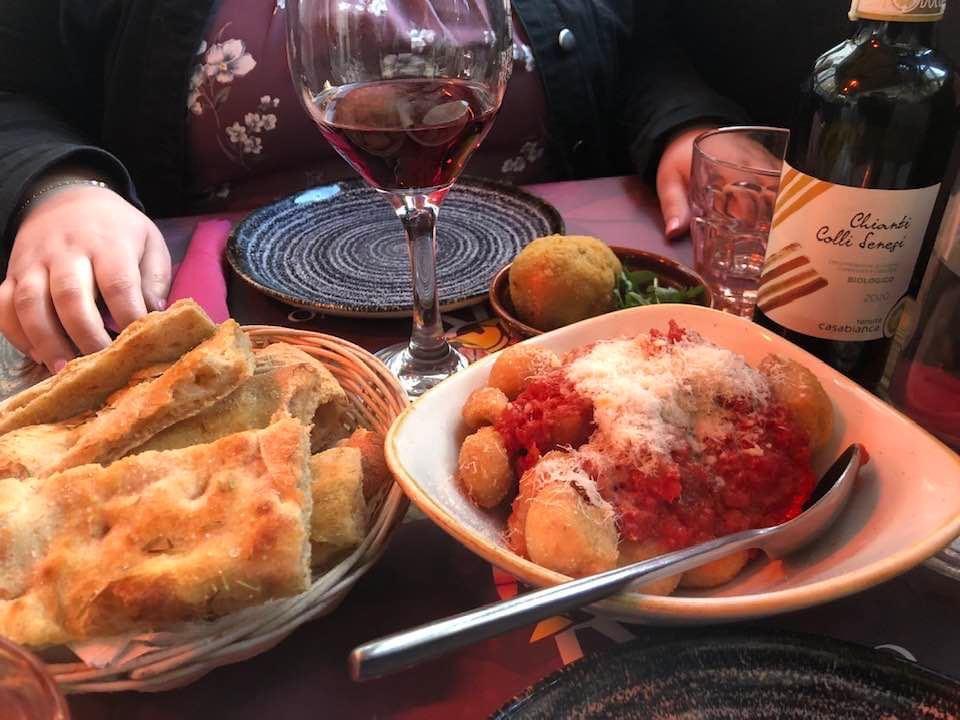
delicious meal in southern Italy

Finally, in Europe, water doesn’t come automatically to the table. If you want water, you’ll have to order it and it usually is only available by bottle without ice.

Rooms: Unless you’re booking a suite, most of the hotel rooms and beds tend to be smaller than typical American standards. And that includes the bathrooms. 

Safety

Be Informed: To keep yourself informed, you can enroll in the Smart Traveler Enrollment Program (STEP). This is a free service that allows you to pre-register your travel plans with the US State Department. This way, they can keep you informed of safety conditions at your destination(s). Plus, the US Embassy will know how to reach you in the event of an emergency (including a family emergency at home). To enroll in STEP, visit https://step.state.gov/step/. To keep others informed – make sure you leave a full itinerary with a reservation number with a friend or family member. 

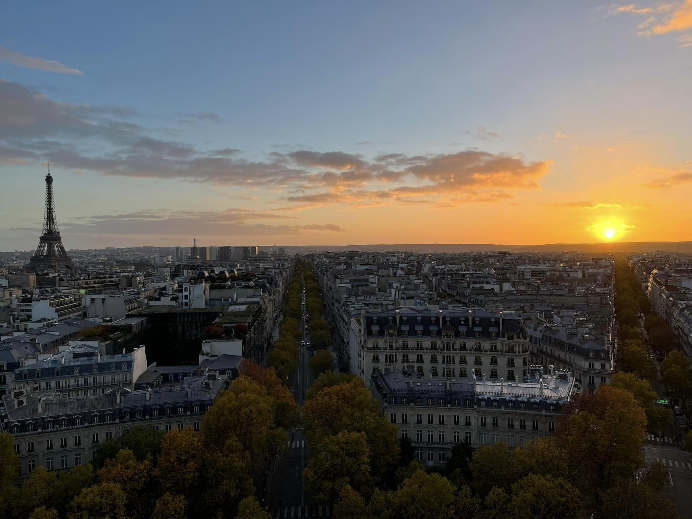
Overlooking Paris at sunset from the Arc du Triomphe

Keep Tabs on your Belongings: As with any crowded city or location, you want to make sure to keep an eye on your belongings. Don’t leave your phone in your back pocket, and have a bag that goes across your body and has zippers/ multiple pockets. 

[Photo Credit: Kim & Paul via Shared Adventures — read about their Paris Adventure here!]

Standard Precautions: Even though you are on vacation, please follow the same health/safety precautions you would if you were closer to home. Don’t drink to excess (especially in the hot sun), and never leave a drink unattended. Don’t wander around alone at night; practice the buddy system. Lock your hotel room windows and doors (and use the deadbolt provided, or bring an inexpensive door wedge or travel lock of your own). Leave expensive jewelry and electronics at home, and keep valuables in a safe and secure place (such as the in-room safe). If you run into legal trouble or are the victim of a crime, reach out to the nearest US Embassy for assistance. Your rights/responsibilities are different in foreign countries. 


While there will always be new things to discover on each adventure you take, we hope this blog has helped you feel more prepared to tackle your first big trip abroad! Now you’re ready to step off the plane and enjoy your European Adventure stress-free. Bookmark this page for later and if you would like some help planning your next adventure let us know!

You provided excellent guidance for us. I appreciated that you really had us think about what was most important to us when we were selecting the right cruise – and not to totally focus on what other people had to say. THANK YOU for helping to make this a memorable trip for our family! It really was a trip of a lifetime!

Clare and Mark (family cruise to Alaska)

The level of service we experienced was out of this world (and we did NOT make it easy on Ann). We weren’t quite sure where we wanted to go, when we would be able to go, or what “vibe” we were going for. After asking us some key questions (what we liked, didn’t like, why, etc.) Ann helped us narrow down our trip details and planned the honeymoon of our dreams. She helped book some of our excursions, answered some emergency questions while abroad and was always available/willing to help. I think it’s safe to say we won’t be using anyone else for future travel planning – Ann is a rockstar!

Carli (Italy and Spain)