Choosing Your Perfect Mountain Adventure

Whether you seek the adrenaline of the world’s highest peaks, the refined comfort of luxury resorts, or the rustic charm of hidden valleys, the European Alps offer three distinct experiences. When our clients start talking about a mountain adventure, we ask questions to understand which will be the best fit for them. As a starting point, here are the most important things to know about the Swiss Alps, the French Alps, and the Italian Dolomites.


The Swiss Alps: Luxury and Precision
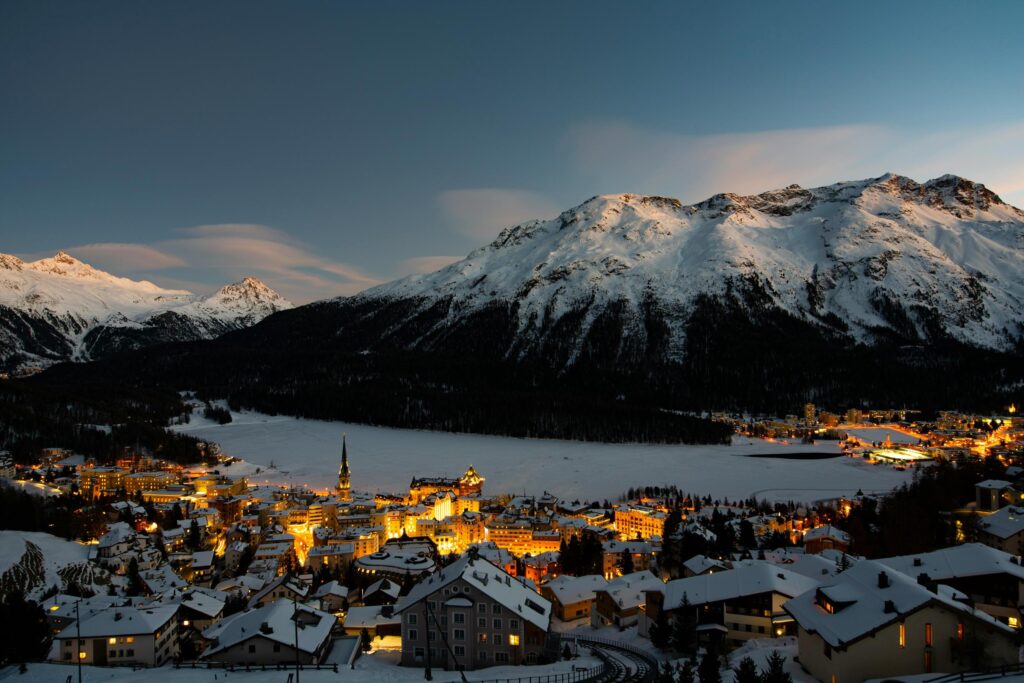

Covering 60% of Switzerland, the Swiss Alps are a mountaineer’s paradise, boasting the highest concentration of 4,000-meter peaks in Europe. Home to the iconic Matterhorn, the region prides itself on the pristine infrastructure, multilingual hospitality, and Swiss efficiency. It is a landscape that oozes luxury, offering high-end resorts and picture-perfect views at every turn.

Our Top Towns: Interlaken, Grindelwald, Zermatt, and Andermatt.


[Photo Credit: Sepp Rutz via Unsplash]

The French Alps: The Ultimate Variety

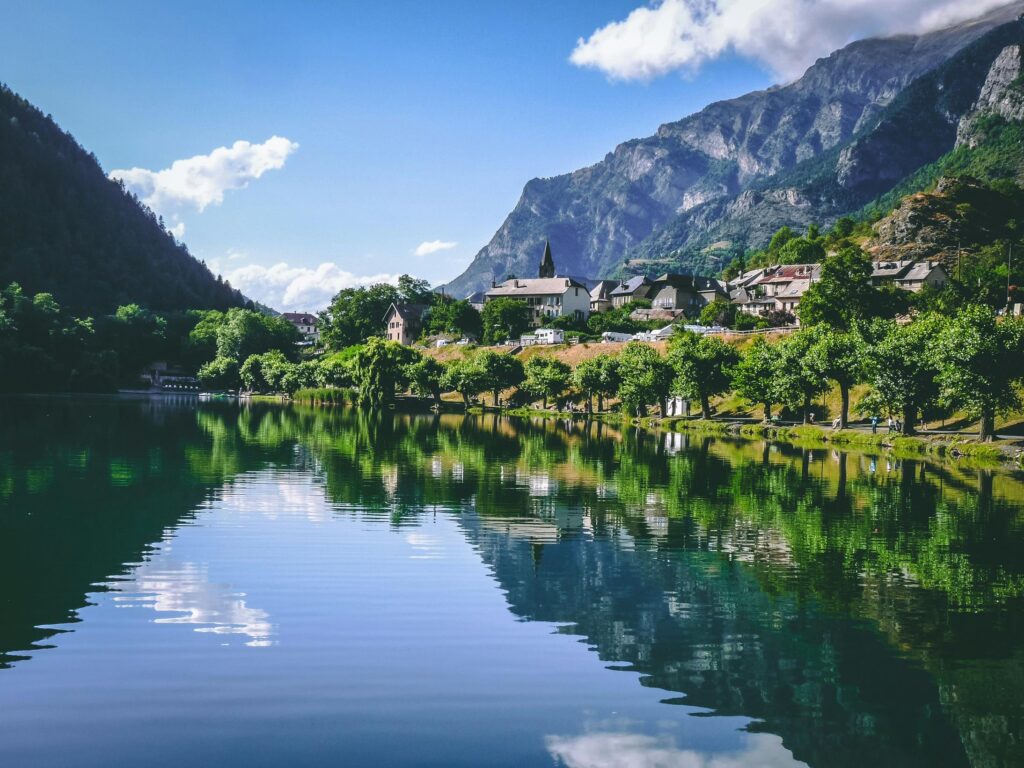
Stretching from Lake Geneva to the Mediterranean, the French Alps are all about diversity. You will find everything from the snow-capped heights of Mont Blanc to rolling meadows and alpine lakes.

Here, the Savoyard culture is the heartbeat, evident in the hearty menus featuring fondue, raclette, and tartiflette. And, the towns buzz with history and energy, offering a perfect pivot between a winter wonderland in the north and sunny Mediterranean getaways in the south.

Our Top Towns: Chamonix, Aix-les-Bains, Grenoble, and Chablis.


[Photo Credit: Clary Garcia via Unsplash]
The Italian Dolomites: Dramatic Beauty and Warmth
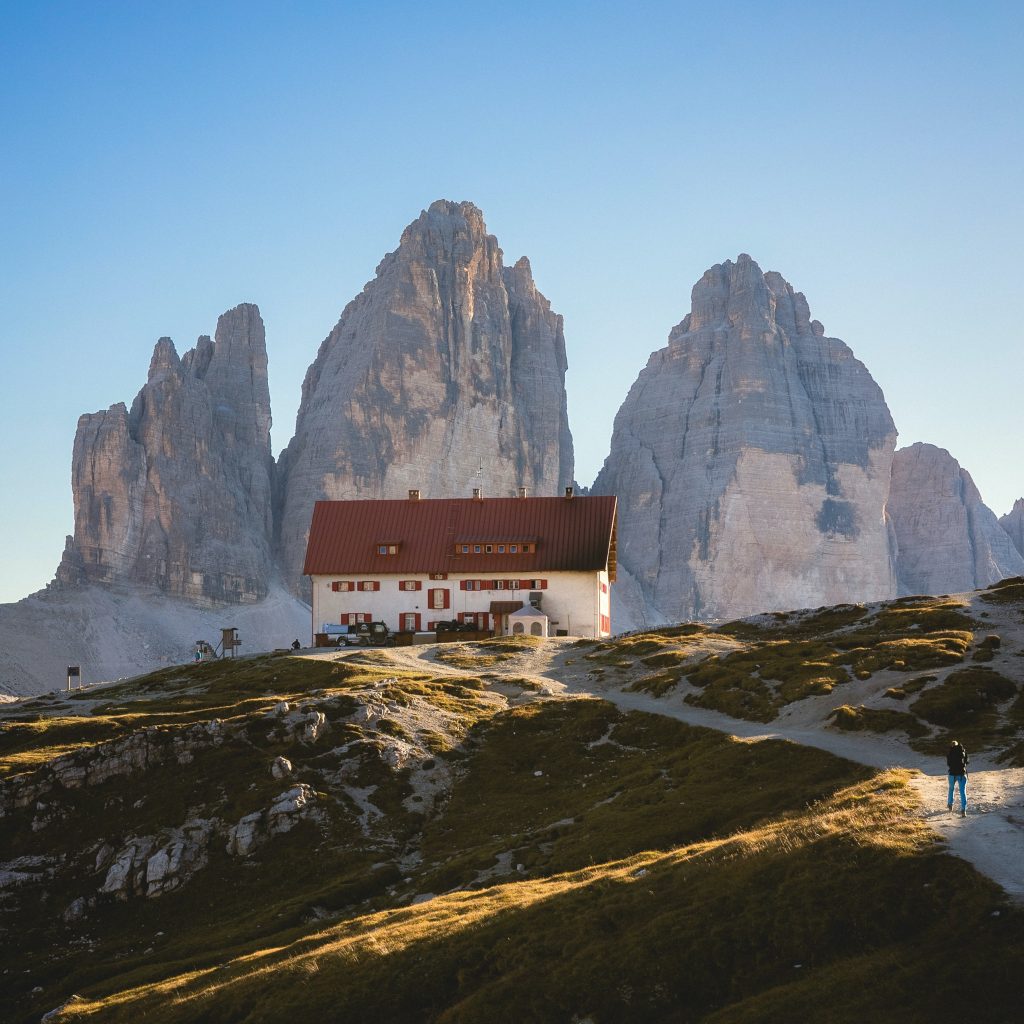

three imposing mountain spires behind a inn on a hill in the Dolomites

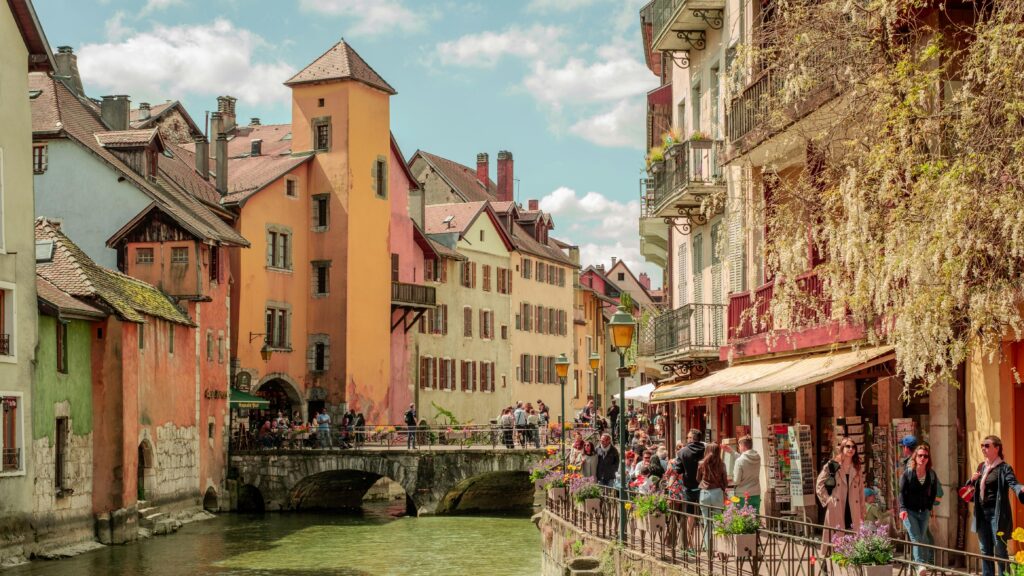
Located in the north-eastern corner of Italy, where Switzerland and Austria meet, the Dolomites offer effortless charm. This region uniquely blends German and Italian cultures, resulting in top-quality food and warm, welcoming hospitality. The landscape features dramatic, steep cliffs and winding roads leading to hidden gems.

Our Top Towns: Ortisei, Dobbiaco, Castelrotto, Bolzano, and Santa Maddalena.


[Photo Credit: Valdemaras D via Unsplash]

What’s the Vibe?
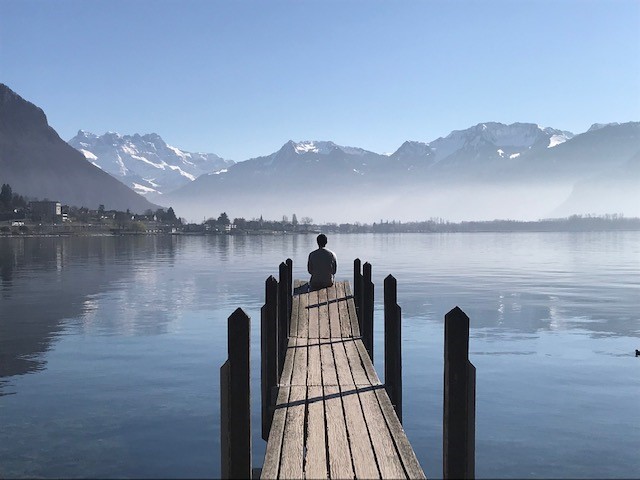
woman at the end of a dock in Switzerland

The Swiss Alps have a timeless sense of luxury and refinement. Here, you feel the respect they have for the incredible nature while managing it with precision. The Swiss Alps exude a calm but sophisticated atmosphere.

The French Alps offer a balance between the luxurious Swiss and laid-back Dolomites. With a lively atmosphere where culture, gastronomy, and sport collide, it feels like a celebration of life in the mountains.

Rustic and slow-paced, the Dolomites feel more like a home than a resort. The blend of cultures creates a unique, laid-back atmosphere where you are welcome to simply enjoy the jaw-dropping scenery.


[Photo Credit: Usha & Mark via Shared Adventures – read about their Switzerland Adventure here! ]

Budget Expectations

The Swiss Alps are the premium option. Expect to pay a significant premium for accommodation, dining, and lift passes. However, the quality of service and infrastructure is world-class, justifying the cost for those seeking the ultimate luxury experience.

While luxury exists, the French Alps are known for excellent value, particularly in the “lesser” known villages and self-catered chalets. You can find high-end experiences, but the region also offers some of the most affordable lift passes and accommodation in Europe.

The Dolomites generally offer better value than the other two Alps. You can enjoy high-end dining and accommodation without the Swiss price tag, thanks to the region’s focus on authentic experiences over pure luxury.

In Winter

a red train traveling through snowy mountains towards the matterhorn in Switzerland

The Swiss Alps in winter offer luxury, functionality, and classic Swiss efficiency. The experience is luxurious: private chalets, Michelin-starred dining, and exclusive spa facilities. Well-run trains wind through the mountains connecting the elegant towns. This is certainly the most comfortable winter holiday available.

[Photo Credit: Kevin Schmid via Unsplash]

For skiers, the pistes are impeccably groomed, and the lifts are reliable. While the Swiss resorts do feature beginner areas separated from the main slopes, the Swiss Alps suit intermediate and expert skiers best. Mid-level adventurers can find long, smooth red trails, and the high-altitude challenging off-piste areas are an adrenaline seeker’s dream. The culture here is more polished than the wild off-piste slopes of the French Alps, giving you stupifying speed that still requires heart-pumping precision and control.

The French Alps are the home of serious skiing. The interconnected “Grand Massif” or “3 Vallées” (the world’s largest ski area) offers thousands of kilometers of perfectly groomed blue and red runs. You can ski for a week without repeating a trail, from powder hounds in Chamonix to families enjoying gentle slopes.
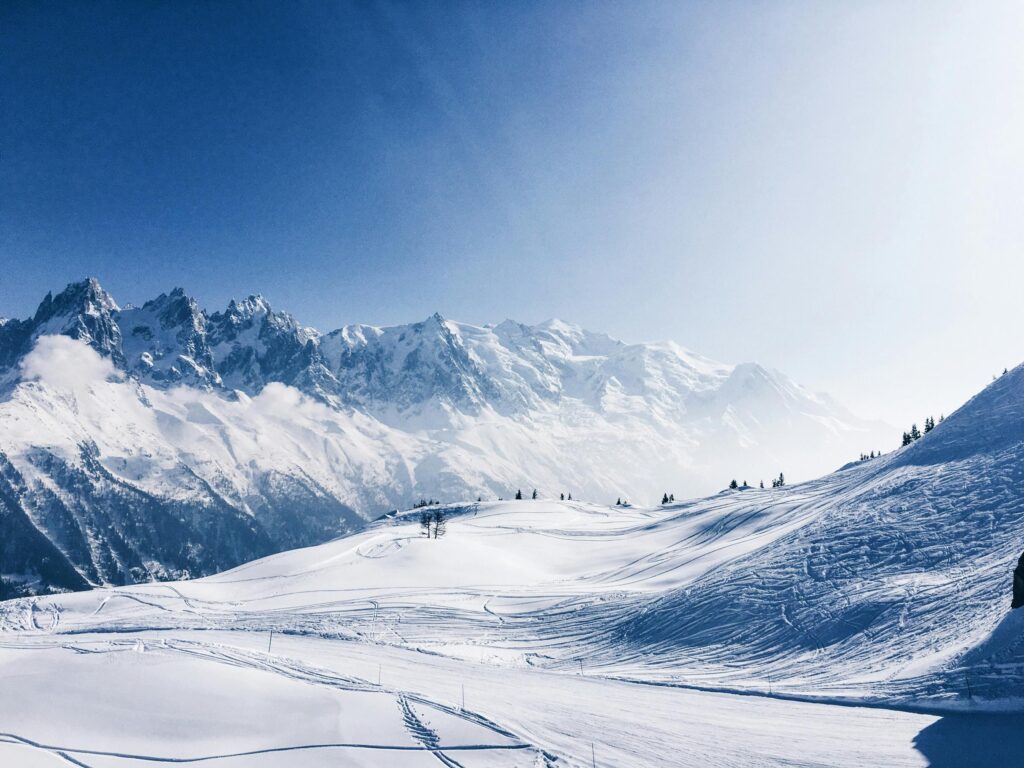
The French system is exceptionally friendly to novices. Towns like La Plagne and Méribel offer vast, gentle green runs that feel endless, allowing learners to build confidence without the intimidation of steep terrain. The “Family” ski areas are designed specifically for first-timers. Those looking for expert adrenaline runs can find it in the Chamonix glaciers, but these slopes tend to be a little more wild.

[Photo Credit: Chris Biron via Unsplash]

The Dolomites offer a more relaxed winter experience compared to their French and Swiss counterparts. The famous Sella Ronda circuit is perfect for all levels, with runs that weave through dramatic limestone peaks. The views alone make the skiing a joy. The infrastructure is there, but definitely less efficient and punctual than in the Swiss and French Alps. Certainly, there is no rush. For beginners, the slopes are gentle and the atmosphere is incredibly welcoming. The advanced runs are wild and rocky – rather than speed the focus here is on scenery and technique.
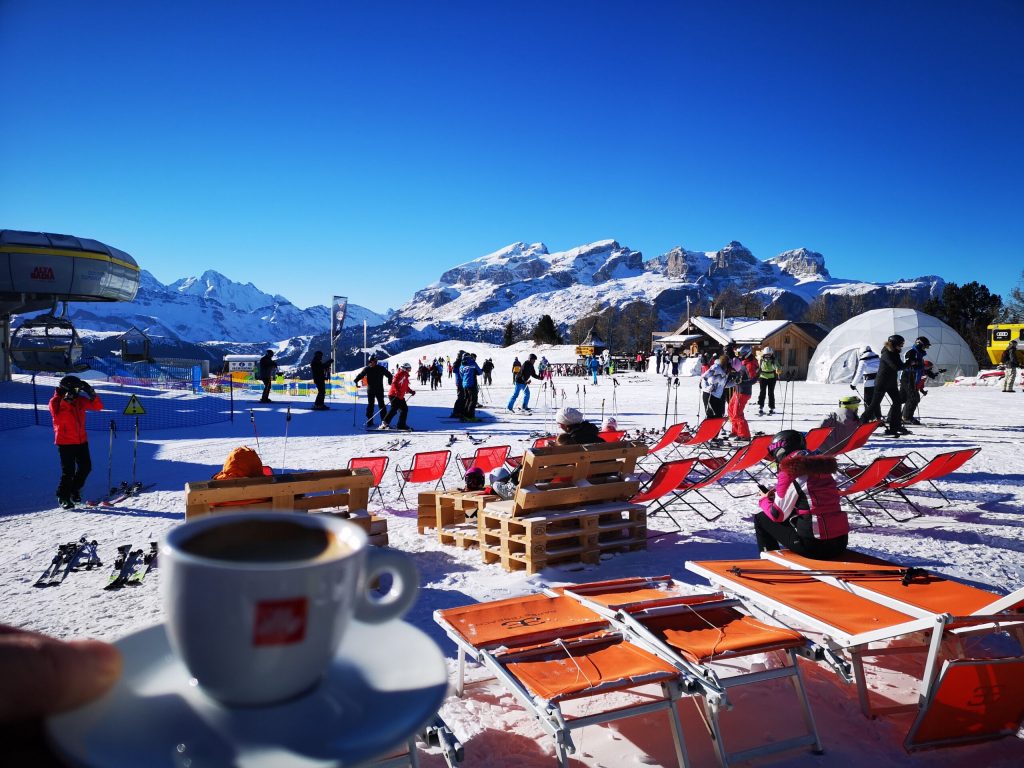
an italian espresso in the foreground and a ski resort in the background Dolomites Italy

Of course, being in Italy, the Dolomites are also perfect for foodies. Gourmet ski huts host the sciare con gusto – taste for skiing. Each year, ten Michelin-starred chefs from across Italy pair with mountain huts to create a signature dish inspired by the local cuisine. This involves a self-guided or tour route of tasting and skiing between each stop.

[Photo Credit: Vlado Sestan via Unsplash]

In Summer

The Swiss Alps are equally captivating in the summer. Keeping with the theme of effortless infrastructure, the Swiss Travel Pass makes exploration easy. Furthermore, you can use it to hop on scenic trains, cable cars, and boats. These Alps are the perfect destination for those who want to experience the mountains with zero logistical stress.

[Photo Credit: Ricardo Gomez Angel via Unsplash]
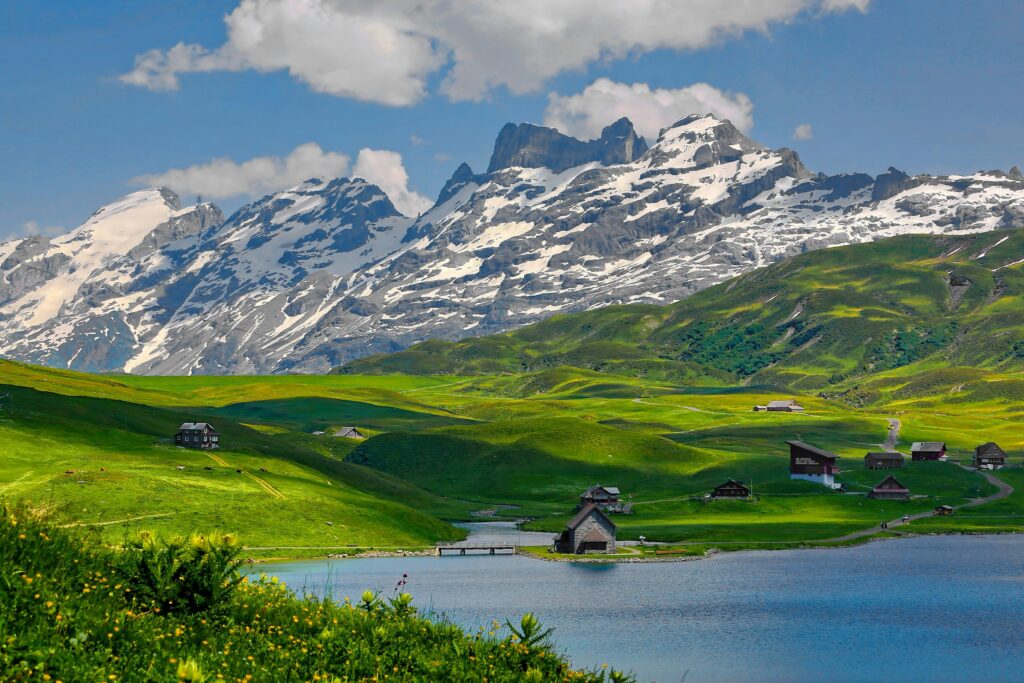
Summer in the French Alps brings warm, sunshiny days and an explosion of verdant green. Additionally, hiking trails are extensive. Like their ski slopes, the trails range from easy alpine lakes to challenging high-altitude treks. The weather is generally warmer than in the Swiss or Italian sectors, making it ideal for those who want to combine mountain air with a taste of the Riviera.

[Photo Credit: David Amar via Unsplash]

Compared to the Alps, the Dolomites have little of the efficient infrastructure, but they are a hiker’s and cyclist’s dream. The winding roads are a paradise for road cyclists, while the trails offer breathtaking views of the jagged peaks. Compared to the others, the culture here is slower, inviting you to linger over long lunches and explore hidden villages. The locals welcome you with open arms, and the scenery astounds.

[Photo Credit: Giorgi Shakarashvili via Unsplash]
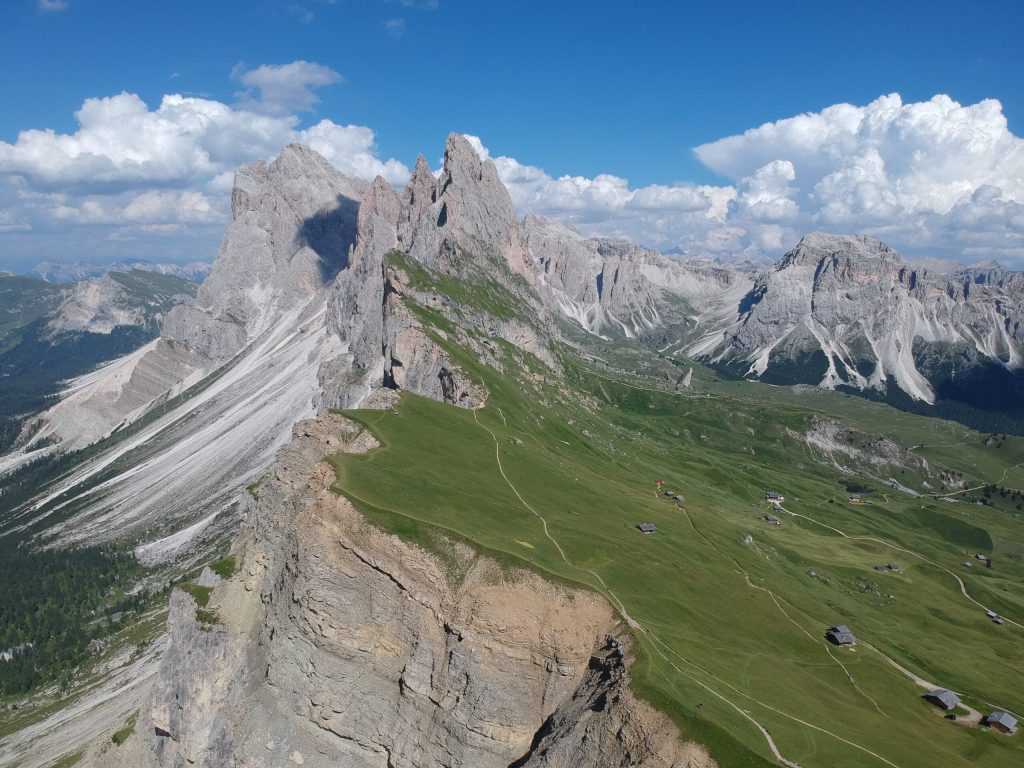
an imposing mountain ridge with a sheer drop on one side and soft grassy hills on the other and imposing mountains in the background Dolomites Italy


No matter which range you choose, the mountains are calling. Let us know which one resonates with your travel style, we can’t wait to begin crafting your perfect itinerary.

Spotlight On: Amsterdam – From Navigating Your Trip to Our Top Tips

Few cities capture the imagination quite like Amsterdam. Built on a latticework of UNESCO-listed canals, this is a city where history and modern energy coexist effortlessly. Masterpieces by Rembrandt and Van Gogh live steps away from avant-garde galleries and vibrant street art. Cozy 17th-century canal houses share streets with concept stores and architectural marvels. Here’s our overview of Amsterdam, from navigating your trip to our top tips:


How To Get Around

Amsterdam is a compact city, and it’s easy to walk around the network of narrow cobbled streets to visit each iconic site. Strolling along the canals from one famous site to the next is part of the charm.

For longer distances, you can rely on public transportation. Trams, buses, and ferries efficiently connect every major neighborhood. A single GVB ticket (€3.40) allows unlimited travel for one hour, while multi-day passes (1–7 days) are ideal for extended stays and can be purchased via the GVB app.

Cycling is quintessentially Dutch — and exhilarating — but it’s not for the faint of heart. Amsterdam’s cyclists are speedy and confident. This is not the city to learn how to cycle. If you choose to rent a bike for the day, make sure you stay in designated lanes, use hand signals when turning, and remain alert to your surroundings. And even if you are not on a bike, keep an eye out at all corners and crossings for cyclists, as they will seemingly come out of nowhere!

[Photo Credit: Liz via Shared Adventures Travel]

The excellent rail system also makes day trips effortless. Within 30–45 minutes, you can be wandering Haarlem’s cobbled streets, exploring Utrecht’s charming canals, or photographing the windmills of Zaanse Schans.

How Long & When to Visit

We recommend three to five days to experience Amsterdam comfortably, allowing time for both iconic highlights and unhurried canal-side moments.

  • Spring (March–May): Tulip season brings color and crisp air. But in early spring, you’ll find larger crowds.
  • Summer: This is the high season. Full of people enjoying the weather and summer vacation, you’ll find Amsterdam packed with crowds.
  • Fall: Although the weather can be even more unpredictable, this is a perfect time to visit to avoid big crowds and still enjoy some sunshine.
  • December–January: The Amsterdam Light Festival illuminates the canals with artistic installations, but also increases the crowds.

Accommodations

Due to regulations aimed at curbing overtourism and preserving the local culture, private short-term rentals are limited. We strongly recommend established hotels, which offer both comfort and responsible tourism practices.

Amsterdam’s historic charm comes with quirks. Many canal houses and hotels have steep, narrow staircases. This is a relic of historic taxation laws based on façade width.

Elevators are not always guaranteed, and when they do exist, they can be much smaller than their American counterparts.

[Photo Credit: Liz via Shared Adventures Travel]

Neighborhoods

Every neighborhood has its own vibe, and exploring them is a perfect way to enjoy the city. We guide our clients to stay in the neighborhood that aligns best with their travel style, but all of them are worth a visit.

  • Centrum & Canal Belt: Classic and quintessential, this neighborhood is within walking distance of pretty much everything. Here you’ll find historic cobblestone streets and classic canals, as well as many iconic sites.   Best for: First-Timers
  • Jordaan:  With an artistic flair, this picture-perfect neighborhood’s Instagrammability comes with a higher price tag. It features cozy cafes and narrow streets, classic architecture, and boutique shops. Best for: Couples
  • De Pijp: A food lover’s paradise with the Albert Cuyp Market.  This is a trendy, buzzing, and full-of-life place. Here you’ll find some of the best restaurants and bars. Just south of Centrum, it’s still within walking distance of many sites with a lower price tag. Best for: Foodies
  • Oud-West: near Vondelpark and De Foodhallen with plenty of green spaces and a peaceful vibe. It’s out of the heavy touristy crush, but still easy to take a tram into the biggest sites.  Best for: Families
  • Oost: A bit of a hidden gem with leafy lanes and a peaceful vibe. Parks, indie shops, and brunch, this is a good place to stay close to the center but not in the thick of everything.  Cool bars and restaurants, but still an area that feels lived in.  Best For: Return Travelers
  • Noord: Industrial-chic with a creative edge, Noord is far from touristy. It has a grungy converted-industrial vibe with street art and an edgy arty scene.  Best For: Budget Travelers
  • Museumplein: The cultural heart of the city, if you plan on spending most of your time at the city’s fabulous museums, this is the best place to be, just steps from them. Best For: Art Lovers

Dutch Customs

The Dutch are famously direct. What may feel blunt is simply clarity. They value eye contact, efficiency, and sincerity. Remove sunglasses when speaking with someone, greet staff before asking questions, and keep your communication straightforward.

Although English is spoken fluently by most Amsterdamers, a simple “Hallo,” “Goedemorgen,” or “Goedemiddag” goes a long way. A cheerful “Dank je wel” (thank you) and “Doei” (bye) as you leave are also considered polite.

[Photo Credit: Danielle via Shared Adventures Travel]

Amsterdam prides itself on openness and tolerance. Approach the people with respect and warmth, and you will find it returned.

Top Tips

A little insider knowledge transforms a good trip into an exceptional one:

  • Book museum tickets in advance. The Anne Frank House and Van Gogh Museum require pre-booked tickets, purchased weeks ahead of time (Anne Frank House tickets typically open six weeks in advance).
  • Pack layers. Rain can arrive at any moment at any time of the year. A lightweight wind-resistant and waterproof jacket, and a compact umbrella, are essential year-round.
  • Expect relaxed service. Dining is meant to be savored. Service is efficient but not overly effusive. Lean into the relaxed pace and don’t try to rush through it.
  • Mind the cyclists. They have the right of way in bike lanes and move quickly – be aware when you cross the streets.
  • Carry ID. It is legally required in the Netherlands.
  • Take a small cross-body bag:  Large bags and backpacks are generally not permitted. Although many museums have free lockers, having a small cross-body bag for your valuables will give you peace of mind while you enjoy the art.
  • Tipping is appreciated but not expected.  Rounding up in a casual establishment, or leaving 5–10% for good service, is always appreciated and considered polite.
  • Respect residential areas. Canal houses are centuries old with thin walls; quiet hours after 10 pm in residential areas are customary.
  • Respect the professionalism of the Red Light District: Sex workers are treated with dignity and respect, and taking photos without permission is highly frowned upon. Engaging in loud behaviors or mockery is also unacceptable.

Top Things to See

For such a small city, Amsterdam packs a lot in.

Canals: The canals add that extra sense of otherness and whimsy to your visit. You can spend hours just walking along them. Or drift along the UNESCO-listed canals on a private boat tour for an intimate perspective of the city’s architectural elegance.  It’s a great way to avoid the crowds and see a lot of the city.

[Photo Credit: Liz via Shared Adventures Travel]

For Something Unique:

  • Fabrique des Lumières: Beautiful and immersive digital art and light experiences
  • Electric Ladyland: A quirky, tiny museum in Jordaan dedicated to fluorescent art, science, and geology. Enjoy all things that glow under ultraviolet light.
  • National Maritime Museum: It’s a nice change from all the art museums in the city. Great exhibitions about navigation and ship models, and you can explore a replica Dutch East Indian ship. It’s especially great for families

Markets:

Bloemenmarkt – a beautiful, colorful display that’s great for photographs. Floating flower market along the southern bank of the Singel.

 Westergasfabriek – a cultural center with small businesses, handicrafts, cafes, events, and festivals.

[Photo Credit: carlotta-segna via Unsplash ]

Incredible Art Museums:

Rijksmuseum: Dutch Golden Age masterpieces, including several by Rembrandt. Don’t miss the incredibly beautiful Cuypers Library as well.  Allow at least three hours.

Van Gogh Museum: The largest collection of Van Gogh’s paintings, sketches, and letters. This is an intimate museum that offers a deep dive into the artist and his life. Plan for two hours minimum.

Stedelijk Museum: Modern and contemporary icons including Mondrian, Picasso, and Warhol.

Moco Museum:  Featuring alternative art with Banksy, Basquiat, and immersive installations.

[Photo Credit: stale-grut via Unsplash ]

WWII History:

Anne Frank House: A profoundly moving visit. You’ll step inside the secret annex where Anne lived and wrote her diary. The museum encourages reflection and discussion.  Tickets should be booked 6 weeks in advance.

Resistance Museum: Contextual and powerful. This museum highlights the role of the Dutch resistance in WWII. The heroic men and women who fought against the Nazi regime. The museum records its efforts with sensitivity and honesty. A good companion to the Anne Frank House.

Seek green serenity in Vondelpark or the historic Hortus Botanicus, one of the world’s oldest botanical gardens.

And at night? The city hums with cozy and authentic “brown bars” (bruine kroeg), stylish cocktail bars, live music venues, and inclusive clubs.

[Photo Credit: rita-candeias via Unsplash ]

Food

Amsterdam’s culinary scene is both traditional and cosmopolitan. Be sure to try their traditional foods like:

  • Warm stroopwafels – delicious caramel-filled waffles
  • Crispy bitterballen – a classic snack of deep-fried balls filled with ragout
  • Fresh herring with onions and pickles
  • Fluffy poffertjes – mini pancakes served warm
  • Golden patat – crisp fries
  • Homemade appeltaart – traditional apple tart

[Photo Credit: haberdoedas via Unsplash ]

Visit Foodhallen or the Albert Cuyp Market for an array of flavors under one roof. Both are perfect places for foodies looking to sample a little bit of everything. Remember that at markets you should wait for your turn and greet vendors politely.

Coffee Shops & Cafes
Remember: Cafés serve coffee; coffee shops serve cannabis. If you choose to partake, remember that consumption is restricted to designated areas and you should inform yourself on the regulations beforehand.

As a rule, restaurants displaying large photo menus often cater to tourists. For a more authentic experience, step into a traditional, local, and old “brown bar” (bruine kroeg).

[Photo Credit: kateryna-melnyk via Unsplash ]


Amsterdam is a city of contrasts. Reflective canals and vibrant nightlife, solemn history and joyful design, centuries-old façades and bold contemporary art.  When you’re ready to experience Amsterdam beyond the surface, let us know!  We are here to design the perfect adventure.

Best City Breaks for 3, 5 & 7 Night Adventures

Thinking about your next adventure, and considering a city break? Looking forward to spending your days in intriguing museums, eating fabulous food, and enjoying the hustle and bustle of a new, vibrant culture? With so many incredible places in the world, you may have trouble deciding which city to visit next. Start with how much time you have! Knowing the length of your trip will help you decide which city is right for your visit. Here’s what we look for when choosing a city for our clients’ 3, 5, and 7-night stays. And our top cities for each of those windows of time.


3 Night Adventures

Whether you’re looking for a quick weekend getaway from your home in the States or you just want to sprinkle a little bit of a city into your European countryside adventure, spending 3 nights in a city is the minimum we recommend for nearly every destination.  However, some cities are more perfect for a three-night stay than others.

What to Look For

a long pool leading to impressive architecture at the Royal Alcazar Palace in Seville

If you’re short on time, you want to look for a city that won’t overwhelm your senses. A destination that has low-key chill vibes and a smallish city center. Look for a destination that has enough to do for your specific interests but not so much that you’ll feel rushed trying to see it all. Choose a city that’s easy to walk around in.  This will enhance your journey and keep you from feeling like you’re spending the whole three days on the subway.

Top Weekend Getaways From the US:

Quebec, Canada
Charleston, SC
Santa Fe, NM

Top Cities to Mix into a European Adventure:

Prague, Czechia
Seville, Spain
Cardiff, Wales

5 Night Adventures

Five nights is a great amount of time to spend in a medium-to-large city. You’ll have days dedicated to seeing the most impressive sites and museums, interspersed with relaxed, unstructured time, finding hidden gems and exploring a little on your own.  You’ll have the time to get a little lost, to feel like you’re experiencing the authenticity of a city. And you can relax in a café or bar without feeling like you’re missing out. With five nights, you’ll get to know the city more deeply and feel like you’ve truly experienced it.

What to Look For

If you have 5 nights in a city, you want to make sure there’s enough to keep your interest without being overwhelming. Look for medium-to-large cities that have several museums, interesting sights, or a unique scene. Look for places that are pleasant to walk around. But don’t shy away from spots that require public transport, or have secondary areas that you may want to visit. Destinations that have big city vibes packed into small city areas are often best for five-night adventures.

Top Cities for a 5 Night Stay:

Edinburgh, Scotland
Athens, Greece
Stockholm, Sweden

Dublin, Ireland
Berlin, Germany
Vancouver, Canada

7-Night Trips

A week-long stay is for the big cities of the world. These are the sorts of places that you could spend months, even years exploring, and still feel that there was more to find. Those who try to spend just a few short days in these cities often feel rushed and stressed. Choosing to stay a week in a city encourages you to slow down, to really take in the city and enjoy it. It also allows time for a daytrip or two outside the city, if you like.

What to Look For

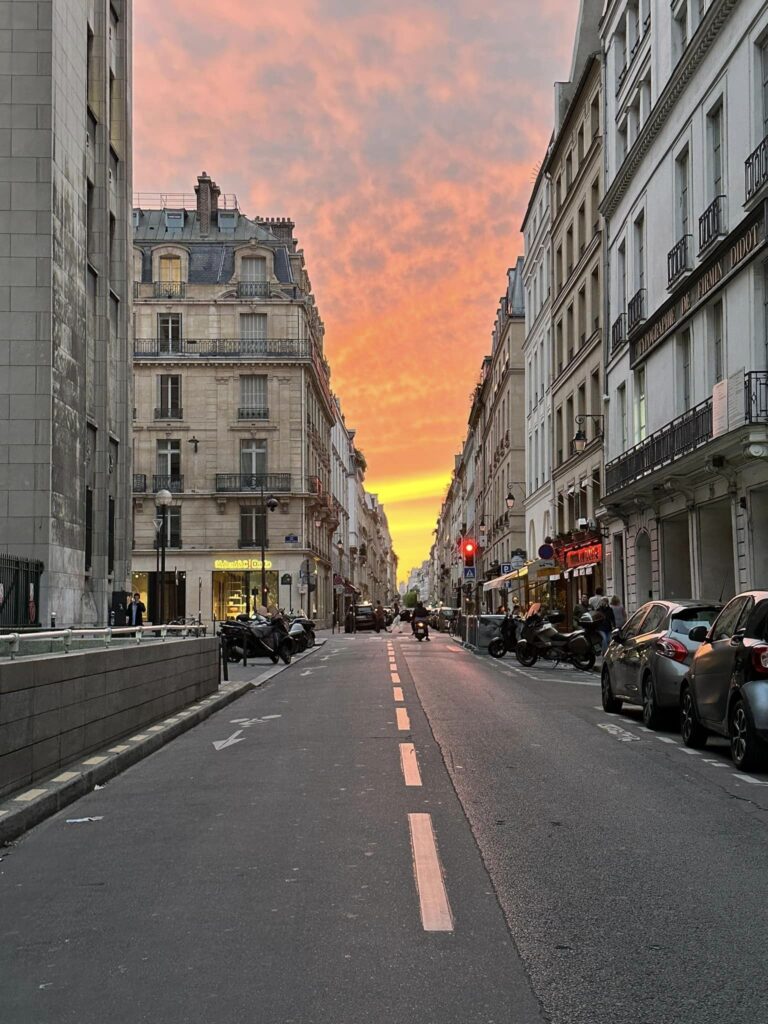
sunset down a street in Paris

If you’re spending a week in a city, you certainly want there to be lots to do and see. But it doesn’t have to be all museums and monuments; look for cities with variety so that you get the opportunity to change up your experiences. Cities with good food, bustling markets, and lots of events are going to be your best options. Look for destinations that are usually high on everyone’s bucket list but are rarely given enough time. If the city has a never-ending list of things you “must see” when you visit, that’s a sign it’s perfect for a seven-night trip.

Top Cities to Spend 7 Nights

Paris, France
Tokyo, Japan
Rome, Italy

London, Uk
Sydney, Australia
Rio de Janiero, Brazil


Are you ready to find the perfect city for your next city break adventure? Let us know – we’d love to help you plan!

5 New European Spas Worth Visiting

If you’re seeking a rejuvenating retreat with a twist, these newly opened European spas offer the perfect escape. Whether you’re looking to relax in a historic building or embrace the latest in longevity science, these five destinations are redefining what it means to unwind. Here’s a look at the latest European Spa Gems:


Corinthia Bucharest – Old World Charm on a City Break

Location: Bucharest, Romania Opened: March 2025

Nestled in a national monument building in Romania’s capital, the Corinthia Bucharest offers an intimate, boutique hotel experience with just 30 suites. The spa, housed in this Belle Epoque masterpiece, combines classic luxury with modern relaxation. Guests can enjoy a full thermal experience, including a sauna, steam baths, and an ice fountain, or indulge in a private treatment in one of the two exclusive rooms.

The spa also features a multi-sensory experience shower, enhancing your time in the relaxation lounge. With sweeping city views, a salon for hair and scalp treatments, and two on-site restaurants, the Corinthia combines old-world elegance with cutting-edge wellness. This is the spa to try if you want to add wellness into your city exploration. Experience a new culture, new site and add in a touch of relaxation.

[Photo Credit: Corinthia Grand Hotel du Boulevard Bucharest]

Nao at Minos Palace – Longevity and Personalization with a Tech Twist

Location: Crete, Greece Opened: May 2025

Located on a private peninsula with panoramic views of the Aegean Sea, Nao at Minos is not just a spa—it’s a sanctuary for longevity. This adults-only retreat blends ancient healing practices with advanced technology to deliver a holistic, evidence-based approach to wellness.

[Photo Credit: Evangelos Mpikakis via Unsplash]

Offering personalized retreats ranging from one day to two weeks, guests can indulge in a variety of treatments. Here you’ll find cryo chambers and vibroacoustic lounger rooms. Infrared saunas and vitality pools. The resort’s brain gym and water sports activities are designed to invigorate both mind and body, while its full-service wellness team ensures a tailored experience based on your unique health needs. This new spa offers a full retreat from the world where you can focus on making lasting lifestyle changes.

ZEM Wellness Clinic Altea – Mediterranean Longevity Meets Cutting-Edge Wellness

Location: Alicante, Spain Opened: January 2025

Located on Spain’s stunning Costa Blanca, ZEM is the largest wellness center in the country, offering 42 treatment rooms equipped with the latest health technology. This immersive wellness destination combines medical science, nutrition, and holistic therapies to craft personalized health programs. ZEM’s longevity focus is backed by research, providing treatments like cryotherapy and ancient techniques such as Ayurvedic massage. The spa also boasts a snow room—yes, with real snow.

Surrounded by mountains on one side and the Mediterranean on the other, guests can enjoy outdoor activities like hiking and swimming between spa sessions. Whether you’re staying for a weekend or longer, ZEM provides a comprehensive, customized experience designed to rejuvenate both the body and the mind.

[Photo Credit: Svyatoslav Teslyak via Unsplash]

Skýra Retreat – A Traditional Finnish Spa Retreat in Lapland

Location: Rovaniemi, Finland Opened: December 2025

For a truly serene wellness experience, head to Finland’s luxurious new spa on the shores of Lake Norvajärvi. Built around a restored 1950s village school, Skýra Retreat brings you back to nature, offering the ultimate in relaxation and tranquility. The open-air Nordic Spa introduces guests to the Finnish tradition of “löyly” — the thermal cycle of heat, cold, and rest that resets the body’s stress response.

With just 40 guests, this exclusive retreat offers a sense of peace and connection to nature, surrounded by the breathtaking Arctic landscape. In summer, the beauty of the nearby Norvajärvi lake glistens. While in winter, the forest exudes a snowglobe magic. All year round, you can enjoy forest walks, saunas, cold plunges, meditation, and yoga. If you’re seeking ultimate quiet and deep rejuvenation, this spa promises the luxury of space and stillness.

[Photo Credit: 66 North via Unsplash]

OKU Andalusia – A Beachfront Resort with Wellness Additions

Location: Alcaidesa, Spain Opened: October 2025

OKU Andalusia brings a refreshing, barefoot luxury vibe to Spain’s Costa del Sol.

Set on a pristine beachfront, this expansive spa spans 2,000 square meters and features everything from an indoor pool and hammam to a yoga space and wellness garden. The design emphasizes relaxation, with stunning swimming pools and Balinese-inspired areas offering the perfect place to unwind.

[Photo Credit: Jorge Fernandez Salas via Unsplash]

With both adult-only and family-friendly zones, OKU is one of the few resorts that allows everyone to enjoy the spa experience. In addition to the wellness offerings, guests can take advantage of nearby golf courses, tennis courts, and sports camps. The focus here is on full-body wellness, with bespoke treatments tailored to your needs, from stress relief to fitness rejuvenation.


Whether you’re looking for personalized longevity treatments or a more traditional resort experience, these new spas offer something truly special. Ready to take your wellness journey to the next level? Let us help you plan your next escape to one of these extraordinary new European spas.

You provided excellent guidance for us. I appreciated that you really had us think about what was most important to us when we were selecting the right cruise – and not to totally focus on what other people had to say. THANK YOU for helping to make this a memorable trip for our family! It really was a trip of a lifetime!

– Clare and Mark (family cruise to Alaska)

The level of service we experienced was out of this world (and we did NOT make it easy on Ann). We weren’t quite sure where we wanted to go, when we would be able to go, or what “vibe” we were going for. After asking us some key questions (what we liked, didn’t like, why, etc.) Ann helped us narrow down our trip details and planned the honeymoon of our dreams. She helped book some of our excursions, answered some emergency questions while abroad and was always available/willing to help. I think it’s safe to say we won’t be using anyone else for future travel planning – Ann is a rockstar!

– Carli (Italy and Spain)