
How to Pack Everything in A Carry-On

There’s nothing worse than missing a connection and realizing that your luggage is who-knows-where while you’re in a hotel halfway to your destination! Or arriving safe and sound in your intended destination while your bag has gone on holiday somewhere else! All that worry and focus on retrieving your carefully packed luggage takes up precious vacation time. The clear solution is to keep your luggage with you. Plus, packing it all in a carry-on prevents you from overpacking and having to cart and carry heavy luggage around on your trip!

But how on earth do you pack everything you need into one small carry-on? This question baffles so many travelers and often discourages them from even trying. Don’t worry! It can be done, even for very long trips. And we’re here to walk you through every step:

What to Bring

What you need to bring will be different for every trip, but there are some top tips and general rules to follow. It doesn’t matter if you’re heading out on a 4-day beach excursion or a 14-day European Adventure, always keep these tips in mind when packing:

Clothes

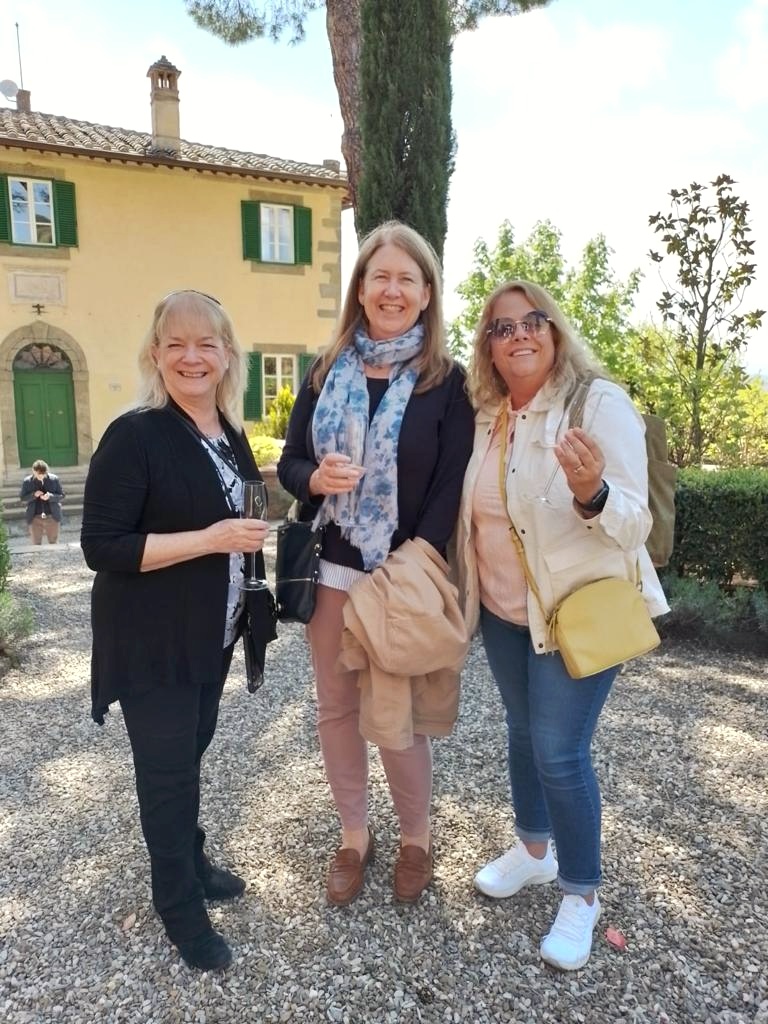
three women ( Ann and Kristy) toast white wine in front of Villa Laura in Tuscany

Pick a color palette. You don’t have to wear only neutrals but sticking to a color palette will help you maximize the mix-and-match ability of your wardrobe. Think of it as a mini-capsule wardrobe.

Choose wrinkle-resistant clothing. Even in cold climates stick to breathable fabrics, that don’t wrinkle easily.

Layers layers layers. Rather than trying to pack a bunch of bulky sweaters, try to stick to layers. They give you versatility for sudden weather changes.

[Photo Credit: Ann via Shared Adventures. Packing layers and light accessories like scarves prepares you for all kinds of adventures! Read about Ann’s Tuscany adventure here!]

2 Pairs of shoes. You should have one pair of walking shoes ( which you will wear on the plane) and one pair of nicer dress shoes OR sandals if it’s a beachy holiday. Make sure your dress shoes are still comfortable to walk in and your walking shoes are nice enough to eat out in.

Do laundry. Depending on the length of your trip, pack for only 5 days and plan on doing laundry about halfway through.

Toiletries

Everything should be mini! Remember, there is no reason to bring a full bottle of anything. Aside from the airport security 3oz rule, you aren’t going to use a full bottle on your trip. Put all toiletries in mini bottles, use samples, and take half a bar. Or plan to pick up some new toiletries at a local store when you arrive.

Just the basics. Try to shrink down your cosmetics and skincare items to the basics.

Packing cubes/ Compression bags

We love using these for organization and for maximizing space. We’ve found a combination is best. Use compression bags (no vacuum required) for your bulkier items and anything that is truly wrinkle-resistant. Use packing cubes to organize the rest.

Pro-tip: If you’re traveling to several destinations with different climates– pack your cubes according to the destination rather than category. That way in each new destination you just need to unpack one cube!

Visualize Your Carry-On

5-7 Days Before Your Trip

This may seem early, but having more time to consider and think about your packing choices will help ensure you’re only packing what you really want to bring. Often your first ideas of what you should pack are not your best ideas.

1) Look up the weather. This is the biggest factor in your packing decisions.

2) Make a list. Use an app like PackPoint or old school pen and paper. To start, write down the essentials. Medication, toothbrush, underwear, etc. Then, fill in everything else you want to bring. Focus most on the activities you’ll be doing on your trip.

3) Check the airline’s bag requirements. Each airline has slightly different dimensions and weight requirements. So, double-check that you know what those are and that your bag fits within them.

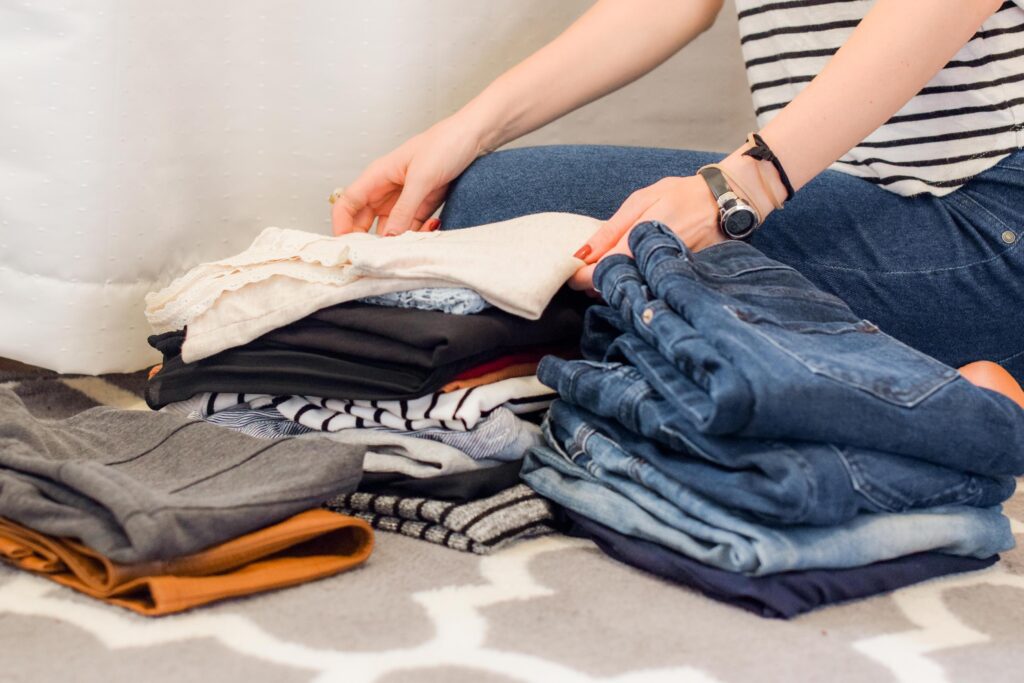
three piles of folded clothing and a woman's hands as if packing them

4) Lay it out, try it on! Lay everything you want to bring out on your bed. Then start trying it all on! You want to plan out your outfits as much as possible. See how many can be mixed and matched, make sure you feel comfortable in your clothes, and that they all go together. Generally, we try to stick to the rule of 2-3 tops for every bottom. Pick clothes you can wear more than once.

[Photo Credit: Sarah Brown via Unsplash]

5) Pare it down. Get rid of anything that can only be worn once or only with one specific item and anything you’re not 100% comfortable in. Get rid of anything that cannot be worn for at least 2-3 of your planned activities. There’s no need to pack for “just in case we go to a ball” or “ just in case I decide to get up early and go for a 10-mile hike”. You’ll probably know if you’re doing something like that ahead of time.

6) Ruminate. Set everything aside to think about it.

Packing

2-3 Days before your trip

It’s time to start packing in earnest! You’ve had time to mull over your outfit choices and make sure you’re truly happy with them. Now let’s get them to fit into your carry-on!

1) Look up the weather just to make sure there aren’t any major changes.

2) Get your checklist and lay everything back out on the bed.

3) Go over everything you want to bring one more time and make sure there are no “ just in case” items.

4) Set aside essentials. Anything you’ll need on the plane: your flight essentials kit, medication, kindle, phone charger, important documents, wallet, liquids bag, etc. Also set aside your travel outfit, bulkiest jacket, and bulkiest shoes.

First Layer

5) Start with your bulkier items like jeans, jackets, and sweaters. Roll them as tightly as possible (consider using a compression bag) and layer them in the bottom of your suitcase.

6) Next take your most wrinkle-resistant items and roll them up in a compression bag for the bottom layer. ( If you’re not using a compression bag, roll them tightly and place them in the bottom layer.)

7) Add your shoes. Just one pair of nice shoes OR sandals. Arrange them so that the soles are facing the side of the bag and the soft side is inside. If possible, stuff the toe with socks.

8) Fill in any gaps or spaces on the bottom layer with socks, cables, chargers, belts, hats, scarves, medications, spare batteries, or any other small items.

9) Put all your non-liquid toiletries and makeup in their pouches and layer on top of your bottom layer to maximize cushioning and prevent breakage.

Pro tip: Place a cotton round in between your pressed powders and the lid to help prevent breakage.

Second Layer

10) Fold and/or roll ( depending on wrinkle resistance) the remaining tops, dresses, and pants into packing cubes. Place bras, underwear, and remaining socks in a cube of their own. Layer these cubes on top of toiletries.

11) Fill in the gaps with any remaining extras ( belts, hats, scarves, chargers, socks, etc)

12) Throw in an extra compression bag for your laundry.

13) Look at how it is all fitting together. Re-arrange as needed. You may find that your sweaters or jeans take up less space when folded. Or that you have an extra gap in the bottom layer that can be filled. This is a game of Tetris and you may need to shuffle things around to optimize it.

14) Close your suitcase!

Final Checks

15) Pack your personal bag. This should be bigger than your usual purse – think a large tote or small backpack. Include your flight essentials kit, important documents and wallet, liquids bag, phone charger, and fragile electronics (camera, computer, etc).

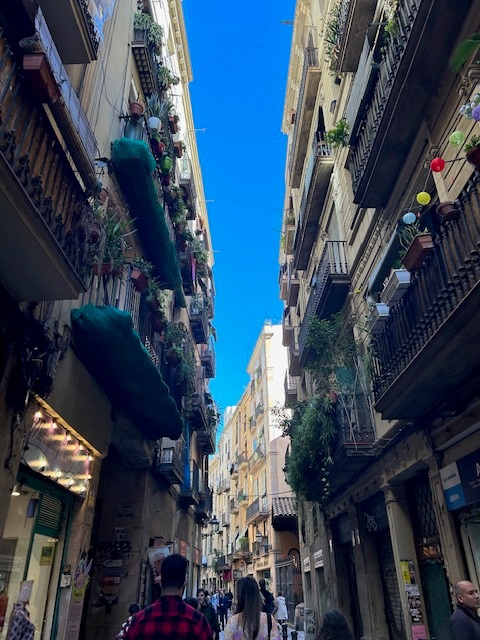
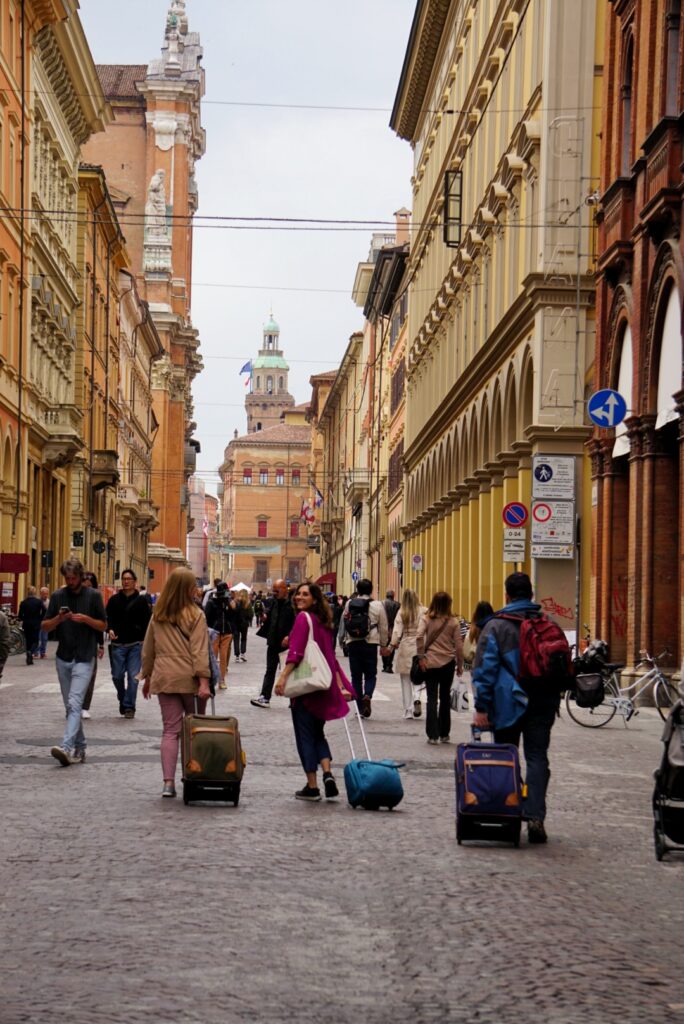
people walking down the cobblestone streets of Bologna

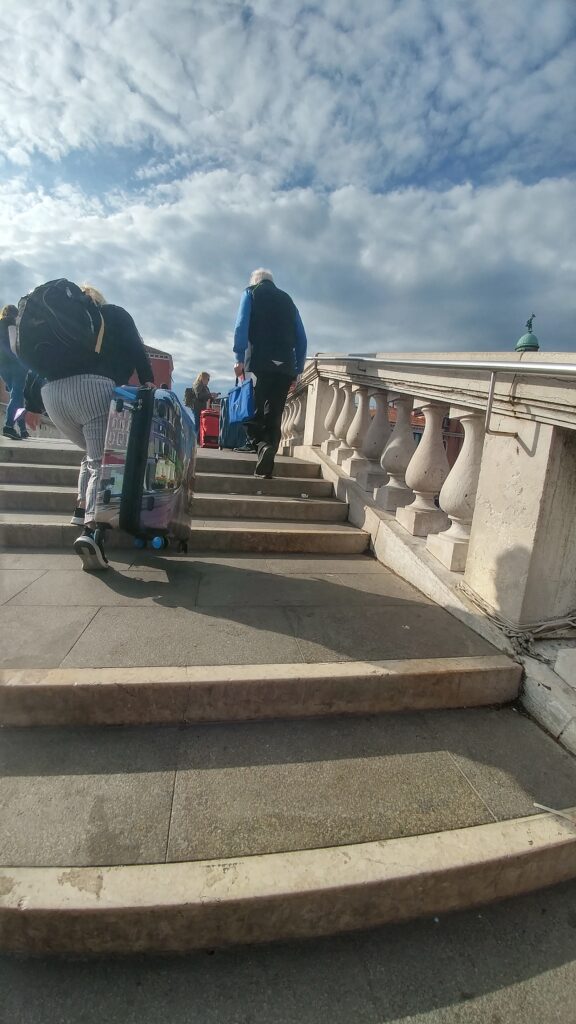
16) Take it all for a test drive! Even with door-to-door services, you’ll have to do some walking with all your luggage. And probably on an uneven surface. So, roll it around, take it upstairs, lift it, take it down the street. Check out how the wheels are rolling on uneven surfaces. (if it’s a soft bag you may have to check weight distribution).

If you find yourself getting overheated, frustrated, and exhausted then you have packed too much! Go back to the beginning and consider what you can do without.

[Photo Credit: Ann via Shared Adventures]


With the right attitude, a minimalist approach, and careful planning you’ll find it’s quite easy to pack it all in a carry-on! Try to leave some space for souvenirs. And remember, if you can’t picture an exact moment on your trip when you’ll need or wear something — you can leave it at home!

If you’re feeling confident in your new packing skills and are ready to plan an adventure to go with them, let us know!

Amsterdam, Belgium & Paris

We’ve worked with Beth and Bob on trips for a few years now and it’s always exciting to plan another adventure! Belgium has long been on their bucket list and we finally managed to pull it off. Despite some rainy weather and a head cold, they had an amazing time — which just goes to show, it’s all in the attitude! Here is their review of the long-awaited Belgium, Amsterdam & Paris adventure:


Thank you for planning an amazing, happy-memory-filled vacation for Bob and me! Not one glitch to report. 🙂

Hotels

The Amsterdam hotel (Park Centraal Amsterdam) upgraded us for free to their tower suite. It had panoramic views of the city (park, canal, street) and was really lovely. The king bed was circular and very comfortable. There was a large soaking tub and large, all-glass shower. And, it was very quiet (a plus in a large city).

The hotel in Paris (Hotel du Louvre by Hyatt) was superb. We opened the window and there was the Louvre! Couldn’t beat the location and the service from the staff was outstanding. Super quiet room and spacious. Immaculate in every way.

The Portinari in Bruges was adorable, themed to The Son of Man with appropriate colors and art on the shower wall plus a bowler hat lamp and large ceramic green apple. It still makes me smile thinking about it. The glass wall and open shower were really unique. This was also a quiet, restful place with a wonderful staff.

In Brussels, the hotel (NH Brussels Grand Place Arenberg) was quiet and the staff was the best of all the ones we stayed at. The included breakfast was plentiful, a wide variety of fresh food, and lovely. The location was just right for us….a short walk from the train station and close to lots of restaurants and shopping. The bathroom needed a makeover and maintenance, but it may have been just our room.

Getting Around

Getting around by the train system was super easy. We had help purchasing the tickets when we needed help. In Antwerp, we got off the train too early, thinking it was our stop and not realizing there were 2 Antwerp stations.

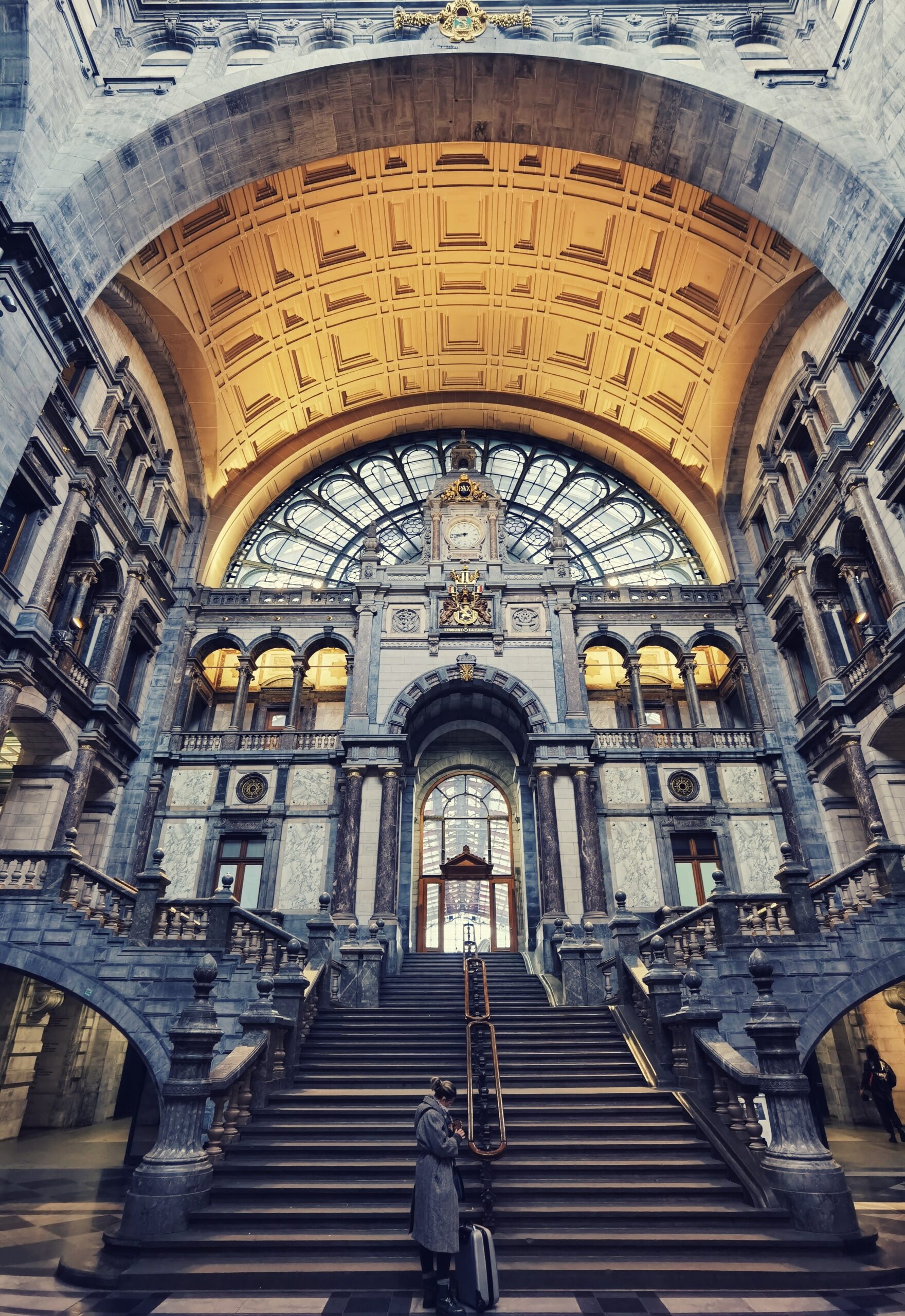
It was a happy mistake: 1) the train station was breathtakingly gorgeous; 2) we were able to grab some snacks to take with us; and 3) the info desk pointed us to the platform where we boarded 20 minutes later for a direct train to Bruges. Our first ticket had us changing trains twice so it was reduced to 1. No problems to report with drivers or taxis.

[Photo Credit: Call me Fred via Unsplash- Antwerp Centraal Station]

The flights were uneventful. At Logan, they implemented a change at security where we walked alone by a dog and then didn’t have to do any of the usual security/scanner stuff. No removing items, no liquids check, nothing. The same was NOT true in Paris, where we were back to the old ways and I swear they checked our passports at least 6 times. Even when I purchased a bottle of water in the airport store near the gate, they asked for my passport. At the gate, an agent walked around and asked to see everyone’s passports as we were sitting, waiting for them to begin boarding. We read up on it and it appears to be random, but it’s not helpful when one is tired and sick.

Yes, sick. On day 2 we both developed head colds (not COVID). In Bruges, we stopped at a pharmacy. Then we did everything we planned to do on the trip except eat well. Because we couldn’t taste anything, it seemed pointless and we ate just to eat. To make the best of it, we ate our light meals in the parks so we could people-watch too. We stopped at many chocolatiers in Belgium and I took home a rolling backpack full of chocolate. The congestion lingers so I’ve been staring at the dining room table, waiting for the day I can start to dig in.

What to Do in Amsterdam & Belgium

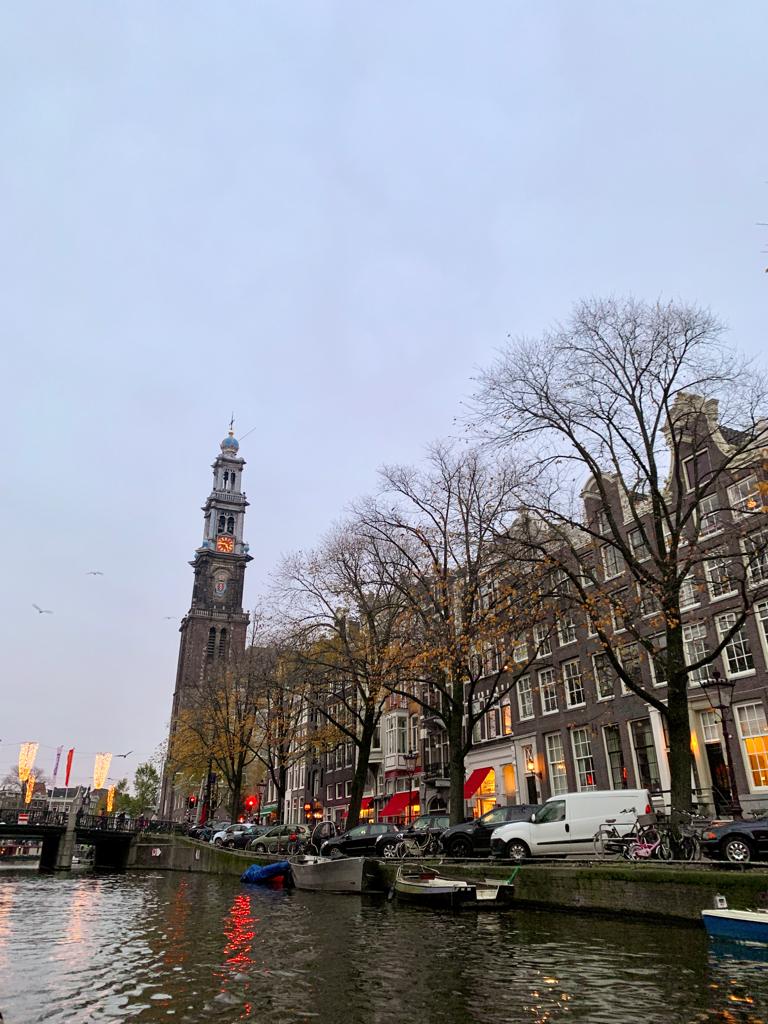
We did canal rides in Amsterdam, Bruges, and Ghent. With the fall foliage, all were especially pretty. It rained every day during the trip but not constantly or heavily so we timed the boat rides during the breaks.

[Photo Credit: Danielle via Shared Adventures – a view from the canal in Amsterdam]

We saw a college graduation in the Grand Plaza of Brussels, on the steps of City Hall. It was so unique and then the downtown was swarming with happy people.

Our brewery tour in Bruges that would give OSHA nightmares. We loved it; it was fun but a little dangerous.

We climbed the bell tower in Bruges and the bell tower in Ghent – beautiful views below.

Museums didn’t disappoint The Rijksmuseum, Anne Frank House, Groeninge (really just to escape the rain) and the Mannekin Pis Museum (also impromptu, to avoid rain), and Choco-Story.

The cities’ architecture, shops, and streets were all so picturesque and we were content just walking around most of the day.

We downloaded walking tours for Bruges, Brussels, Amsterdam, and Ghent. Bob’s apple watch clocked us at 34 miles before we got to Paris. My running shoes were too broken in so I stopped at a Sketchers in Amsterdam and bought a new pair. That helped for sure.

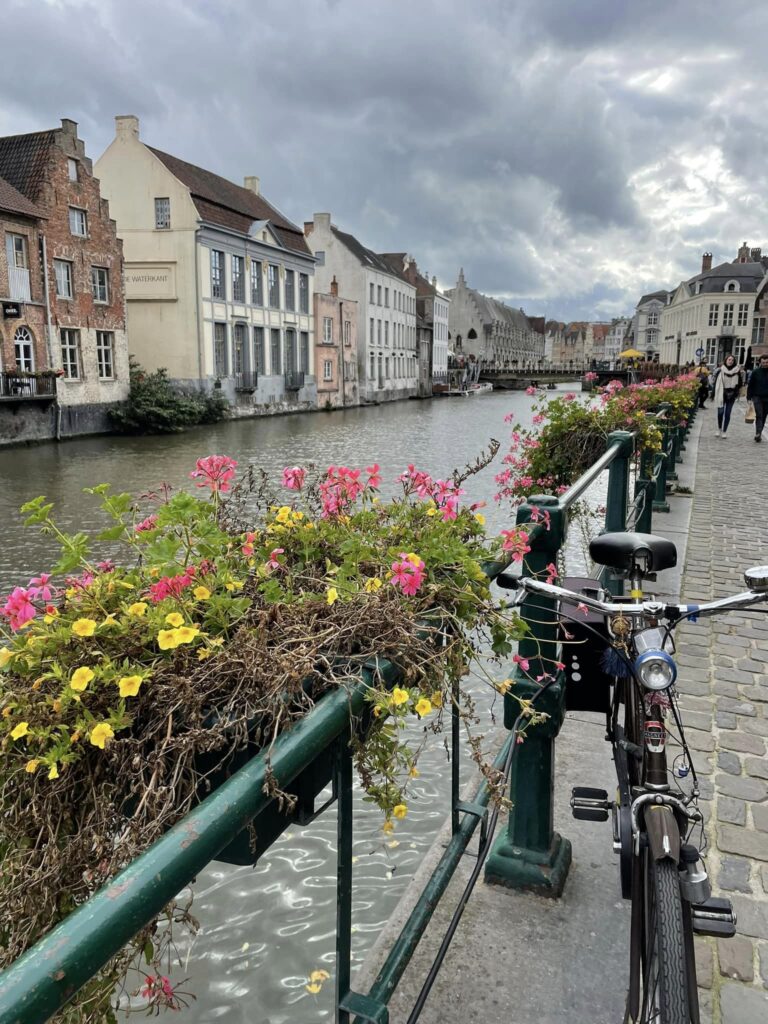
[Photo: Walking Around Ghent]

Paris

We felt like we had run a marathon by the time we got to Paris so it was funny (!) that we had difficulty getting to our hotel because of a 10K road race. The taxi driver ended up telling us to get out and walk (because the roads were all detoured). We had to cross the race route twice, with our luggage click clacking on the cobblestones, and working our way up to the hotel. This was the only hotel where our room wasn’t immediately available but they gave us a “salon” to freshen up. It had a shower, sink, toilet, toiletries, towels and wash cloths, robes…very very nice. They stowed our luggage and we walked away from the crowds to the Tuileries, where we settled in for coffees and croissants. And ice cream. Because ice cream helps when you are sick! And it did!

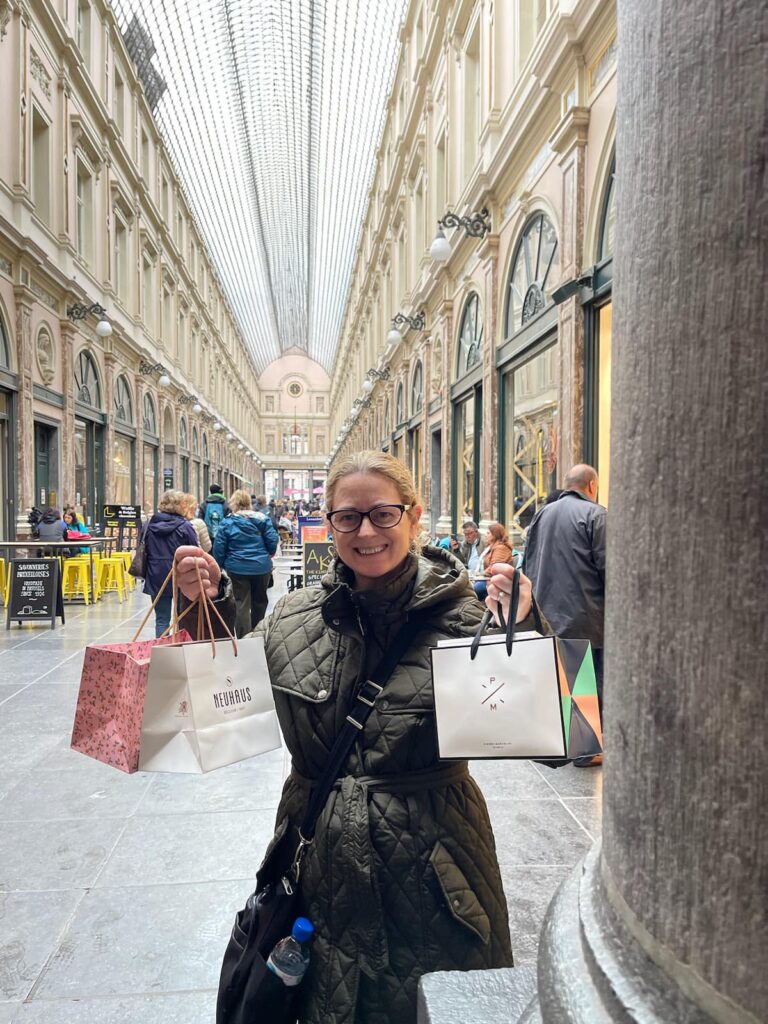
In Belgium Beth showing off her chocolate- shopping bags in the Brussels Shopping Mall

Thanks so much for helping us have such an enjoyable vacation. Yay! We finally made it to Belgium!!

Beth

Choosing the Right Paris Neighborhood

Paris Pin
Pin it for Later!

The city of light, the city of love, an epicenter for culture, shopping, and food – Paris inspires high expectations. And with good reason. It’s an incredible city to visit, and one you’ll keep coming back to. But which Paris neighborhood do you choose for your home base? Being so high on everyone’s list means there’s no shortage of hotels, and looking at your options can be instantly overwhelming. You will, of course, be able to explore all of this beautiful city. But where you stay will set the tone for your adventure and dictate what’s closest and easiest for you. We’re always excited to find the perfect hotel for your travel style, but here’s our little guide on where to begin: 

Arrondissements

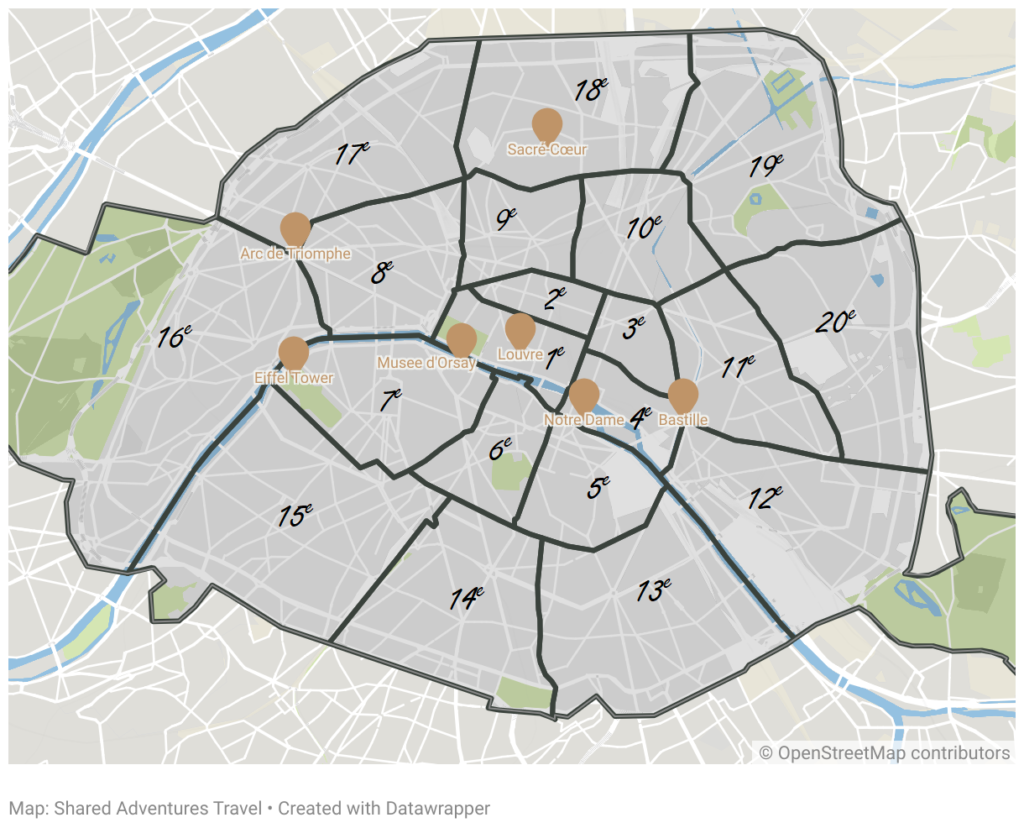
Orienting yourself in Paris is easy, once you get the hang of it. Starting from the Louvre and spiraling out like a snail shell, the city is divided into 20 bureaucratic districts, or arrondissements. Often, the arrondissement is synonymous with the cultural neighborhood they contain. But on occasion, some neighborhoods spread across two or more arrondissements. Much like New York City’s 5 boroughs, each arrondissement has its own personality, sites, and quirks.

The Seine serves as a center point dividing the city in half. So, the lower numbers are closer to the Seine and the Louvre, while the higher numbers are further away from Paris central and tend to be more residential.

Choosing the right arrondissement or neighborhood to match your travel style will enhance your time in Paris and set you up to enjoy every second of your trip.

Pro-tip: Wondering what arrondissement a place is in? Look at the postcode. They all start with 750 and end with the arrondissement. For example, the Louvre is 75001 in the 1st arrondissement. Shakespeare & Co is 75005 in the 5th arrondissement.

For First-Timers or A Short Stay

If it’s your first time in Paris, or if you only have a day or two, you’ll probably want to stay in the heart of Paris. Fill your days seeing the major cultural sites like the Louvre, Notre Dame, and Tuileries. These areas will have many other tourists all excited to see everything too. But having these major sites close by and easy to access will allow you to spend more time soaking in the culture and less time on the metro.

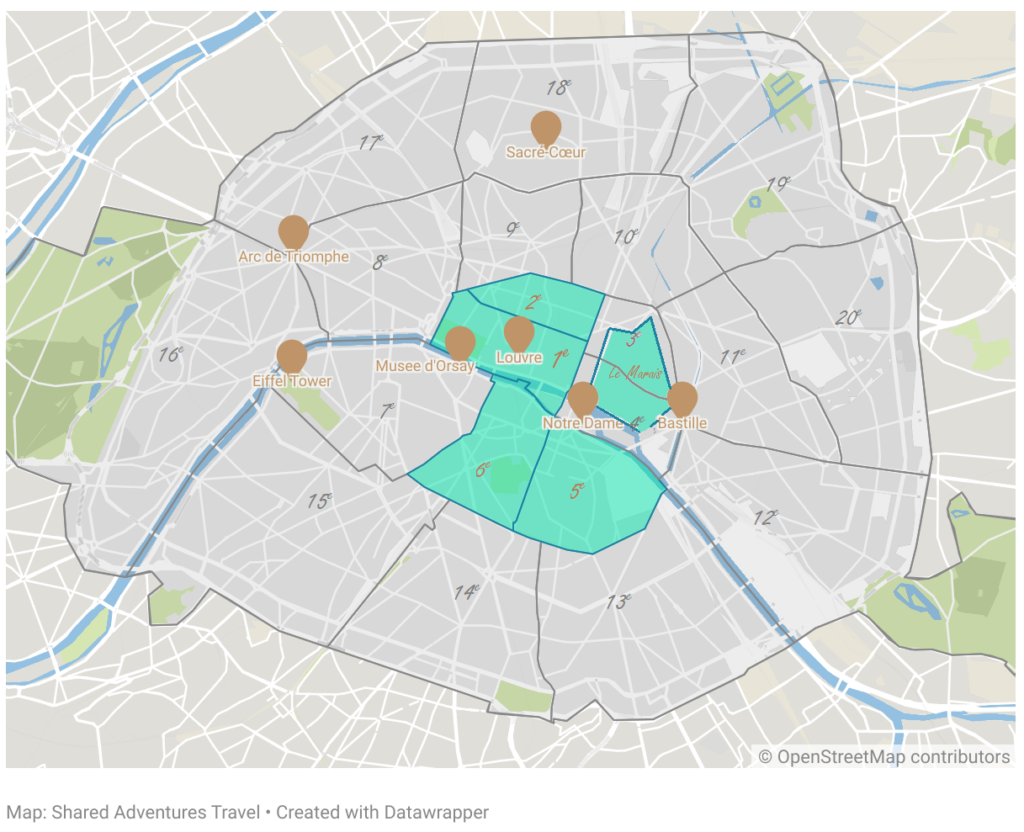
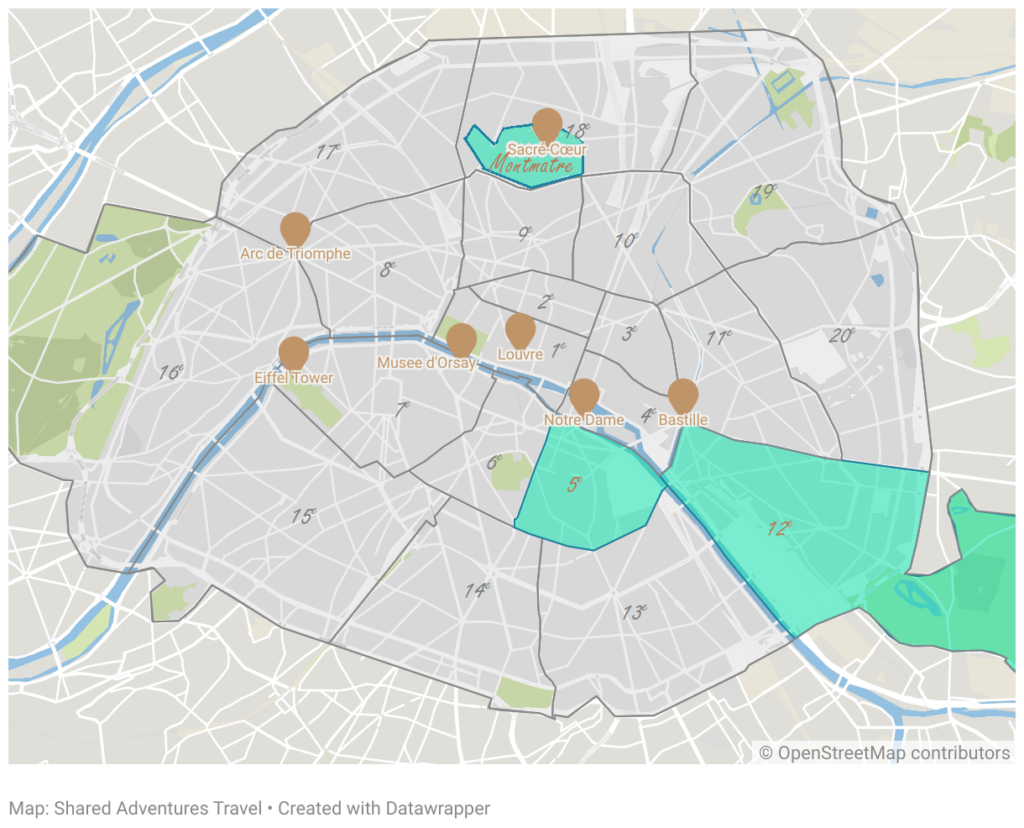
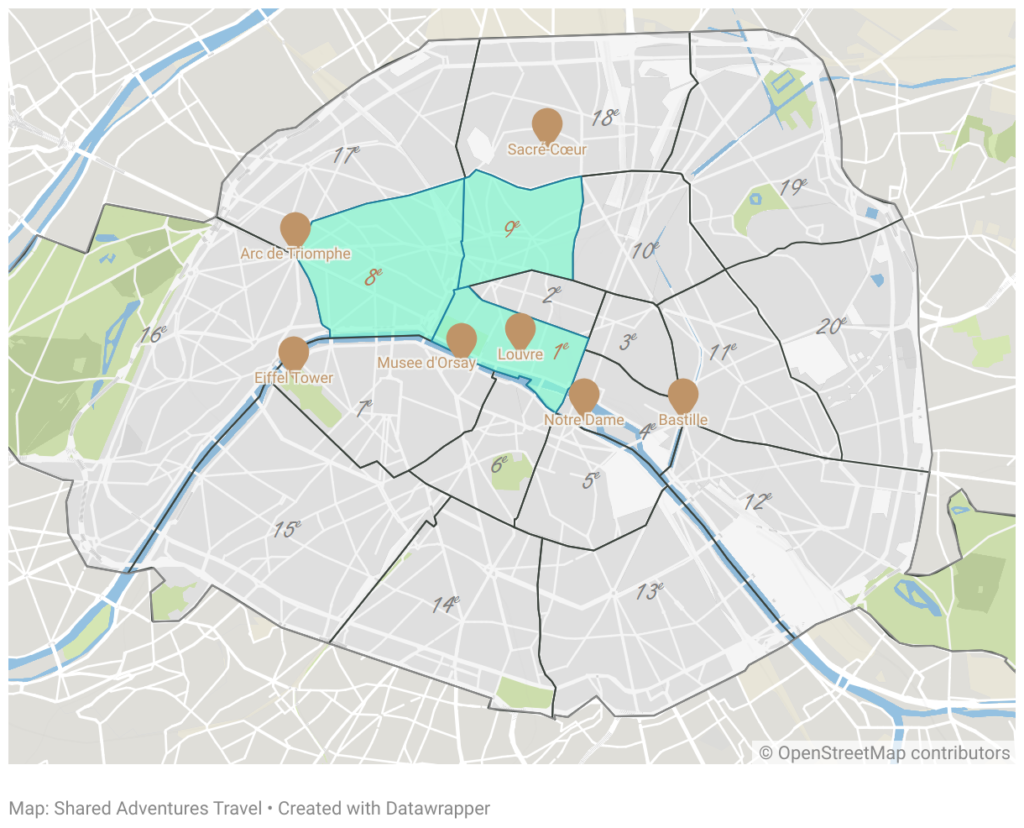
1st Arrondissement

The center of the spiral, the 1st arrondissement is mostly shopping and tourist attractions. Great for culture lovers and those who enjoy walking everywhere. This area tends to be more expensive, and some hotels will have a view of the Eiffel tower. Staying here won’t give you the typical Parisian neighborhood feeling, but nearly everything will be on your doorstep. 

2nd Arrondissement

A bit of a hidden gem, the 2nd arrondissement is full of beautiful 1800s arcaded passages. Still located in the heart of it all, there are no major tourist sites directly in the neighborhood. Being slightly out of the limelight, you’ll find fewer tourists and fewer crowds while still staying close to the major attractions. 

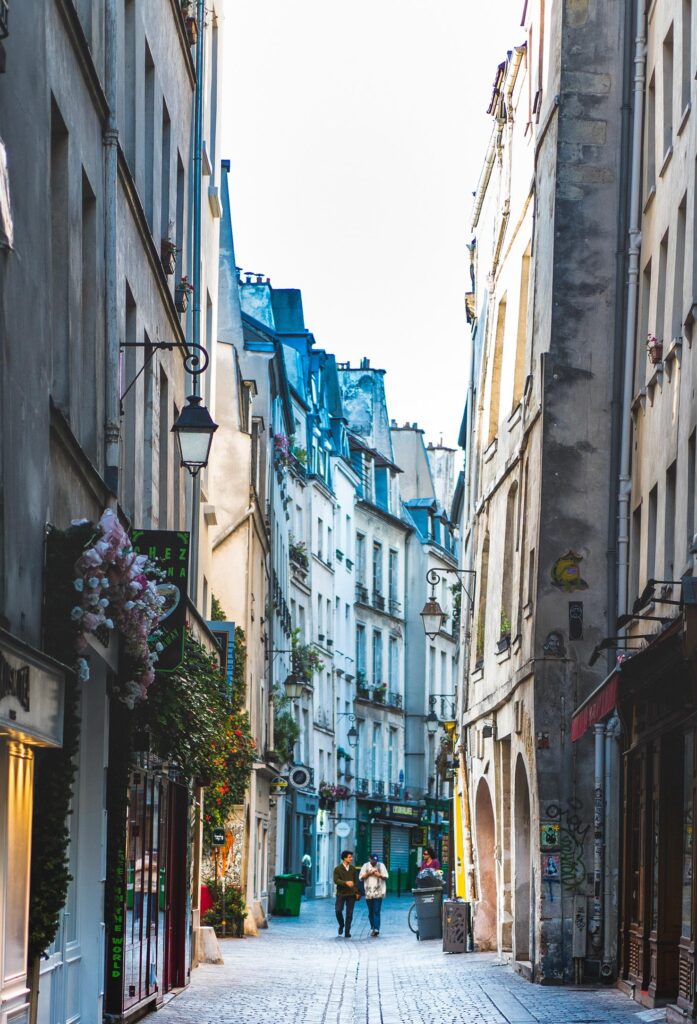
a narrow cobblestone street in Le Marais Paris

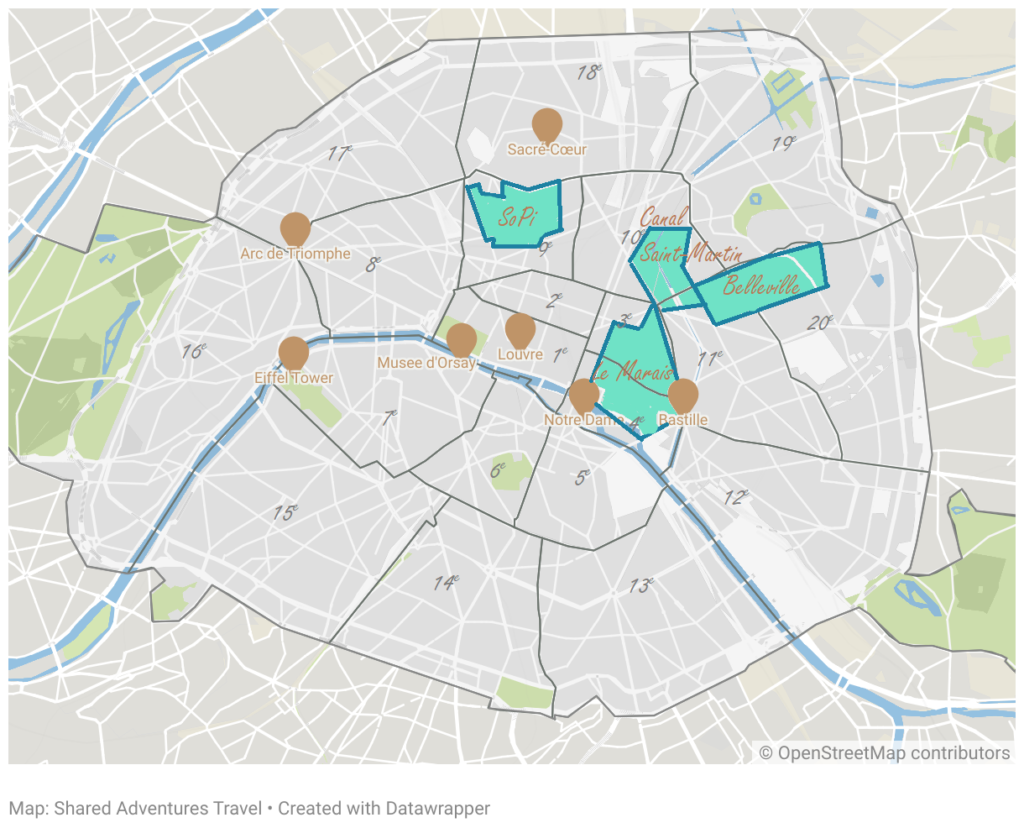
Le Marais

Spreading across the 3rd and 4th arrondissement is the historic Le Marais neighborhood. Home to large LGBTQ+ and Jewish communities it has a rich blend of cultures and chill vibes. As you wander the narrow winding streets that open into bright leafy squares, you’ll feel that yes, you are in Paris. Combining old-world elegant charm with the avant-garde, this neighborhood finds a perfect balance between old and new. Plus, it’s still close to the major sites. You’ll enjoy the trendy bistros, vintage shopping, and independent galleries in this Paris neighborhood.

[Photo Credit: Dodzy via Unsplash]

5th Arrondissement

Across the Seine on the Left Bank is the 5th arrondissement. Nicknamed the Latin Quarter for the university La Sorbonne that used to teach Latin, it is one of the oldest parts of Paris. It is still a student area with many young bars, restaurants and bohemian vibes. Bustling streets, trendy restaurants, and just a bridge away from many main sites. You can find the Panthéon, the Jardin des Plantes, and the renowned Shakespeare & Co bookstore. There are quite a few hidden gems! 

6th Arrondissement

Also known as Saint-Germain or Saint-Germain-des-Pres, this quiet neighborhood is very close to the city center. Saint-Germain saw the 20th-century cultural movement, and the golden age of Paris can still be felt in the independent stores, boutiques, and thriving café culture. It has easy access to all the above arrondissements while enjoying old-world glamour and quiet luxury. Also, this is a great area when traveling with kids because it is quiet and contains the Luxembourg Gardens

For Luxury Travel

To explore Paris in style, these arrondissements offer a 5-star experience. Paris with all the trimmings. Stay in luxurious hotels which offer private gardens, spacious rooms, and relaxing spas. Around the hotels, there are chic lounges, gourmet restaurants, and upscale shopping. 

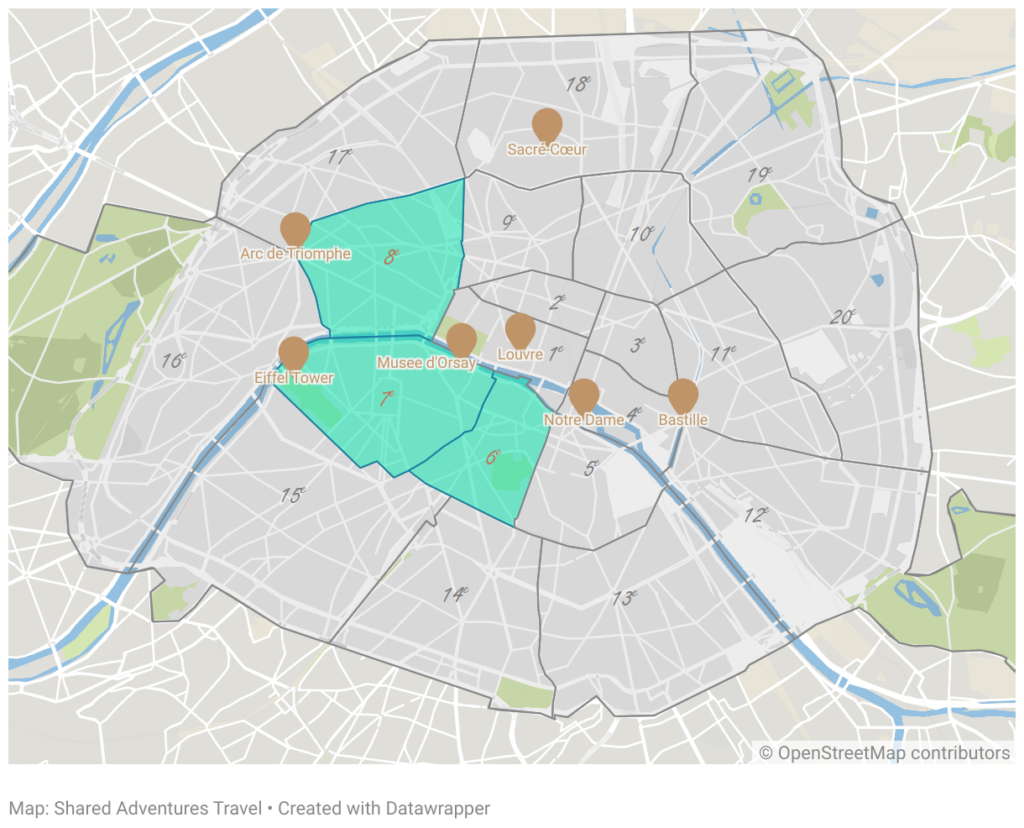
6th Arrondissement

Saint-Germain-des-Pres has a more high-end local feel. It’s a luxury residential neighborhood. Enjoy your morning croissant at a cafe on a wide boulevard, watching wealthy Parisians head to work from their elegant homes. Close to the city center and the major cultural attractions, soak up the old-world glamour of Paris in the early 20th century. 

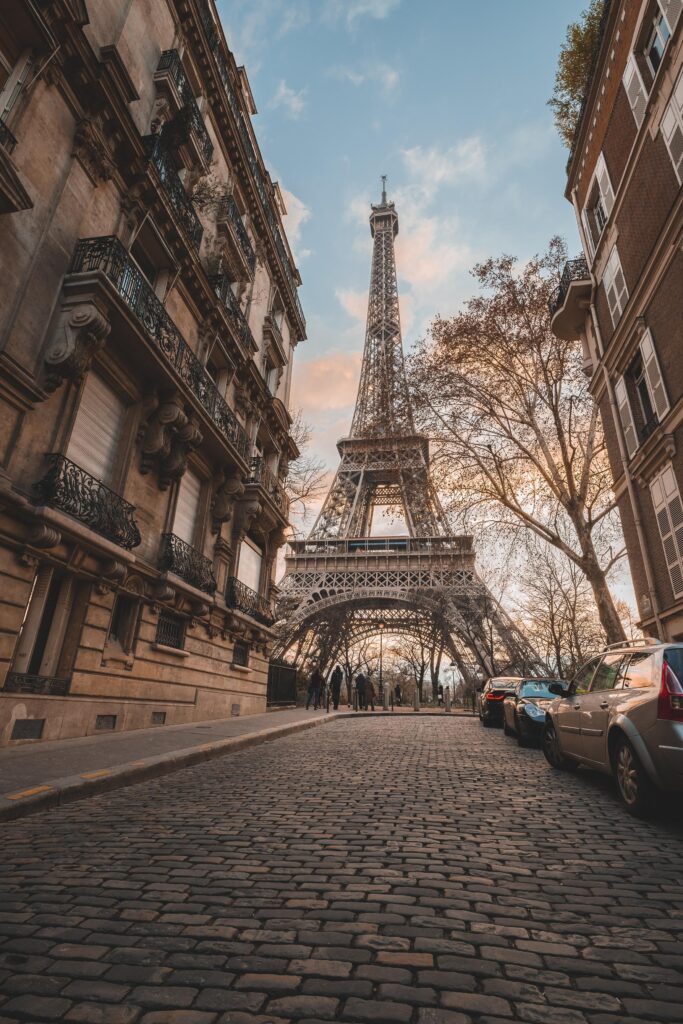
a bricked street with luxury buildings and the Eiffel Tower at the end in Paris

7th Arrondissement

Because of its proximity to the Eiffel Tower, this neighborhood caters to upscale clients looking for spectacular views from every window. If you dream of waking up to the Eiffel Tower out your window from your lush expansive bed, this is the place for you. Step out your door to world-class museums like the Musee D’Orsay, beautiful streets, and high-end shopping. Just note that with all this luxury, there isn’t much nightlife and the whole area quiets down after dinner.

[Photo Credit: Cyril Mazarin via Unsplash]

8th Arrondissement

This is the home of high-end hotels. With the presidential palace in this arrondissement, the international jet set gives it an expensive, elegant, and elite vibe. Here you’ll find the classiest and grandest hotels available. Enjoy the high-end shops and luxury restaurants that give you Paris with all the extras.

For Budget Travelers

If you’re on a tighter budget, you can still enjoy an incredible Paris experience! Of course, you can find a budget hotel in almost any neighborhood, but choosing one of these arrondissements will offer a broader selection with more for less.

5th Arrondissement

The Latin Quarter has a distinct student vibe. With its vibrant bohemian atmosphere, you’ll find an eclectic mix of restaurants, shops, and student bars. This is a great budget option to stay close to the heart of the city. 

colorfull houses and cafes line the hilly street of Montmatre Paris

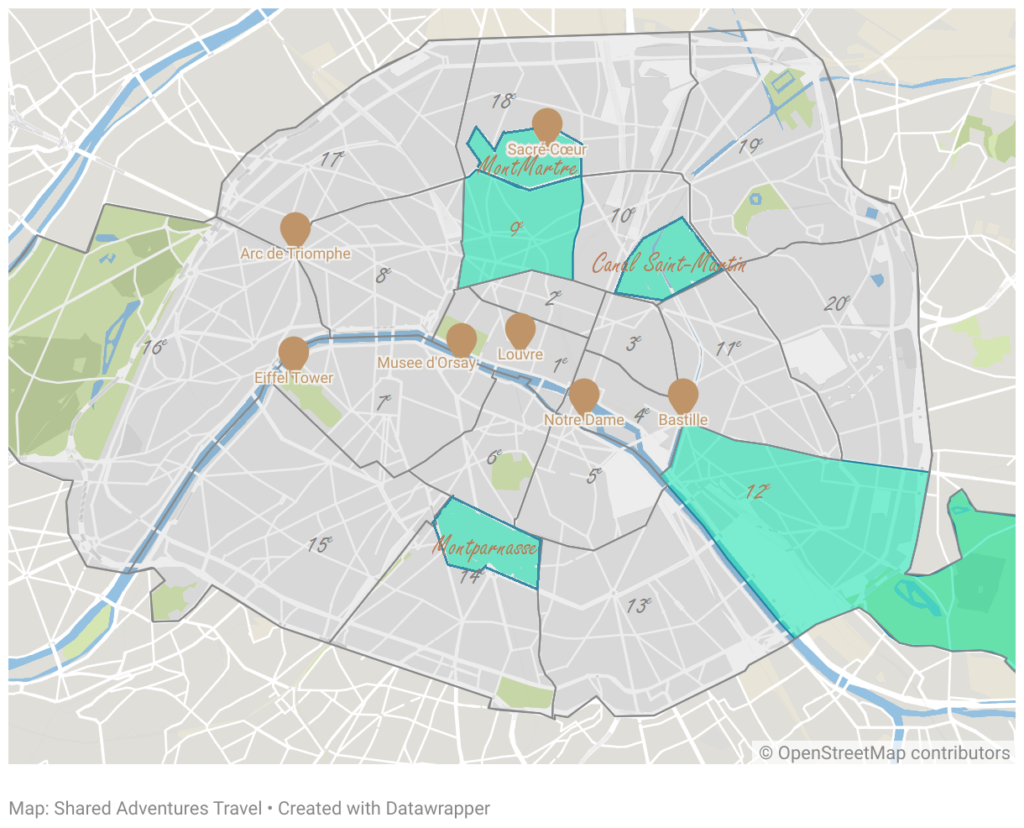
Montmartre

In the 18th arrondissement, you’ll find a high concentration of budget boutique hotels. Further out from the city, you will have to take the metro much more to get to the main sites. Home of Sacre Coeur and bordering the Moulin Rouge this area is built on a hill. The winding streets give it a village feel and the classic cafes and architecture are picture-perfect. This is what most people envision when they picture Paris. But the hill means stairs around every corner, making it a bit difficult to lug around heavy luggage. This is not a good option if you have any mobility issues.

[Photo Credit: Jeff Frenette via Unsplash]

12th Arrondissement

Further out from the city and not on the tourist track. This neighborhood will offer you quieter budget options while still being well connected to the main sites and the morning trains from Gare de Lyon via the metro. 

For the Shopaholics

Shopping is high on many lists when visiting Paris. With the famous Champs-Elysees, stunning department stores, and high-end designers, Paris has a lot to offer a shopaholic. If you dream of wandering Paris admiring elegant window displays and buying the latest trends, these neighborhoods will let you shop till you drop close to your hotel.

1st Arrondissement

Right in the heart of it all, the 1st arrondissement offers many shopping opportunities. It has a little bit of everything, from luxury brands to touristy souvenir stalls. It will be easy to spend the whole day exploring what this arrondissement has to offer.

8th Arrondissement

Home of the Champs-Elysees, the 8th arrondissement is the perfect place for luxury shopping. Expensive and elegant, you will find luxury brands like Louis Vuitton and Chanel. If your goal is to shop the big names in fashion, jewelry, perfumes, and bags, this is the place to stay. 

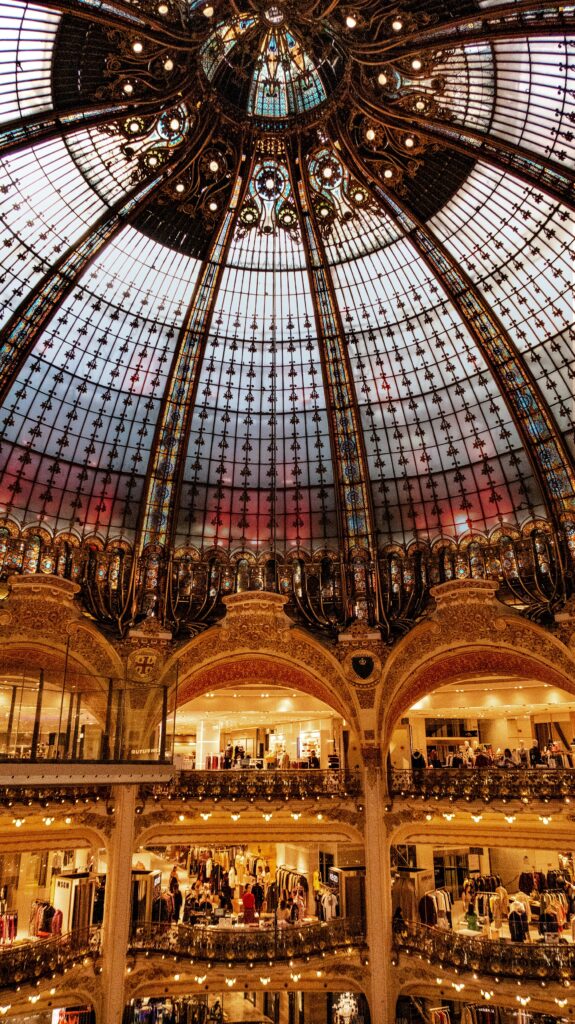
the domed glass ceiling and elegant arches of Printemps Department Store in Paris
Printemps [Photo Credit: Svetlana Gumerova via Unsplash]
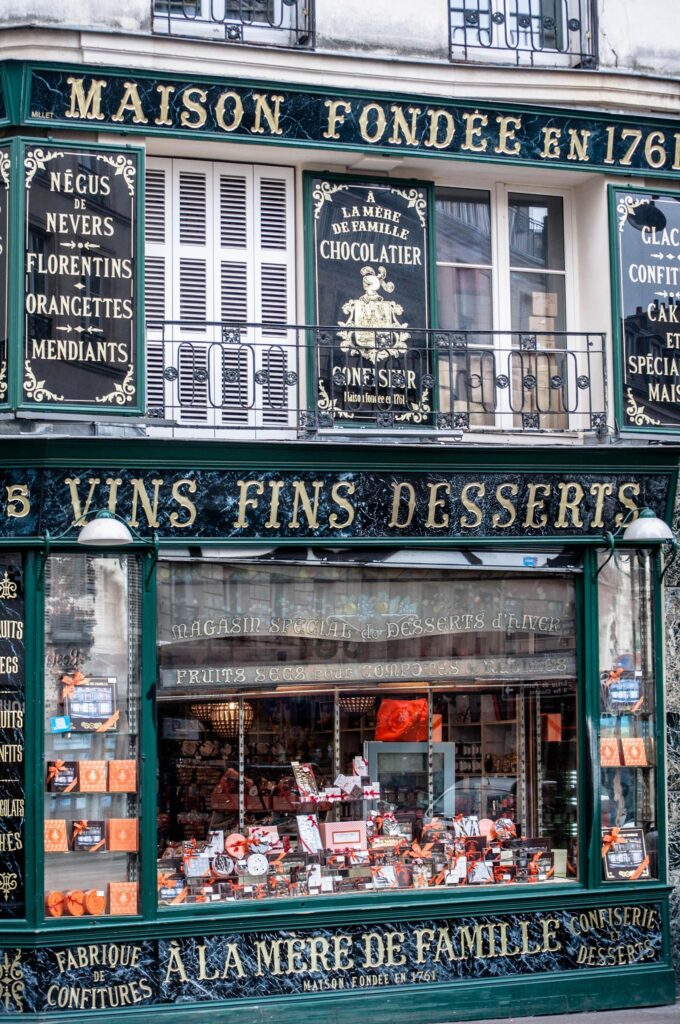
The colorful and elegant front of a chocolatier in Paris
[Photo Credit: Esophie Louisnard via Unsplash]

9th Arrondissement

Home to the Grand Magasins – or huge department stores- of Paris. The Galeries Lafayette and Printemps as well as some lovely smaller shops. This area is perfect if you’re looking to shop till you drop without completely breaking the bank. In the 9th arrondissement, you’ll find shops for every budget plus beautiful architecture and covered passages. 

For a Local Feel/ Repeat Visitors

For those who have been to Paris several times, or are looking for that local, authentic Paris feel, ditch the tourists and enjoy a slice of Parisian life. Further away from the main attractions, you’ll find charming cafes, tree-lined streets, and a more relaxed pace.

For Trendy, Unique Vibes

If you’re looking to stay out of the main tourist areas but still feel that your neighborhood has some glitz and glam try the 9th arrondissement or the adjacent Montmartre in the 18th. Each of these neighborhoods offer quintessential Parisian architecture, small boutiques, trendy restaurants and thriving nightlife. The 9th arrondissement and Montmartre are not totally devoid of tourists or touristy attractions. But they are neighborhoods you often don’t spend a lot of time exploring your first time in Paris. Nonetheless, they offer lots of hidden gems worth discovering.

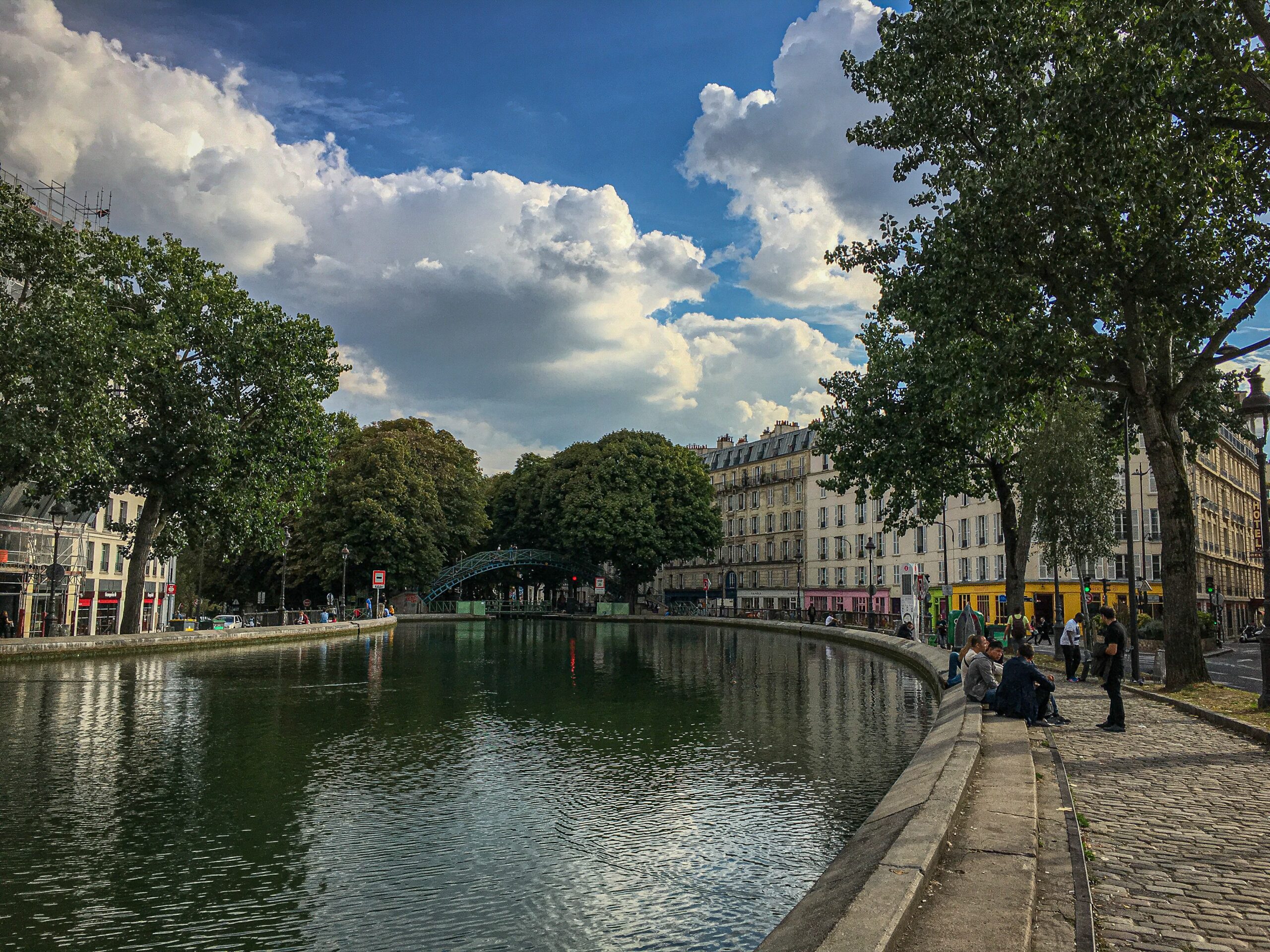
down the Canal Saint Martin in Paris with trees and people sitting along the bank

Canal Saint-Martin

This area offers a balance between trendy vibes and quiet residential neighborhood, with a multicultural artistic flare. This relaxed neighborhood is where locals go to hang out. Whether you join them in a game of boules along the banks, take a dinner cruise or simply admire the street art, Canal Saint-Martin encourages you to soak in the local flavor. The Canal offers a slower pace with cobblestone streets, amazing food, and unique sites like temples, grottos, and waterfalls. Fewer classic touristy adventures mean fewer tourists. You’re farther from the main sites but it’s perfect for a stroll any time of the day.

[Photo Credit: Vince Duque via Unsplash]

For Quiet and Residential

If you’re looking to experience a slice of Parisian life without the glitz and glamour try the 12th arrondissement or Montparnasse in the 14th arrondissement. Primarily business and residential areas, staying here will make you feel like a true local. Stop at a cafe or brasserie along the bustling but not boisterous boulevards of these modern neighborhoods. Enjoy the green spaces of Bois de Vincennes park in the 12th arrondissement and feel safely away from the crowds.

For Foodies

Paris is full of amazing restaurants and delicious food. Whether you dream of upscale 5-star Michelin restaurants and trendy and inventive fusion bars, or crave those quintessential creperies and markets, Paris prides itself on its food. You can absolutely find amazing food anywhere in Paris, but if your main focus is where you’re eating next there are a few neighborhoods that stand out.

Le Marais

Combining old and elegant with the inventive and new, in a perfect balance, and brimming with French cafes, vegan eateries, and kosher delights. Here you will find an endless selection of restaurants at every price point. Between old-fashioned boulangeries, open markets, and trendy bars this is a great base if your focus is always on food.

Canal Saint-Martin

In the 10th arrondissement, the Canal is a little outside the heart of the city. But it has become a foodies paradise. With numerous organic wine and cheese stores, craft coffee shops, and unique restaurants, and a more local feel away from the tourist crowds, this is the perfect place to find your new favorite hidden gem.

[Photo Credit: Liz via Shared Adventures Travel]

SoPi (South Pigelle)

In the 9th arrondissement, just below the Moulin Rouge. This very trendy up-and-coming neighborhood offers the latest food trends. With fusion bars, craft cocktails, and the very foodie Rue de Martyrs street there’s a lot to enjoy. While it still retains a tinge of its original red-light-district seediness, this vibrant neighborhood offers innovative food options.

Belleville

Staying in Paris for a while and growing tired of the Frenchest French food? Belleville in the 20th arrondissement has you covered. Trendy and hip, the Belleville area has a wide mix of cultures with narrow streets, little boutiques, and independent food shops. An arty, gritty, vibrant neighborhood where Chinatown meets hipster, this is the spot to enjoy foods from around the world.


So, which neighborhood fits your style? The balanced and classic Le Marais? The chic and elite 8th arrondissement? Or maybe the relaxed and removed Canal Saint-Martin? Which ever suites you best, if this blog has piqued your interest and you’re ready for your next adventure to Paris, let us know! We’d love to help you find the perfect hotel in the perfect neighborhood!

A Guide to River Cruises

Intro Guide to River Cruises Pin
Pin it for Later!

Imagine sailing dreamily past landscapes dotted with castles, fairy-tale villages, and vineyards. Sitting on the sundeck, drinking in new scenery every day. Docking right in the heart of a city, making it easy to explore by just strolling off the gangway. Enjoy a quiet, intimate setting with delicious local food and wine each night. River cruises are a unique way to travel, with a focus on the destination and the local culture. They offer you an almost- or all-inclusive luxury vacation, combined with easy-to-access sightseeing in the most incredible towns and cities. If you’re intrigued, here’s our mini guide to river cruising.


River Cruise vs. Ocean Cruise

Ocean cruises and river cruises share a few traits. They are an easy way to see multiple destinations without having to worry about how you’re getting from place to place or having to unpack each time. You get to enjoy the gentle sense of travel on a body of water. And you can easily sign up for shore excursions and guided tours at each destination. But that is where the similarities stop.

River cruises are smaller so you don’t have such long lines or big crowds. They are far from the “floating cities” that describe the larger ocean liners. Their size contributes to many of the key differences. There’s a greater since of intimacy with only around 150 – 200 passengers. You also won’t have as many amenities and onboard activities as the ocean cruises, because the focus of a river cruise is on the destination.

Generally, this means there won’t be any casinos or large-scale production shows. But they might have a small spa, some live music, a small pool, and some onboard lectures.

Typically, they dock right in the middle of a city/ town. You’ll have no long transfers to get to the places you want to see – just stroll off the boat!

River cruises also offer more included in the upfront price. Shore excursions, drinks with dinner, and sometimes even gratuities will be included in the price.

[Photo Credit: Dima Fedorov via Unsplash]

a group of teens and kids in traditional Bulgarian dress kneel for a photo after performing a local folk dance

Because of their close connection to the ports they visit, river cruises celebrate the local culture. The lectures and live entertainment will be local experts and performers.

Each day the ingredients, wines, and beers for dinner are sourced locally. River cruises give you an in-depth experience, ensuring you get a real sense of the destination. They are a great way to explore multiple countries with local guides to give you the context and history.

[Photo Credit: Ann via Shared Adventures Travel]

Where Do River Cruises Go?

You can find great river cruises all over the world. Europe, Asia, Africa, and the USA all boast incredible itineraries. Choosing to do a river cruise won’t limit your destinations and might even expand them. 

The Budapest parliment building lit up at night from the view of the river cruise

One of the most popular first-timer itineraries is the Upper Danube through Germany and Austria. This itinerary is a great starting place because it has a little bit of everything. You’ll get to visit famous cities like Nuremberg, Vienna, and Budapest. And also a few small fairy-tale villages, outdoorsy adventures, and UNESCO sites. It’s a great introduction to all that river cruises can offer in one trip.

[Photo Credit: Ann via Shared Adventures Travel read about her Danube Adventure Here!]

Other popular routes include Amsterdam to Basel, Paris to Normandy, along the Nile in Egypt, and the Douro River in Portugal. 

Who Would Love A River Cruise?

  • Anyone who doesn’t consider themselves a “cruiser” or who dislikes the big ocean vessels. River cruises are a more intimate experience with less than 200 passengers. So they still allow you to have authentic experiences in a destination. 
  • Someone looking for the ease/ convenience of a guided motorcoach tour, but without having to pack and unpack every day or two. 
  • An independent traveler who typically does their own thing and enjoys multi-city trips. Someone who likes the idea of docking in a new place every day and heading out to explore. 

How to Choose the Right Cruise?

There are two things to consider when selecting the perfect river cruise — Cruise lines and Destinations.

Cruise Lines

Like ocean cruise lines, each river cruise line has a slightly different “personality”. An experienced travel agent can help you find the right match. Our top three lines are:

The sun deck with pool of an AMA waterways river cruise

Ama Waterways – aimed at slightly younger, more active working professionals. They have more included excursions, more “active” excursion choices like hiking and biking, as well a small gym on board. They usually include drinks not just at dinner but for happy hour each evening as well.

[Photo Credit: Ann via Shared Adventures Travel read about her Danube Adventure Here!]

Viking Cruises – a popular entry-level option. Viking has a lower price point, with just the basics included. (i.e. beer/wine only at dinner; just one shore excursion included and the others are optional with added cost; etc) They’re a great starter line to test out the river cruise waters, and they do a lot of promotions and sales, so you can often catch a great rate.

the entrance staircase and chandelier of a Uniworld River Cruise

Uniworld– a slightly more upscale line. Their ships are all very uniquely decorated to emulate a boutique European hotel. The cruise fare includes all alcohol and gratuities, so there’s very little you have to add to the upfront price.

[Photo Credit: Ann via Shared Adventures Travel]

Destinations

River cruises are destination-focused, so make sure to choose an itinerary that plays into your interests! Are you a history buff? A wine lover? Do you dream of seeing fields of tulips or picturesque castles? Each itinerary offers something a little bit different and depending on what you’re most interested in experiencing, the destinations will have a starring role.

As with any trip, you should be mindful of seasonality. European rivers can have water level issues at certain times of the year.

Some months are colder than others and whether you’d like to wear a jacket or a swimsuit on the sundeck will affect when and where you go.

[Photo Credit: Ann via Shared Adventures Travel]

Finally, you’ll find there are often promotions/specials for 2-for-1 cruise fares or discounted airfare. You can search the internet for these deals, or keep an eye out for them in our newsletter! 


Does the adventure of visiting many ports without the hassle of re-packing, plus the intimate connection with the destinations and local customs appeal to you? Let us know! We’d love to help you find the perfect itinerary and cruise line!

You provided excellent guidance for us. I appreciated that you really had us think about what was most important to us when we were selecting the right cruise – and not to totally focus on what other people had to say. THANK YOU for helping to make this a memorable trip for our family! It really was a trip of a lifetime!

Clare and Mark (family cruise to Alaska)

The level of service we experienced was out of this world (and we did NOT make it easy on Ann). We weren’t quite sure where we wanted to go, when we would be able to go, or what “vibe” we were going for. After asking us some key questions (what we liked, didn’t like, why, etc.) Ann helped us narrow down our trip details and planned the honeymoon of our dreams. She helped book some of our excursions, answered some emergency questions while abroad and was always available/willing to help. I think it’s safe to say we won’t be using anyone else for future travel planning – Ann is a rockstar!

Carli (Italy and Spain)