

Whether you seek the adrenaline of the world’s highest peaks, the refined comfort of luxury resorts, or the rustic charm of hidden valleys, the European Alps offer three distinct experiences. When our clients start talking about a mountain adventure, we ask questions to understand which will be the best fit for them. As a starting point, here are the most important things to know about the Swiss Alps, the French Alps, and the Italian Dolomites.
The Swiss Alps: Luxury and Precision
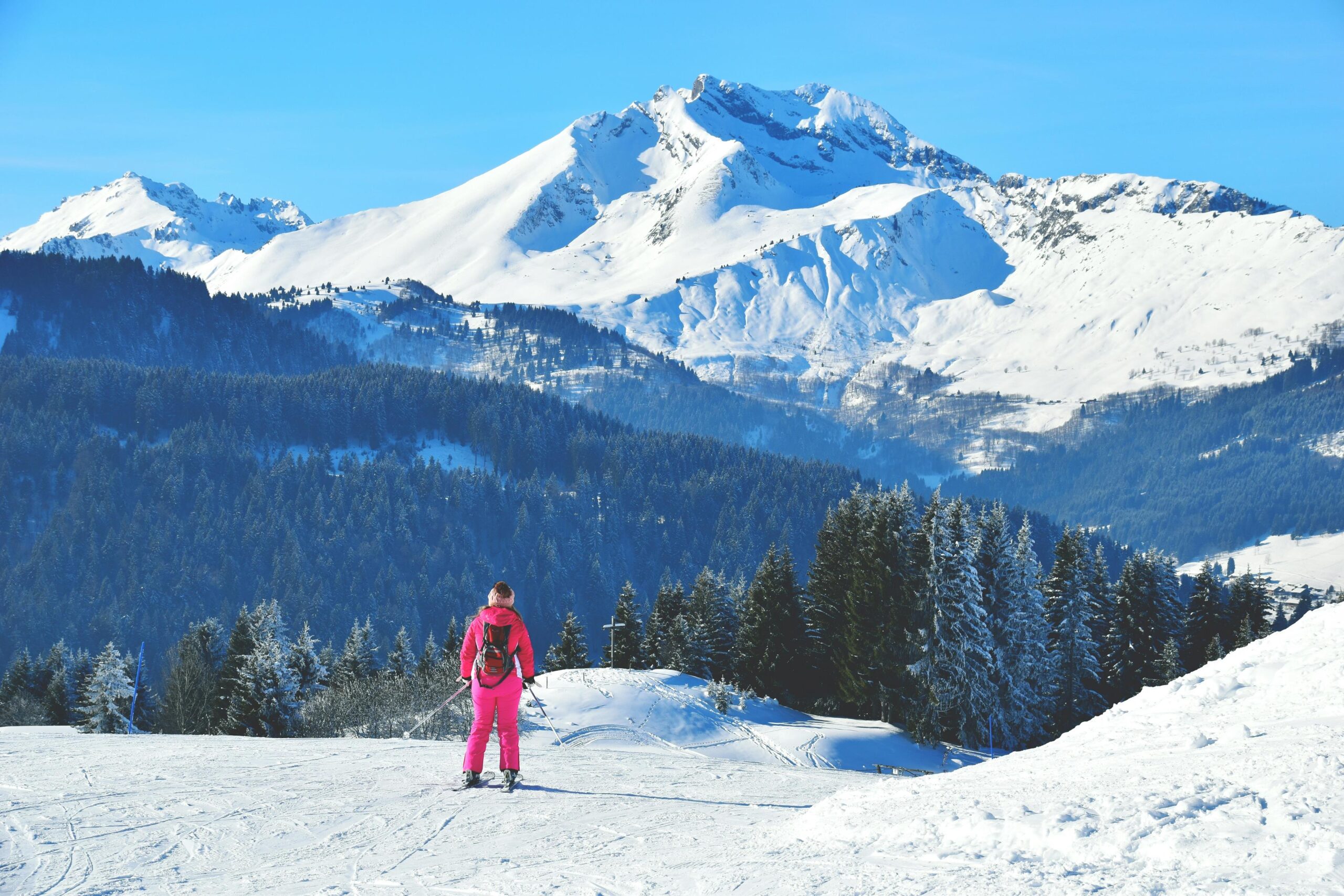
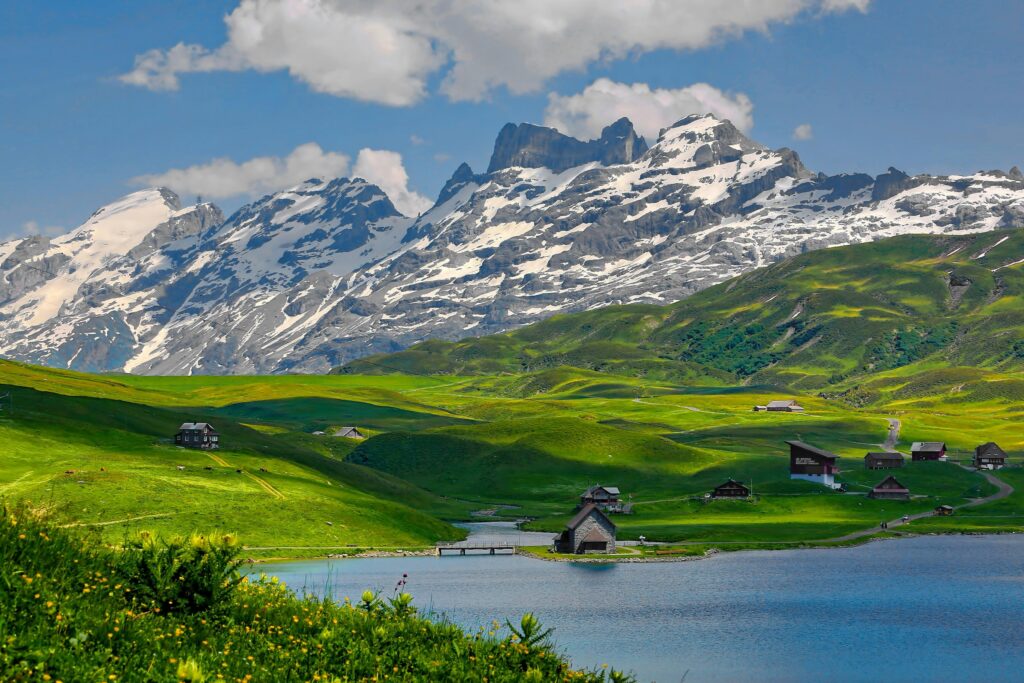
Covering 60% of Switzerland, the Swiss Alps are a mountaineer’s paradise, boasting the highest concentration of 4,000-meter peaks in Europe. Home to the iconic Matterhorn, the region prides itself on the pristine infrastructure, multilingual hospitality, and Swiss efficiency. It is a landscape that oozes luxury, offering high-end resorts and picture-perfect views at every turn.
Our Top Towns: Interlaken, Grindelwald, Zermatt, and Andermatt.
[Photo Credit: Sepp Rutz via Unsplash]
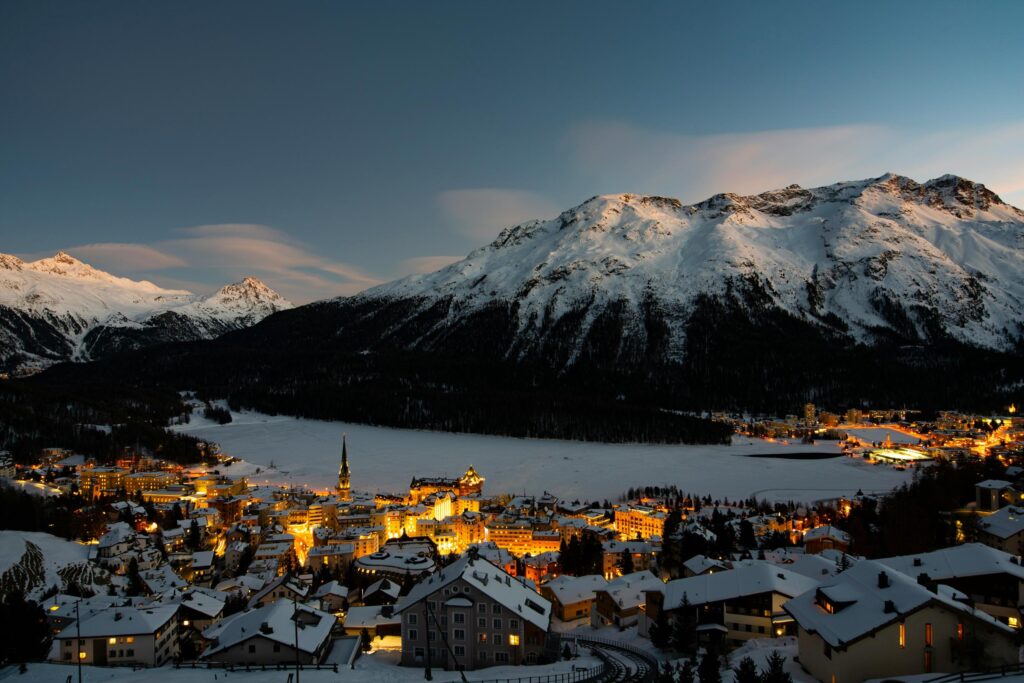
The French Alps: The Ultimate Variety
Stretching from Lake Geneva to the Mediterranean, the French Alps are all about diversity. You will find everything from the snow-capped heights of Mont Blanc to rolling meadows and alpine lakes.
Here, the Savoyard culture is the heartbeat, evident in the hearty menus featuring fondue, raclette, and tartiflette. And, the towns buzz with history and energy, offering a perfect pivot between a winter wonderland in the north and sunny Mediterranean getaways in the south.
Our Top Towns: Chamonix, Aix-les-Bains, Grenoble, and Chablis.
[Photo Credit: Clary Garcia via Unsplash]
The Italian Dolomites: Dramatic Beauty and Warmth
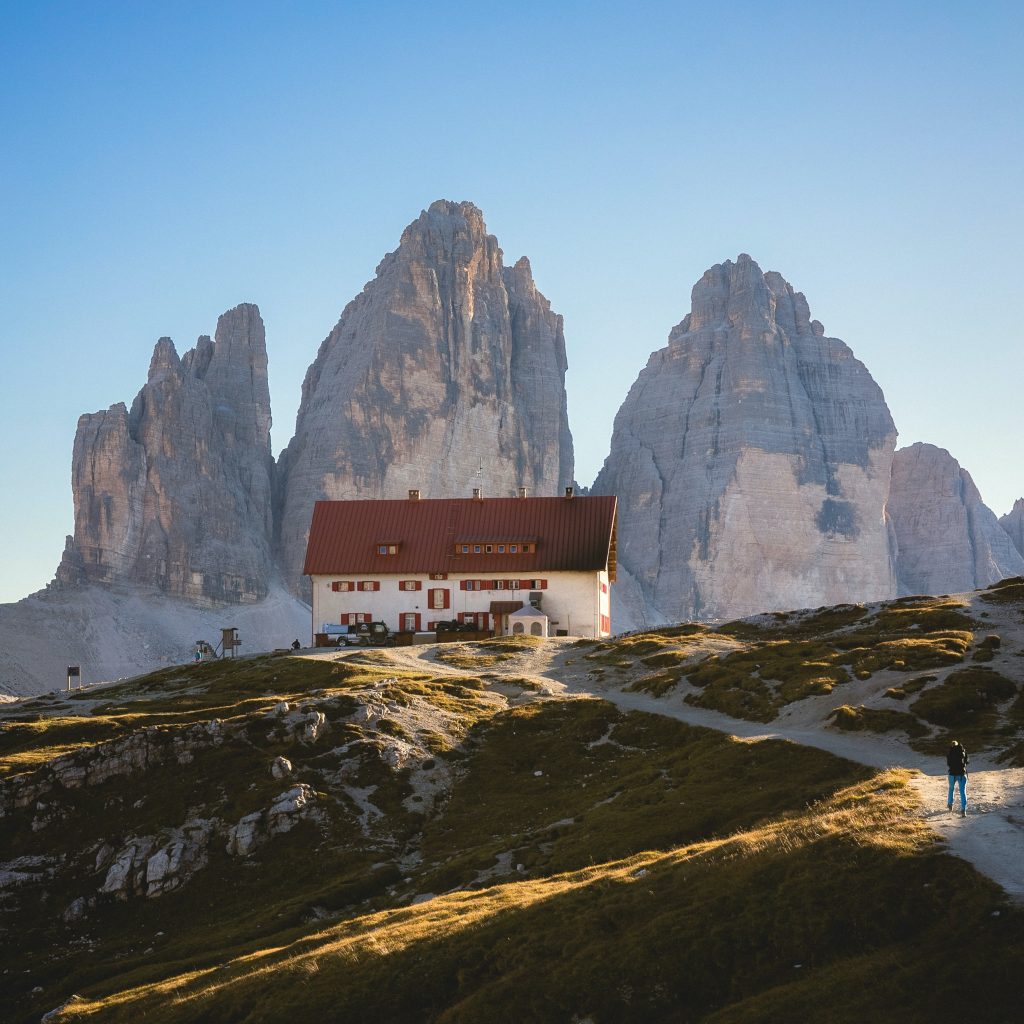
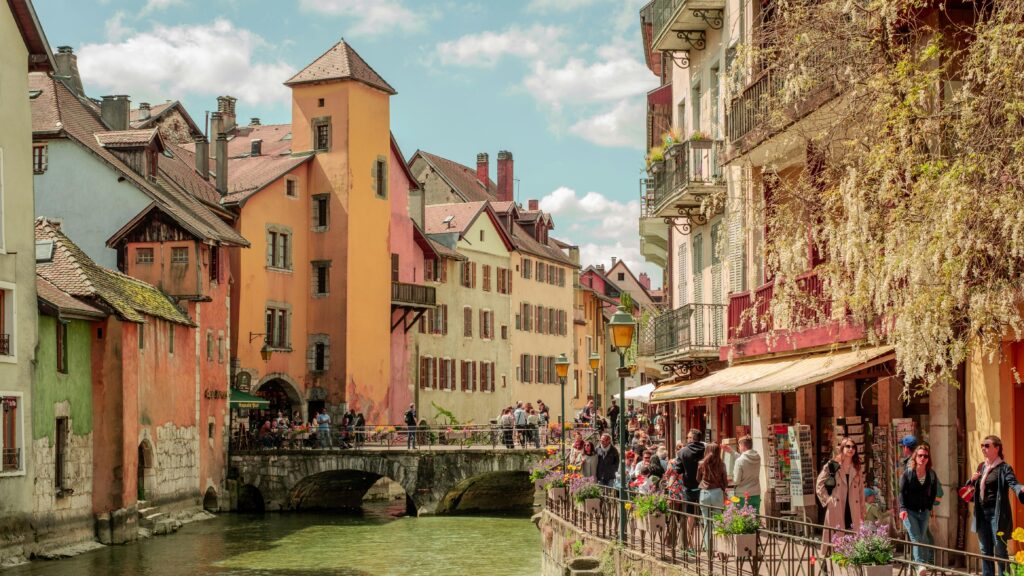
Located in the north-eastern corner of Italy, where Switzerland and Austria meet, the Dolomites offer effortless charm. This region uniquely blends German and Italian cultures, resulting in top-quality food and warm, welcoming hospitality. The landscape features dramatic, steep cliffs and winding roads leading to hidden gems.
Our Top Towns: Ortisei, Dobbiaco, Castelrotto, Bolzano, and Santa Maddalena.
[Photo Credit: Valdemaras D via Unsplash]
What’s the Vibe?
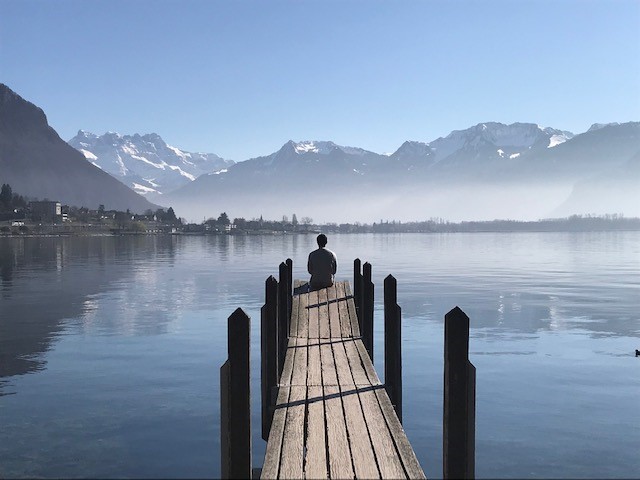
The Swiss Alps have a timeless sense of luxury and refinement. Here, you feel the respect they have for the incredible nature while managing it with precision. The Swiss Alps exude a calm but sophisticated atmosphere.
The French Alps offer a balance between the luxurious Swiss and laid-back Dolomites. With a lively atmosphere where culture, gastronomy, and sport collide, it feels like a celebration of life in the mountains.
Rustic and slow-paced, the Dolomites feel more like a home than a resort. The blend of cultures creates a unique, laid-back atmosphere where you are welcome to simply enjoy the jaw-dropping scenery.
[Photo Credit: Usha & Mark via Shared Adventures – read about their Switzerland Adventure here! ]
Budget Expectations
The Swiss Alps are the premium option. Expect to pay a significant premium for accommodation, dining, and lift passes. However, the quality of service and infrastructure is world-class, justifying the cost for those seeking the ultimate luxury experience.
While luxury exists, the French Alps are known for excellent value, particularly in the “lesser” known villages and self-catered chalets. You can find high-end experiences, but the region also offers some of the most affordable lift passes and accommodation in Europe.
The Dolomites generally offer better value than the other two Alps. You can enjoy high-end dining and accommodation without the Swiss price tag, thanks to the region’s focus on authentic experiences over pure luxury.
In Winter

The Swiss Alps in winter offer luxury, functionality, and classic Swiss efficiency. The experience is luxurious: private chalets, Michelin-starred dining, and exclusive spa facilities. Well-run trains wind through the mountains connecting the elegant towns. This is certainly the most comfortable winter holiday available.
[Photo Credit: Kevin Schmid via Unsplash]
For skiers, the pistes are impeccably groomed, and the lifts are reliable. While the Swiss resorts do feature beginner areas separated from the main slopes, the Swiss Alps suit intermediate and expert skiers best. Mid-level adventurers can find long, smooth red trails, and the high-altitude challenging off-piste areas are an adrenaline seeker’s dream. The culture here is more polished than the wild off-piste slopes of the French Alps, giving you stupifying speed that still requires heart-pumping precision and control.
The French Alps are the home of serious skiing. The interconnected “Grand Massif” or “3 Vallées” (the world’s largest ski area) offers thousands of kilometers of perfectly groomed blue and red runs. You can ski for a week without repeating a trail, from powder hounds in Chamonix to families enjoying gentle slopes.
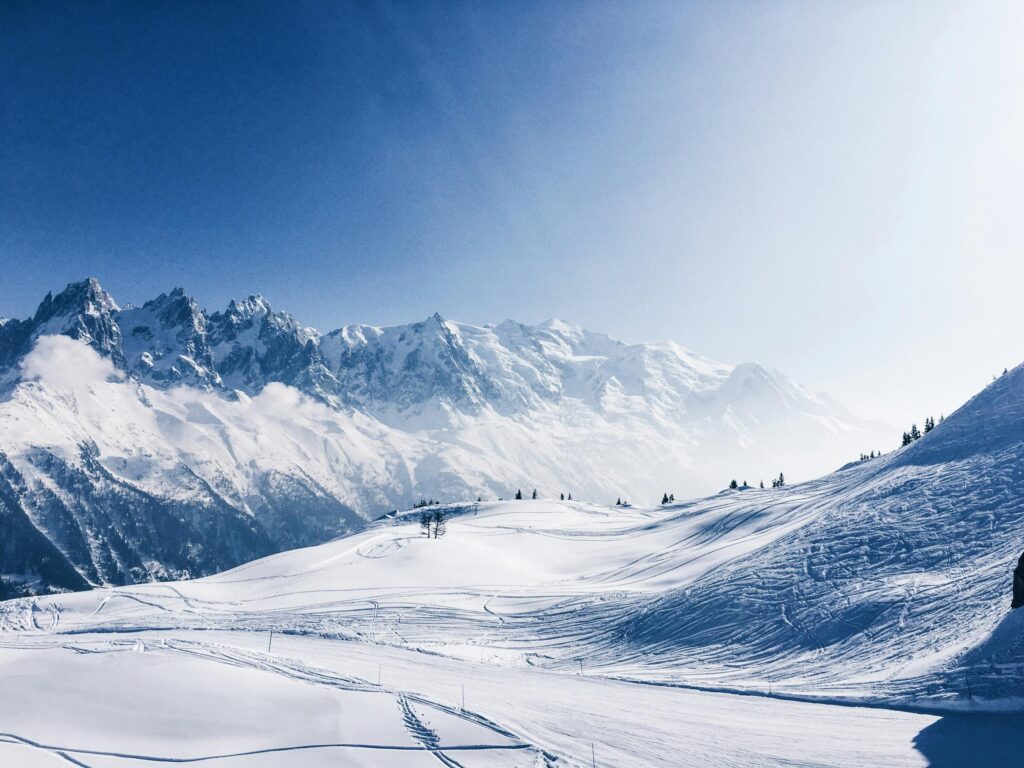
The French system is exceptionally friendly to novices. Towns like La Plagne and Méribel offer vast, gentle green runs that feel endless, allowing learners to build confidence without the intimidation of steep terrain. The “Family” ski areas are designed specifically for first-timers. Those looking for expert adrenaline runs can find it in the Chamonix glaciers, but these slopes tend to be a little more wild.
[Photo Credit: Chris Biron via Unsplash]
The Dolomites offer a more relaxed winter experience compared to their French and Swiss counterparts. The famous Sella Ronda circuit is perfect for all levels, with runs that weave through dramatic limestone peaks. The views alone make the skiing a joy. The infrastructure is there, but definitely less efficient and punctual than in the Swiss and French Alps. Certainly, there is no rush. For beginners, the slopes are gentle and the atmosphere is incredibly welcoming. The advanced runs are wild and rocky – rather than speed the focus here is on scenery and technique.
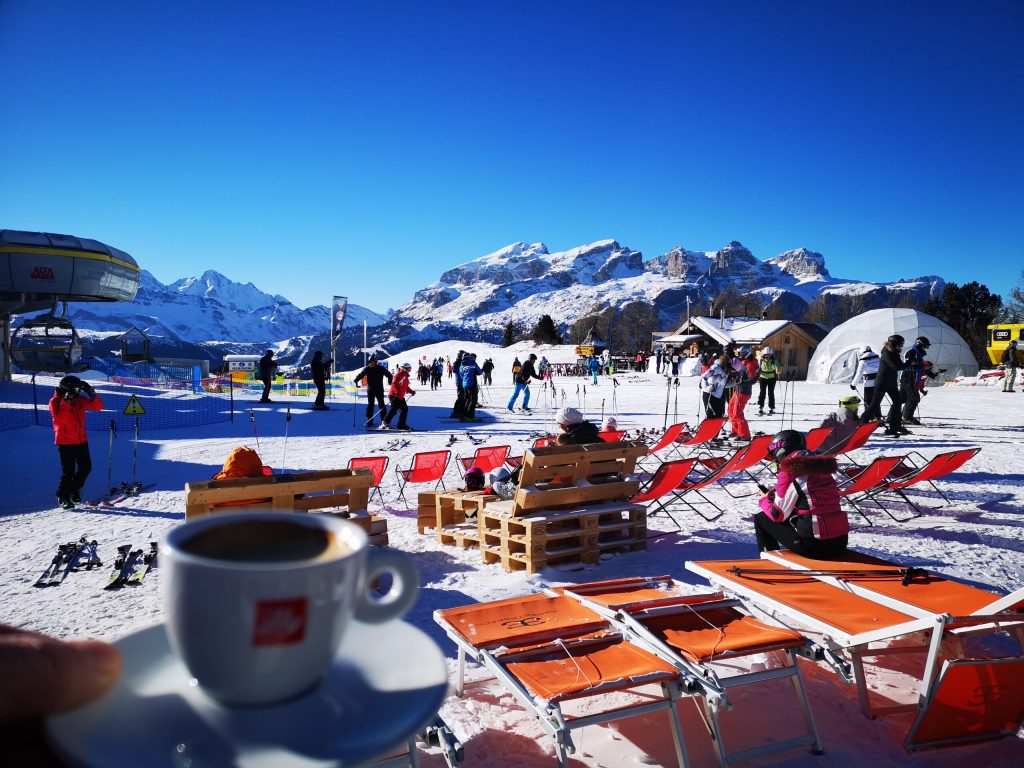
Of course, being in Italy, the Dolomites are also perfect for foodies. Gourmet ski huts host the sciare con gusto – taste for skiing. Each year, ten Michelin-starred chefs from across Italy pair with mountain huts to create a signature dish inspired by the local cuisine. This involves a self-guided or tour route of tasting and skiing between each stop.
[Photo Credit: Vlado Sestan via Unsplash]
In Summer
The Swiss Alps are equally captivating in the summer. Keeping with the theme of effortless infrastructure, the Swiss Travel Pass makes exploration easy. Furthermore, you can use it to hop on scenic trains, cable cars, and boats. These Alps are the perfect destination for those who want to experience the mountains with zero logistical stress.
[Photo Credit: Ricardo Gomez Angel via Unsplash]
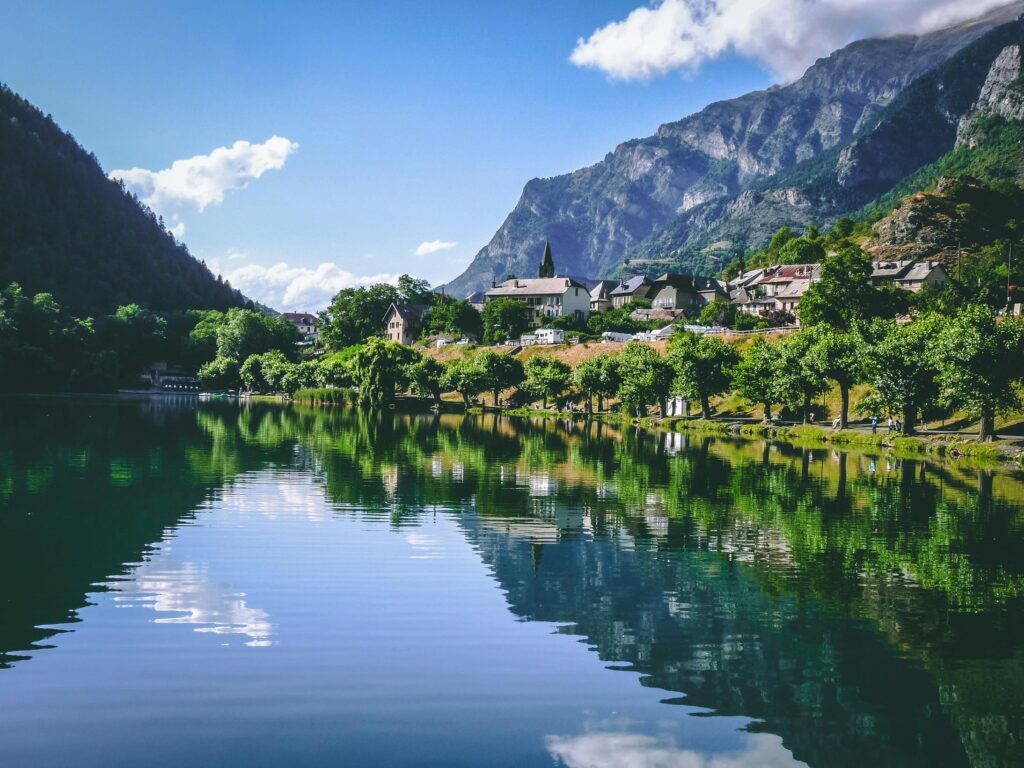
Summer in the French Alps brings warm, sunshiny days and an explosion of verdant green. Additionally, hiking trails are extensive. Like their ski slopes, the trails range from easy alpine lakes to challenging high-altitude treks. The weather is generally warmer than in the Swiss or Italian sectors, making it ideal for those who want to combine mountain air with a taste of the Riviera.
[Photo Credit: David Amar via Unsplash]
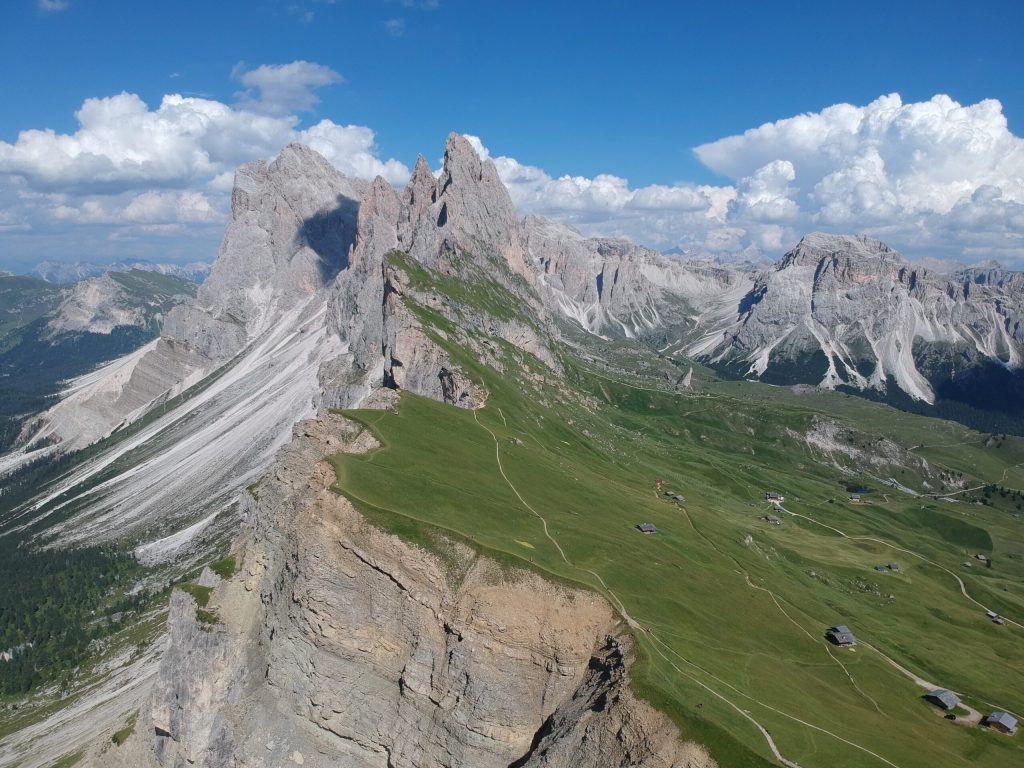
Compared to the Alps, the Dolomites have little of the efficient infrastructure, but they are a hiker’s and cyclist’s dream. The winding roads are a paradise for road cyclists, while the trails offer breathtaking views of the jagged peaks. Compared to the others, the culture here is slower, inviting you to linger over long lunches and explore hidden villages. The locals welcome you with open arms, and the scenery astounds.
[Photo Credit: Giorgi Shakarashvili via Unsplash]
No matter which range you choose, the mountains are calling. Let us know which one resonates with your travel style, we can’t wait to begin crafting your perfect itinerary.