


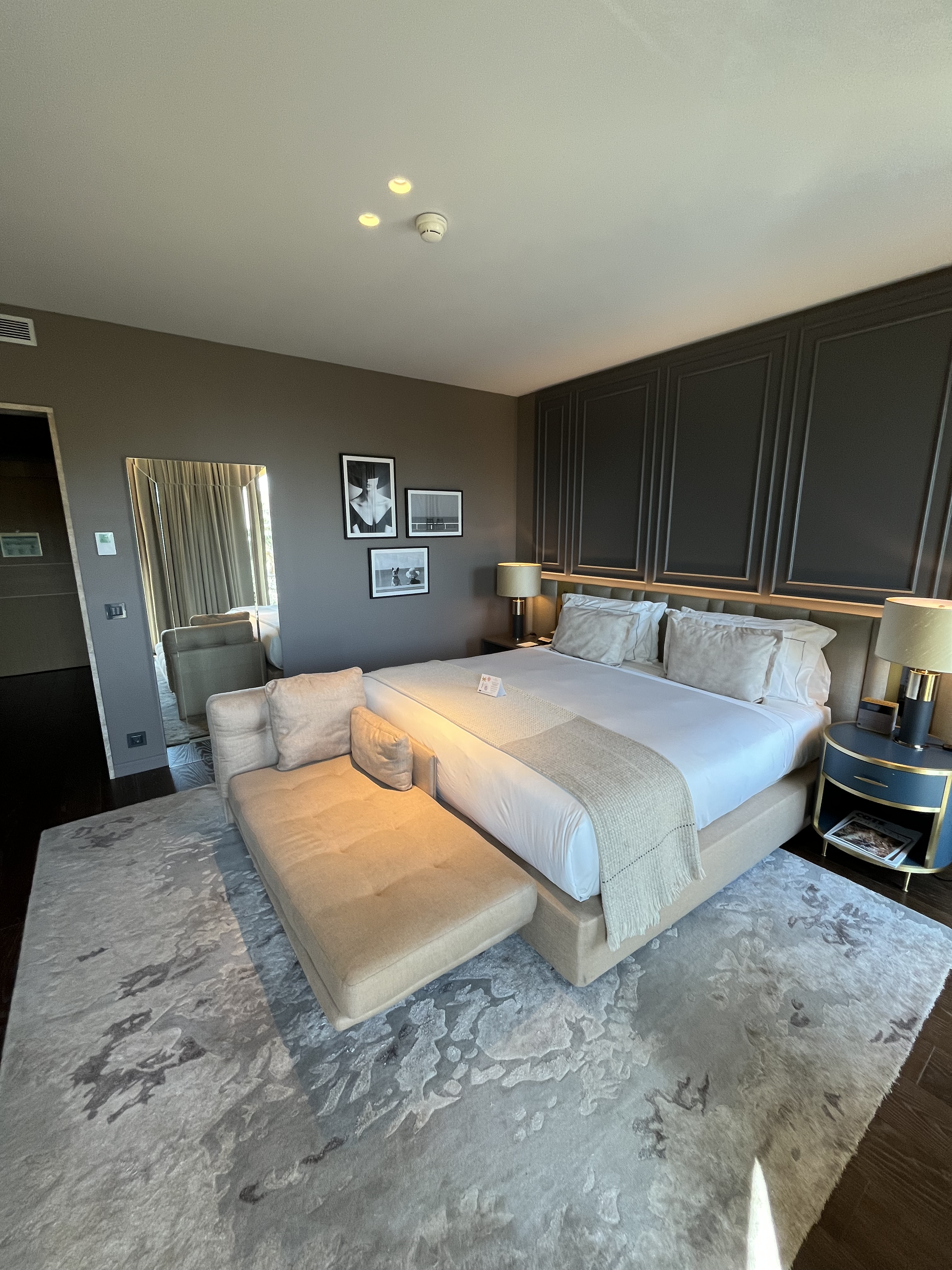
Most of our clients travel to Europe at some point, and we work hard to make sure they know what to expect when they get there. In today’s increasingly “globalized” world, there are a lot of things that feel consistent from one country to the next, and you can almost always find a Starbucks or a McDonalds hamburger if you start to feel homesick. But European hotels are not yet globalized — which is something we actually love. They can be quirky and charming and, as long as you know what to expect, a European hotel can be a really refreshing change from a standard chain hotel like you’ve experienced in the US.
Are European Hotels Really Smaller?
In North America, many cities were constructed, reconstructed, and expanded in more recent history, with lots of available space to spread out and create large, sprawling hotel buildings. In Europe, hotels are mostly repurposed, extremely old structures. They may completely gut the inside to make it as modern and luxurious as possible, but the overall size and shape of the building tend to remain unchanged.

This historic charm means European hotels, on average, are smaller. And they can feature unusual layouts, to work within the confines of historical buildings. When space is at a premium, you may also give up amenities like large gyms, indoor pools and spas, and full-service restaurants. While European resorts might have those features, historic city hotels tend to have small breakfast rooms, lobby bars, and maybe a rooftop terrace.
Beds & Rooms
Every time Liz goes back to the US from Italy and stays in a hotel, she is flabbergasted by the size of the room. (Even though she spent the better part of a decade traveling all over the US). TWO queen beds? In the same room?! A European hotel would never. There just isn’t space.
The average size of a hotel room in the United States is 300 -325 square feet (about 28 – 30 square meters). In Europe, the average hotel room is 170 square feet (about 16 square meters).
What they lack in space and (consequently) the number of beds they can accommodate, they make up for in smart design and small touches. Any room category above the most basic might come with built-in storage, a small French balcony, and windows you can open to let in fresh air and enjoy the view.
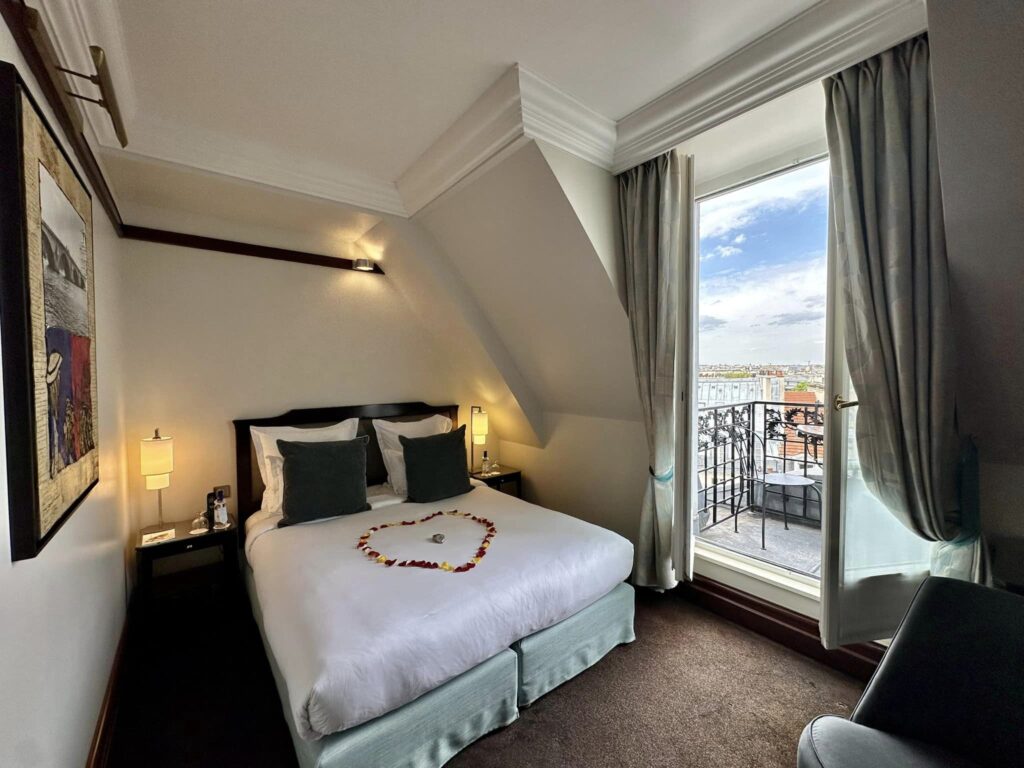
The room designs are unique, and every room in a hotel may be slightly different in size and layout. Even minimalist designs don’t feel impersonal. While European beds generally don’t have a top sheet, they do have soft, lovely, fluffy duvets that keep you warm in winter and allow airflow in summer.
– A Double Room: one queen or king-sized bed, to accommodate two people. Or two twin beds pushed together, which share a duvet. NOTE: If you need separate beds, you have to specifically book a “twin” room, which will have two twin beds.
– A Suite: one queen or king-sized bed and a small sitting area. Might have a door in between the two spaces.
A Triple Room: one queen or king-sized bed and a twin bed. Or, less common, three separate twin beds.
– A Family Room / Quadruple Room: one queen and two twin beds. Or, two queens in separate but connecting rooms.
While hotels with two double beds exist, they are few and far between, and tend to be in international branded hotels like Marriotts, Hiltons and Hyatts. You’ll need to ask your travel advisor to find them and they will generally come at a higher cost.
European Bathrooms
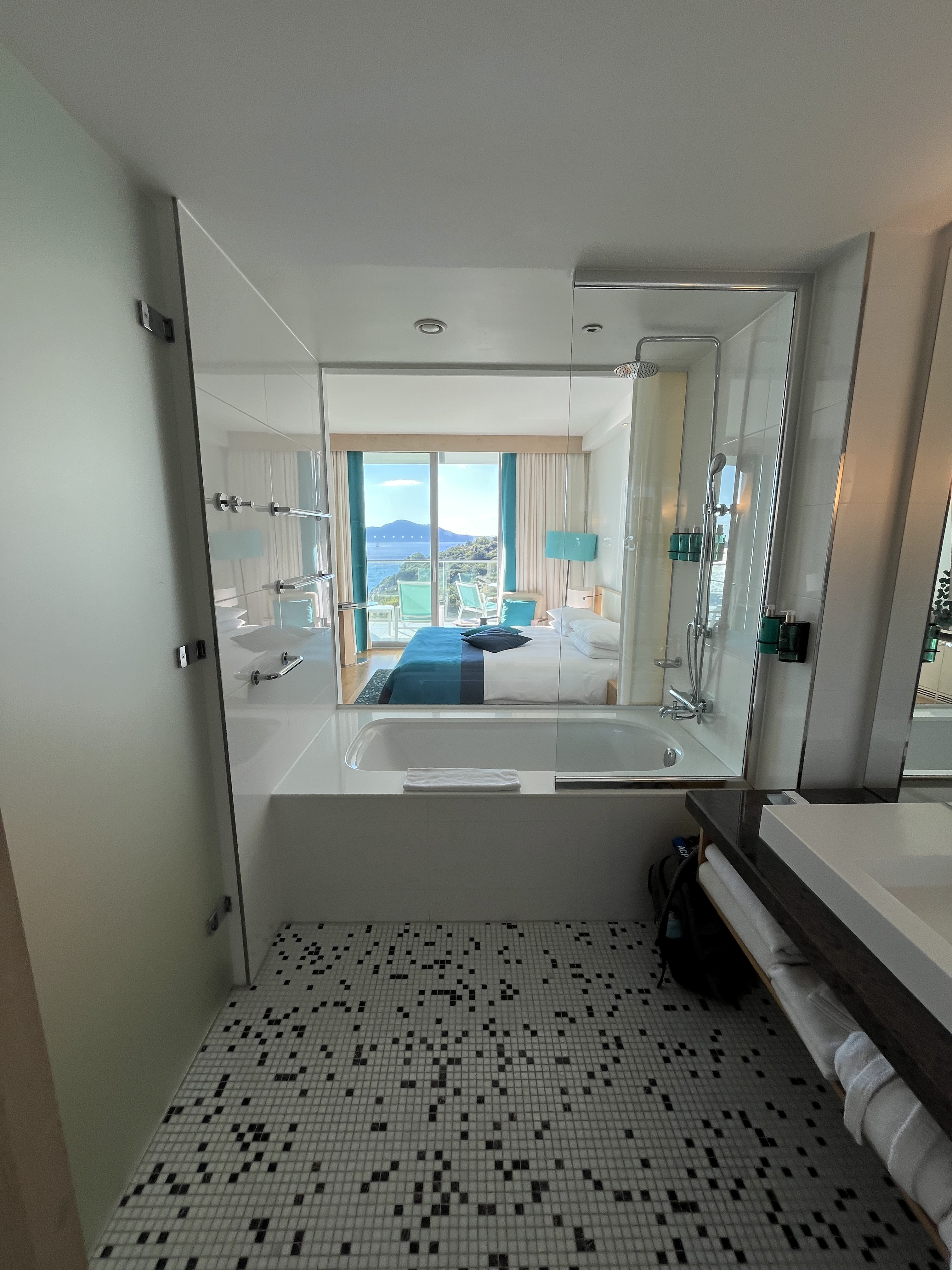
Just as the rooms are smaller, the bathrooms tend to be smaller as well. Space is at a premium. European bathrooms typically have a sleek design made with high-end materials. Beautiful marble and high-quality fixtures make European bathrooms aesthetically pleasing.
But beware of the half-doors in their showers — many European bathrooms have only a partial shower divider (not a fully-enclosed shower), and it can be tough for inexperienced Americans to contain the spray!
As with North American hotels, you will always find a hairdryer. But you won’t find washcloths (Europeans see those as personal items, which a traveler would be bringing with them). And while the water pressure is often lower to be more eco-friendly, most bathrooms have a heated towel rack which add a touch of luxury.
Hotel Elevators
Not surprisingly, the elevators are also smaller. This isn’t a question of the quality of the hotel; many old buildings were retrofitted with elevators as they became a popular technology. The elevators are reliable but might fit a maximum of two people with suitcases.
Also be aware that the elevator might not serve every floor. There might be a short flight of stairs to enter the building or reach the lobby, before you can enter an elevator. Or there might be an attic/annex that requires a final set of stairs after you exit the elevator. Europe does not have the same disability/access laws that we have in the US. If you have mobility concerns and need to avoid stairs completely, you’ll need to contact the hotel directly (or ask your travel advisor) to be certain.
What Floor Are You on in Europe?
Europeans count building floors differently from North Americans. We start the first floor on the ground and count up from there. So the level above the ground floor is the second floor. It makes sense in a literal way.
For Europeans, the ground floor is its own level — level zero. This makes the level above the ground floor the first floor. This puts their floor counting one level off from ours.
The confusion usually comes if you are using stairs. If you are lost and confused about which floor you’re on, we recommend counting floors by how many levels you’ve had to go up. So, from the ground floor, you climbed up two levels: you’re on the second floor.

| North American | European |
| Ground/ 1st | Ground / 0 |
| 2nd | 1st |
| 3rd | 2nd |
| 4th | 3rd |
Do European Hotels Have Air-Conditioning?
It’s true: Europeans don’t often use air-conditioning. And throughout most of their history, it was unnecessary. Summers weren’t hot enough for a long enough time to merit the cost.
While climate change is increasing the need for air-conditioning, retrofitted European hotels usually won’t feature the strong central-air system you find in North America. Each room will have an individual unit for you to control. Not a strong, modern unit, but a unit that provides air conditioning nonetheless.

You’ll also find that some hotels have strict seasonal regulations. Especially in Italy, France, and Spain, the air conditioning will only turn on between May and October. Or they might only go down to 78°F. If you have a particularly hot day in April, you’ll have to open a window and rely on a breeze.
What Do European Hotel Stars Mean?
In the US, hotel stars are not regulated in any way. There are a multitude of associations that “give” stars, like Forbes Travel Guide and Google. But generally, we understand the stars to refer to cleanliness, sense of luxury, and guest experience.
In the EU, there is the European Hospitality Quality scheme (EHQ), which tries to create a standard across the many countries. Some countries set standard laws, and others still vary by region. Overall, the EU star system is more about tangible/measurable amenities than guest experience or quality.

At a minimum:
2-star: Bilingual staff, breakfast, reading light by bed, bath gel, bath and hand towels, linen shelves.
3-star: Reception at least 10 hours a day and by phone or digital 24 hours, lounge area at reception, luggage service, beverage in room, telephone, multimedia, heating in bathroom, hairdryer, place for luggage, laundry and ironing.
4-star: Reception at least 16 hours, lobby, beverage service, breakfast and room service, minibar, upholstered chair with side table, cosmetics in bathroom, large-scale art in bathroom, TV with international channels.
5-star: 24-hour reception, multilingual staff, doorman or valet, concierge, shuttle, luggage service, personalized greeting for each guest with fresh flowers or a present in the room, minibar, room service 24 hours, safe, ironing service, turndown.
You can still use the number of stars to help inform your hotel decision. But make sure you also read reviews, and consider what amenities you really need or want. Or, better yet, leave the research to your travel advisor.
Old School Touches
Depending on the hotel you choose, you may find that your hotel maintains some traditional touches that call back to the hotel’s founding.
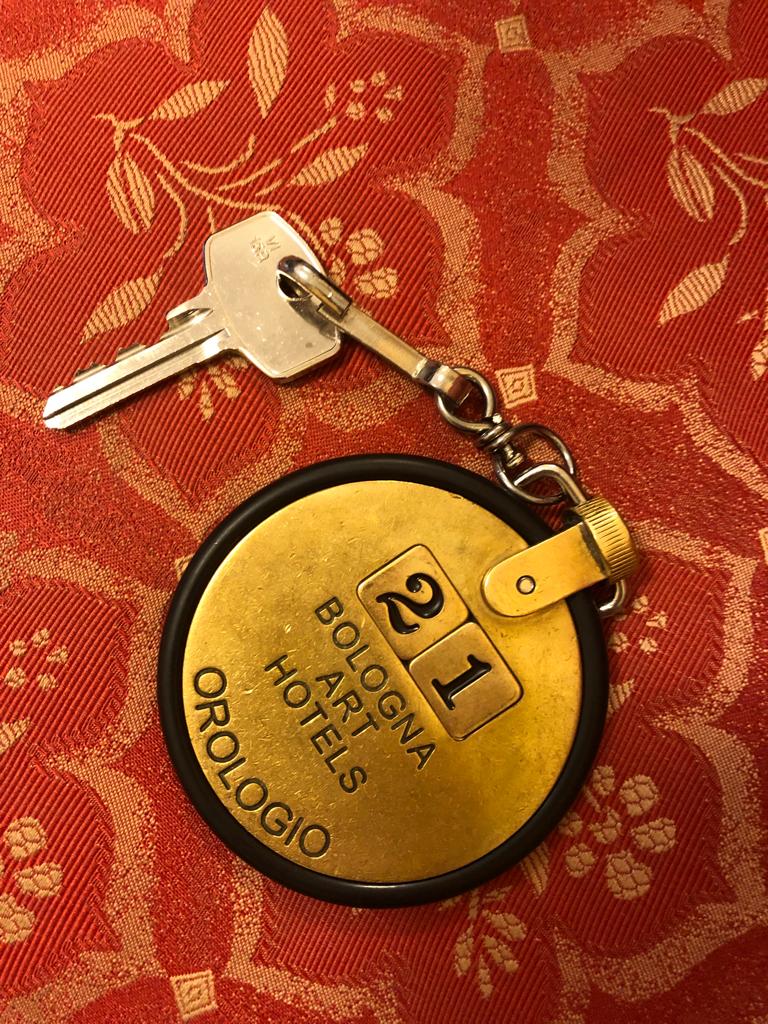
Most frequent is the heavy metal keys. Instead of sleek plastic keycards, some European hotels have old fashioned keys attached to a heavy room number.
Don’t carry this heavy key around. As you leave the hotel, drop off your key at the front desk.
When you return, simply go to the front desk and tell them your room number. If it’s a small boutique hotel, they may already remember it.
Other traditional touches include decorative celiengs and moldings, gilded age cockatil bars, radiator heating, and stunning rooftop bars. You’ll see little nods to the history throughout the hotels, including in the artwork/pictures.
You may also notice more traditional/formal service. Especially when it comes to breakfast and concierge services. All these touches help you connect further to the destination you are visiting, and highlight the fact that you’re not just in a hotel down the street from your home.
We hope this guide has helped you set your expectations for your European hotel. You’ll still experience luxury, beauty, and quality service. But as with everything abroad, things are a little different. And isn’t that what we travel for? If you’re ready to start planning your next European vacation, let us know!